


By Sani Idris Abdulrahman
Stakeholders in Kaduna State have commenced an assessment of the civic space to identify barriers limiting citizens’ participation in governance.
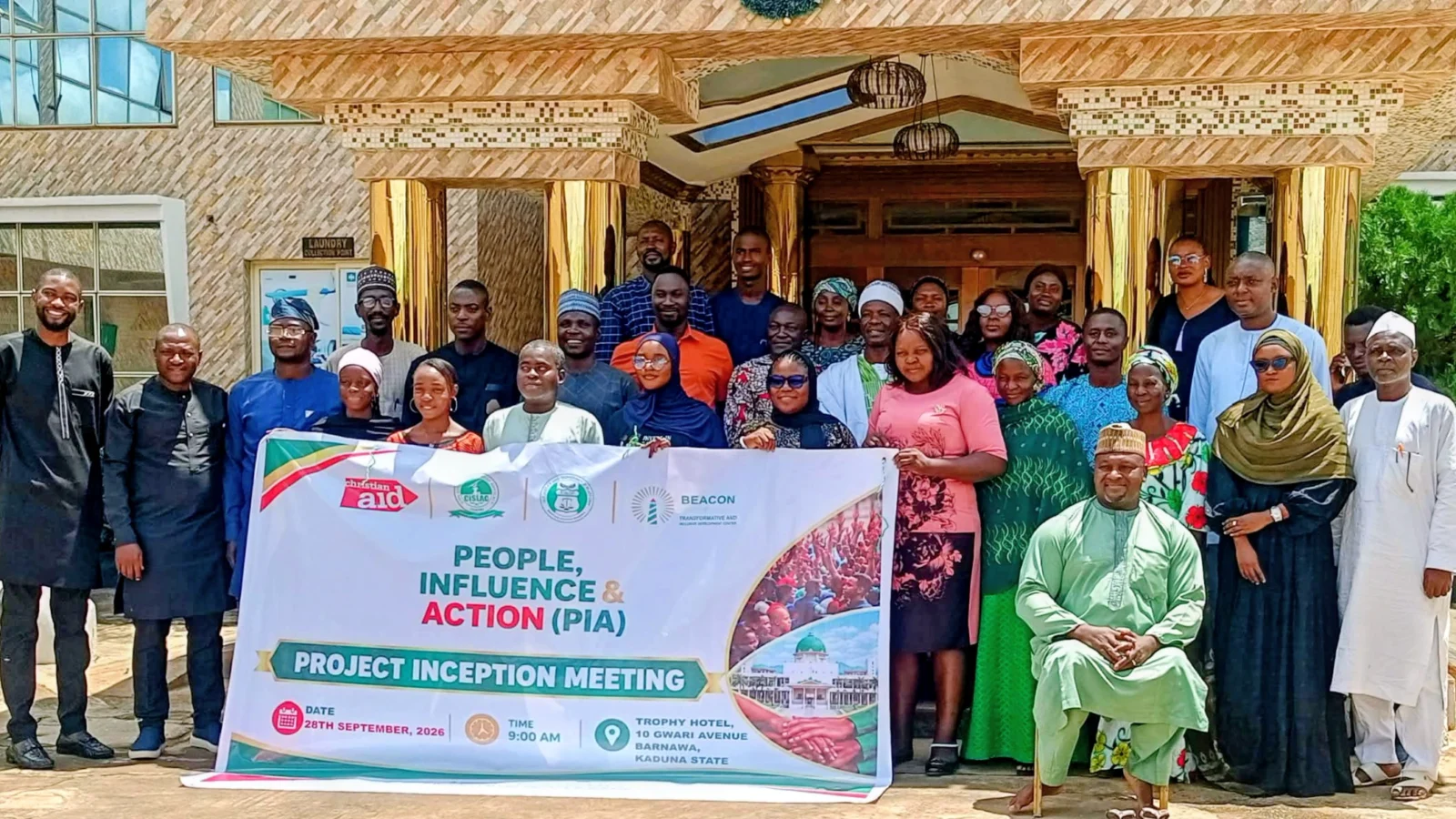
The assessment is being conducted under the People, Influence and Action (PIA) Project, launched through an inception meeting on Monday in Kaduna, organised by Tax Justice and Governance Platform (TJ&GP), Kaduna.
The meeting was held in partnership with the BEACON of Transformative and Inclusive Development Center, and supported by Civil Society Legislative Advocacy Centre (CISLAC).
The project seeks to document barriers to civic participation and identify practical pathways for communities to influence decisions affecting their lives.
Speaking at the meeting, TJ&GP Coordinator in Kaduna, Mr Simeon Olatunde, said the initiative followed concerns over shrinking civic participation.
Olatunde said participation was increasingly concentrated among familiar groups, leaving many citizens, particularly vulnerable groups, outside decision-making processes.
He said civil society organisations had traditionally focused on taxation and budgeting, but emerging evidence showed the need to examine the wider civic space.
According to him, the project would examine who has influence, who is excluded, reasons for exclusion and how community priorities reach decision-making institutions.
“This programme is about ensuring that we expand, strengthen and protect the civic space we have today,” Olatunde said.
He said the project would focus on poor and vulnerable groups, women, youths, children and persons with disabilities whose voices were often absent from policymaking.
Olatunde said the assessment would generate evidence on civic space, exclusion, power relations, rights, participation barriers, threats and opportunities across different sectors.
He said the assessment would cover government, civil society, communities, religious institutions and informal economic groups.
The project would also examine how gender, age, disability, livelihood, faith, location and socioeconomic status affect access to services and public decision-making.
Olatunde said Kaduna’s findings would contribute to national and regional processes aimed at strengthening civic participation and citizen influence across Nigeria and Africa.
Representing the Kaduna State Ministry of Women Affairs, Mercy Madaki welcomed the initiative and urged stakeholders to translate its findings into practical community action.
Speaking on behalf of the Kaduna State Disabilities Affairs Board, Rilwan Muhammad, also pledged to partner with the project, commending the organisers for incorporating accessibility considerations.
Representing traditional institutions, Alhaji Garba Umar, Garkuwan Sabon-Gari, described traditional leaders as a critical link between government and communities.
He urged the organisers to sustain the process beyond the inception meeting to ensure community concerns were continuously captured and followed through.
Mr Tara Wyah, Kaduna State Open Government Partnership (OGP) Point of Contact, said the initiative was timely amid concerns about shrinking civic space globally.
Wyah said Kaduna’s commitment to OGP provided a framework for citizens and stakeholders to gather, discuss governance issues and contribute to reforms.
He urged participants to listen, contribute and remain actively involved, saying the outcome of the engagement could demonstrate the value of citizen participation.
Wyah said Kaduna’s civic and governance reforms had received international attention, adding that stakeholders should sustain efforts that produced tangible results.
He said his motivation for supporting reforms was also driven by the need to improve governance for communities, families and future generations.
Sadiq Mustapha, Coordinator of TJ&GP in Kano, said the PIA Subnational Project would be implemented from August 2026 to March 2030.
Mustapha said Kaduna, Kano and Plateau were the target states under the Nigerian component of the project.
He said the project was being implemented by CISLAC under Christian Aid’s wider People in Action Signature Programme for West and Central Africa.
According to him, the project seeks to expand civic space, strengthen citizen power and advance inclusive governance.
Mustapha said excluded groups, particularly women, young people, persons with disabilities and informal workers, faced barriers to participating in decisions affecting their lives.
He said the project would strengthen communities, civic actors and faith groups to organise, mobilise, influence decisions and defend basic rights.
The project would also promote inclusive governance through public finance monitoring, tax justice analysis, service-delivery tracking and citizen-state dialogue.
Mustapha said other activities would include town halls, policy dialogues, legislative engagements, advocacy meetings and public commitment tracking.
He said traditional leaders, faith actors and the media would also be engaged as civic partners while avoiding politicisation and harm.
The project would use evidence, learning, outcome harvesting, stories of change, peer learning and policy briefs to strengthen citizen influence.
Mustapha said the first year would focus on baseline studies, analysis, platform establishment and capacity strengthening.
He said subsequent years would test accountability tools, deepen institutional engagement, document outcomes and strengthen sustainability.
The News Agency of Nigeria (NAN), reports that the project is expected to culminate in a Kaduna Context and Actor Analysis, identifying relationships among key actors and opportunities for civic participation.
It will also identify safe and accessible channels for information, feedback and complaints under the project’s community accountability mechanism.(NAN)
Edited by Yakubu Uba


Comments