


By Josephine Miller
The Japan International Cooperation Agency (JICA) says energy efficiency is critical to cutting costs and boosting productivity in Nigeria.
The agency therefore, urged Nigeria to accelerate its transition to energy efficiency technologies across key sectors.
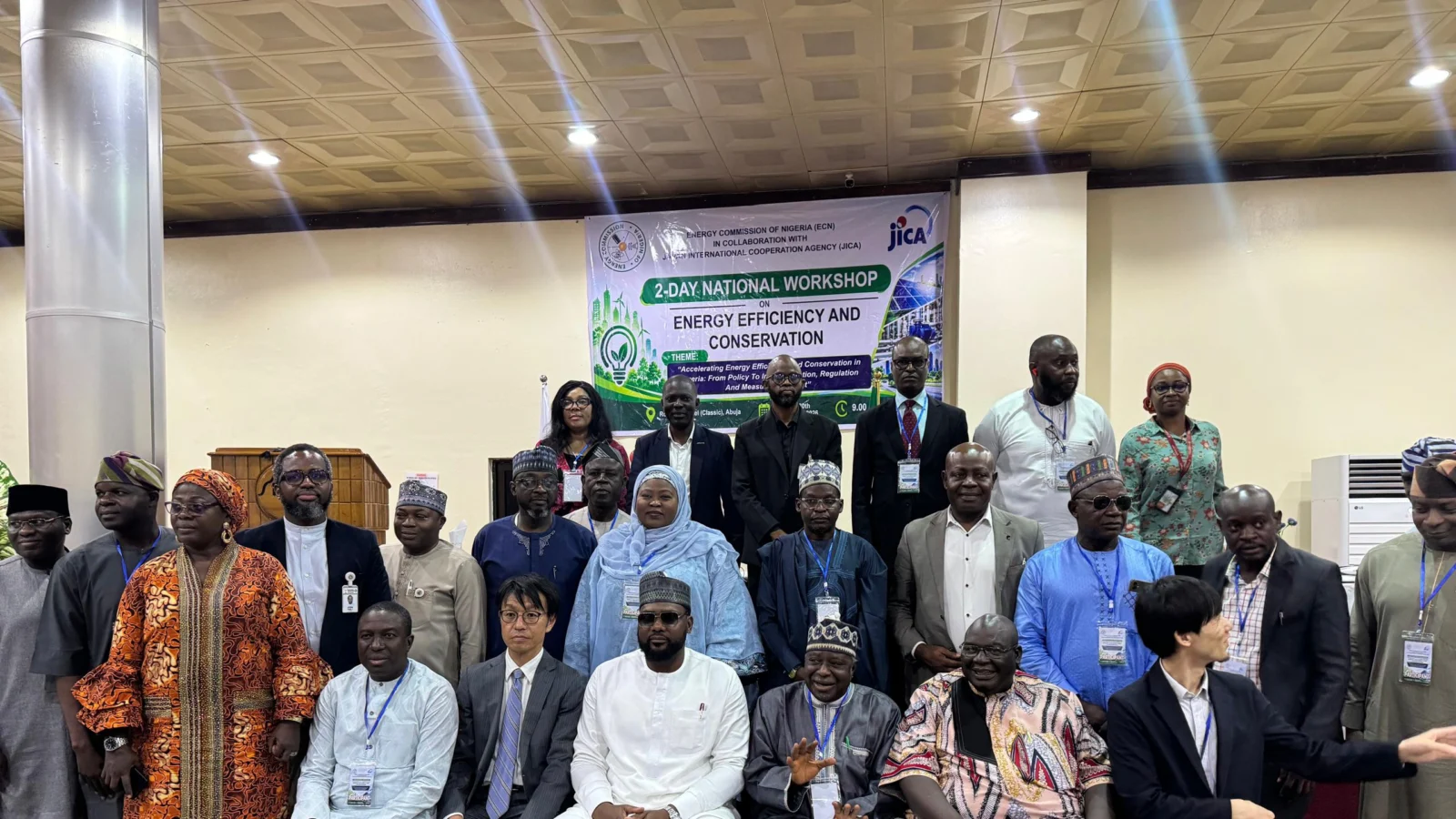
The Chief Representative of JICA in Nigeria, Mr Ishigame Keiji said this on Tuesday in Abuja at a two-day national workshop on energy efficiency and conservation, organised by JICA and the Energy Commission of Nigeria (ECN).
The workshop had the theme: “Accelerating Energy Efficiency and Conservation in Nigeria: From Policy to Implementation, Regulation and Measurable Impact.”
He said energy efficiency was often described as the first fuel, as the cheapest unit of energy was the one that did not need to be produced at all.
“By adopting energy efficiency technologies in buildings, industries, transportation and appliances Nigeria can reduce energy costs, improve productivity and enhance energy security.
“Japan’s own development journey has shown that energy efficiency is a powerful driver of economic growth and industrial competitiveness.
“JICA remains committed to supporting Nigeria’s efforts towards sustainable and inclusive energy development, and we hope this workshop will produce a practical roadmap to guide future investment and institutional collaboration,” he said.
Dr Kingsley Udeh, the Minister of Innovation, Science and Technology, represented by the Director, Technology Acquisition and Adaptation, Mr Michael Anpe, said technology was critical to Nigeria’s transition to a more efficient energy future.
Udeh said smart energy systems, Artificial Intelligence and digital monitoring tools were already transforming energy management across the world.
He said Nigeria should strengthen links among its research institutions, universities, technology hubs and industries to ensure innovation translated into practical solutions.
“We must move beyond research that remain on shelves towards innovations that solve real problems in Nigerian homes, offices, industries and communities.
“Nigeria has made progress in developing policies and institutional frameworks relating to energy efficiency, but policies can only achieve their objectives when effectively implemented and properly monitored.
“I encourage participants to ensure that discussions are practical, solution-oriented and action-driven, so that we can identify clear implementation pathways that contribute to measurable improvements across key sectors,” he said.
Dr Mustapha Abdullahi, the Director General and Chief Executive Officer, Energy Commission of Nigeria, said industrial energy expenditure in Nigeria ran into trillions of naira annually.
Abdullahi said a large share of that spending went to self-generated diesel power, which he said, was the most expensive and least efficient energy source available to Nigerian industries.
He said the workshop was designed to bring policymakers, regulators and implementers into the same room to agree on specific actions and timelines.
“Inefficiency in the energy chain is money leaving the productive economy for no productive return.
“Energy efficiency policy that is not backed by clear standards, and standards not backed by institutions able to enforce them, do not change outcomes on the ground,” he said.
In a keynote, Prof. Abubakar Sambo said Nigeria’s borders remained porous to energy-inefficient appliances, creating a major enforcement gap in the country.
Sambo said the country lacked decentralised testing capacity to verify the energy ratings of appliances entering its ports.
He said a transition from voluntary to mandatory customs-enforced compliance at the point of entry was urgently needed.
“We must integrate compliance between the Standards Organisation of Nigeria and the Nigeria Customs Service to flag high-energy intensity imports at the ports.
“Efficiency is our cleanest, cheapest and most abundant energy source. It requires no new power plants, only the political will to enforce what is already on paper,” he said.
Mrs Fatima Sheji, who represented the Federal Ministry of Budget and Economic Planning, said JICA had been a strong and consistent partner in Nigeria’s national development.
Sheji said energy touched every sector of national life, from infrastructure to education, making the workshop’s focus particularly important.
She urged the commission to fully support the programme and scale down its outcomes across all levels.
“This is very dear to the country because it will help industries, improve schools and support the all-round development of Nigeria.
“Budget and Economic Planning does not take for granted all the activities JICA is doing for Nigeria and the Japanese government,” she said. (NAN)
Editd by Uche Anunne


Comments