


By Oluwafunke Ishola
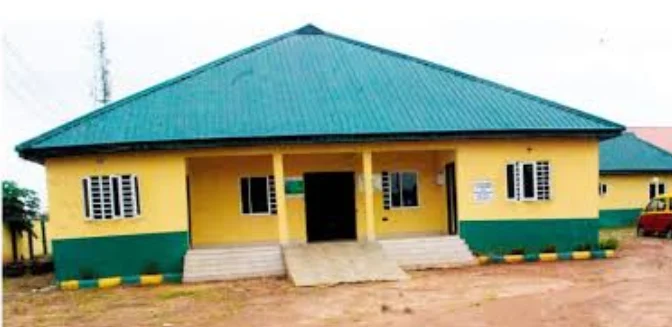
A community-led audit of 290 revitalised primary healthcare centres across six states has revealed that many of the facilities fall short of the functional standards set by the National Primary Health Care Development Agency (NPHCDA).
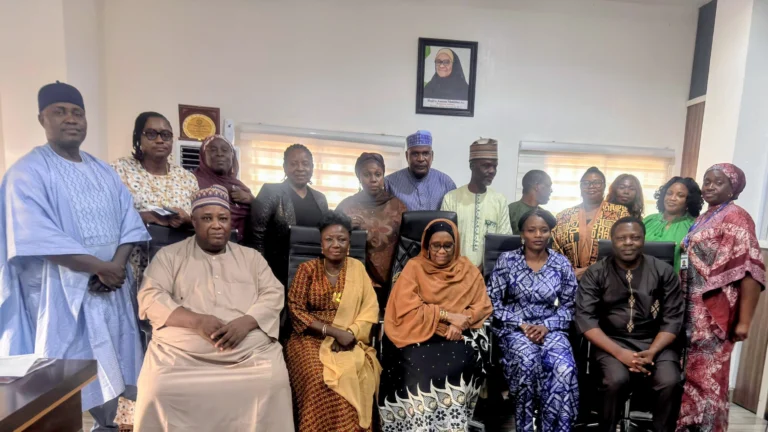
This was disclosed on Tuesday during a Primary Health Care (PHC) revitalisation Town Hall meeting in Lagos.
The states under review were Abia, Benue, Cross River, Kano, Osun, and Taraba.
The News Agency of Nigeria reports that the event was organised by Orodata Science, in collaboration with Africa Data Hub.
Highlighting findings from the facilities, Ms Hannah Naiyeju, Data and Research Lead, Orodata Science, said NPHCDA databases on revitalised PHCs do not match reality witnessed in the communities.
According to her, NPHCDA Level 2 functional standards were benchmarks used to measure revitalised PHCs; however, the accessed facilities fall short of the required standards.
A functional NPHCDA Level 2 facility should provide 24/7 basic and maternal healthcare services, staffed by at least four to six Skilled Birth Attendants (SBAs), consulting rooms, delivery and labour wards, inpatient wards, and laboratories.
Others include access to essential drugs, immunisation, and enabling conditions such as reliable power with solar backup, water and sanitation facilities, boreholes, staff accommodation, and secured premises.
Naiyeju said the revitalised facilities were funded through the Basic Healthcare Provision Fund (BHCPF) and other federal and state channels.
She explained that of the 290 facilities,153 were completed, 41 ongoing, 70 yet to start, 21 stalled or abandoned and five completed but not commissioned or in use.
“For the 21 stalled or abandoned facilities, 14 had no reasons given, five were abandoned by contractors and one cited funding delay.”
The assessment, she said, used the organisation’s CheckMyPHC Digital Scorecard to evaluate staffing, infrastructure, equipment, electricity, water supply and accessibility.
According to her, only 29 per cent of facilities meet the assessed benchmark, with Benue scoring the worst, followed by Taraba with 73 per cent major gaps.
She disclosed that the state of Osun had 43 per cent critical gaps: good structures and utilities but weak clinical equipment, while 63 per cent of facilities in Kano State met the benchmark.
Also, Mr John Eromosele, Country Director, Orodata Science and Civic Technology, said evidence showed that many PHCs are operating with serious structural, service-delivery and system-readiness gaps.
Eromosele added that the gaps weakened their ability to provide safe, timely and equitable care.
“What these findings demand is not a narrow focus on isolated repairs. But a more coordinated approach to PHC improvement.
“Governments at the national and state level must treat infrastructure, water, power, staffing, maternal and newborn readiness, accessibility, and community accountability as connected parts of the same system.
“Investment decisions should be tied to verified facility-level needs.
“Implementation should be tracked transparently, and progress should be measured not only by announced projects but by whether PHCs are visibly safer, better staffed, more functional and more trusted by the communities they serve.”
Responding, Dr Shina Igbalaye, Executive Secretary, Osun Primary Healthcare Development Board, said the state had made tremendous progress in its strengthening of PHCs, in spite of the funding challenges it encountered.
Igbalaye disclosed that aside from state funding, Osun received support from NPHCDA for the revitalisation of six PHCs, while three were done by UNICEF through funding from the Global Fund.
He stressed that the state government had evolved mechanisms to bridge critical gaps to improve healthcare delivery and outcomes for residents.
Similarly, Dr Ibrahim Mustafa, Permanent Secretary, Lagos State Primary Health Care Board (LSPHCB), said Lagos PHCs were not included in the assessment; however, they had made giant strides in their revitalisation agenda.
Mustafa highlighted the state’s efforts in bridging infrastructure gaps, solving personnel and brain drain issues, and strengthening service delivery across the state’s five divisions. (NAN)www.nannews.ng
Edited by Vivian Ihechu


Comments