


By Ijeoma Olorunfemi
The Nigerian Society of Engineers (NSE) has called for stronger integration of satellite resources and indigenous engineering capacity into the country’s national security architecture.
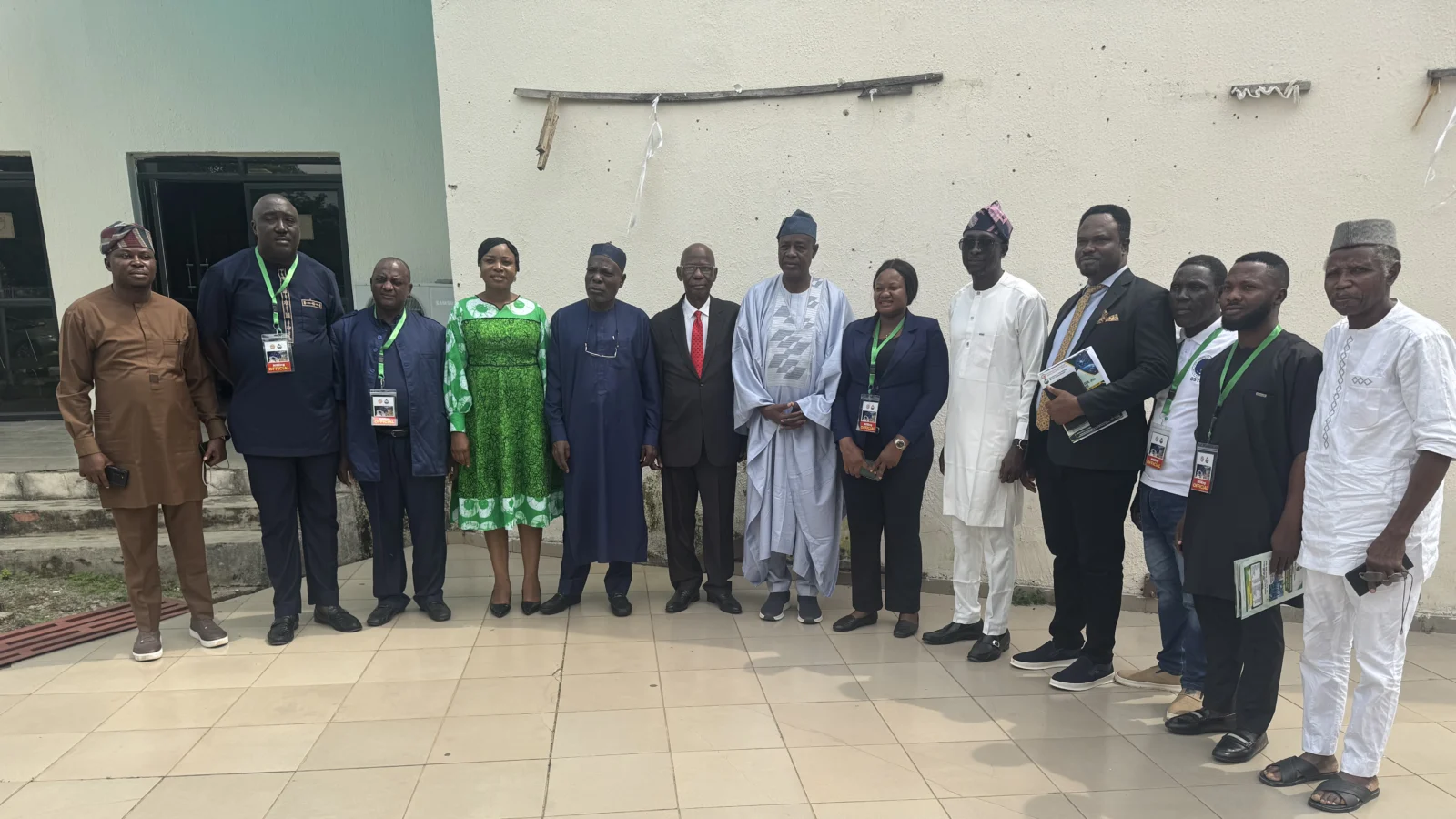
The NSE President, Ali Alimasuya, represented by Dauda Musa, made the call on Wednesday in Abuja at the 10th Rtd. Brig.-Gen. Michael Agu Annual Lecture, organised by the Nigerian Institution of Space Engineers (NISEng).
The lecture had its theme as: “Reconnaissance Satellites and National Security: Applying Satellite Resources to Counter Multi-Dimensional Insurgency in Nigeria.”
“Space technology, and particularly the strategic use of satellite resources, offers immense possibilities for surveillance, reconnaissance, monitoring, environmental observation, and the protection of critical national assets.
“Our national security architecture must, therefore, continue to explore how indigenous engineering expertise and investment in space technology can be harnessed to provide accurate, timely, and actionable information for decision makers and security agents,” he said.
According to him, the NSE remains committed to promoting engineering excellent solutions that contribute meaningfully to national development, public safety, security and prosperity of citizens.
Kogi governor, Ahmed Ododo, represented by his Security Adviser, Mr Jerry Omodara, said the state’s strategic geographical position created both opportunities and security responsibilities.
Ododo said the state’s extensive rural communities, forests, waterways and difficult-to-monitor areas, coupled with challenges such as banditry, kidnapping and criminal activities along major routes, made technology essential to its security efforts.
He also called for increased investment in capacity building of Nigerian scientists, engineers to develop the country’s space industry to be at par with global requirements.
“For us, therefore, technology is not a luxury.
“If we are serious about becoming a technologically secure nation we must not depend perpetually on foreign technology without developing the capacity to design, manage, analyse and maintain our own systems.
“Nigeria has the human capital. What we need is sustained investment, institutional support, research opportunities, industry partnerships and a deliberate pathway for operational national applications,” he said.
Earlier, Babalola Kayode, Chairman, NISEng, said the real value of satellite technology did not only involve having satellites in orbit, but having capacity to transform space-based data into actionable intelligence and timely decisions.
He said this required a robust ecosystem involving satellite operators, engineers, data scientists, intelligence professionals, the armed forces, security agencies, policymakers, academia and the private sector.
Kayode also called for investment in indigenous capacity, ground infrastructure, data processing, artificial intelligence, secure communications and professionals capable of effectively exploiting satellite resources.
According to him, the lecture provided an opportunity to examine the gaps between satellite capability and operational application and explored how existing and future space assets could be integrated into the broader national security architecture.
Prof. Matthew Adepoju, Director-General, National Space Research and Development Agency (NASRDA), said reconnaissance satellites were critical to national security due to ability to monitor borders, track activities and trade routes, protect critical infrastructure and support disaster response.
Represented by Dr Sadiq Umar, Director, Centre for Space Technology Development, Adepoju said that given Nigeria’s size and strategic importance, space-based intelligence was a necessity.
Adepoju said NASRDA remained committed to strengthening Nigeria’s capacity in satellite technology through local expertise, appropriate regulation and collaboration with the armed forces, security agencies, academia and industry.
Agu, on his part, reiterated the need for high resolution satellites to address insecurity challenges in the country, hence the need for more investment in the sector.
The annual lecture included conferment of fellowships and awards to outstanding members of the institution.(NAN)
Edited by Uche Anunne


Comments