


By Edith Tsokar
The Federal Government has tasked Colleges of Education across Nigeria to ensure institutional readiness, accountability and strict adherence to regulatory standards in implementing the dual-mode mandate.
The Minister of State for Education, Prof. Suwaiba Ahmad, gave the charge on Tuesday in Abuja at a retreat on dual-mode implementation organised by the National Commission for Colleges of Education (NCCE).
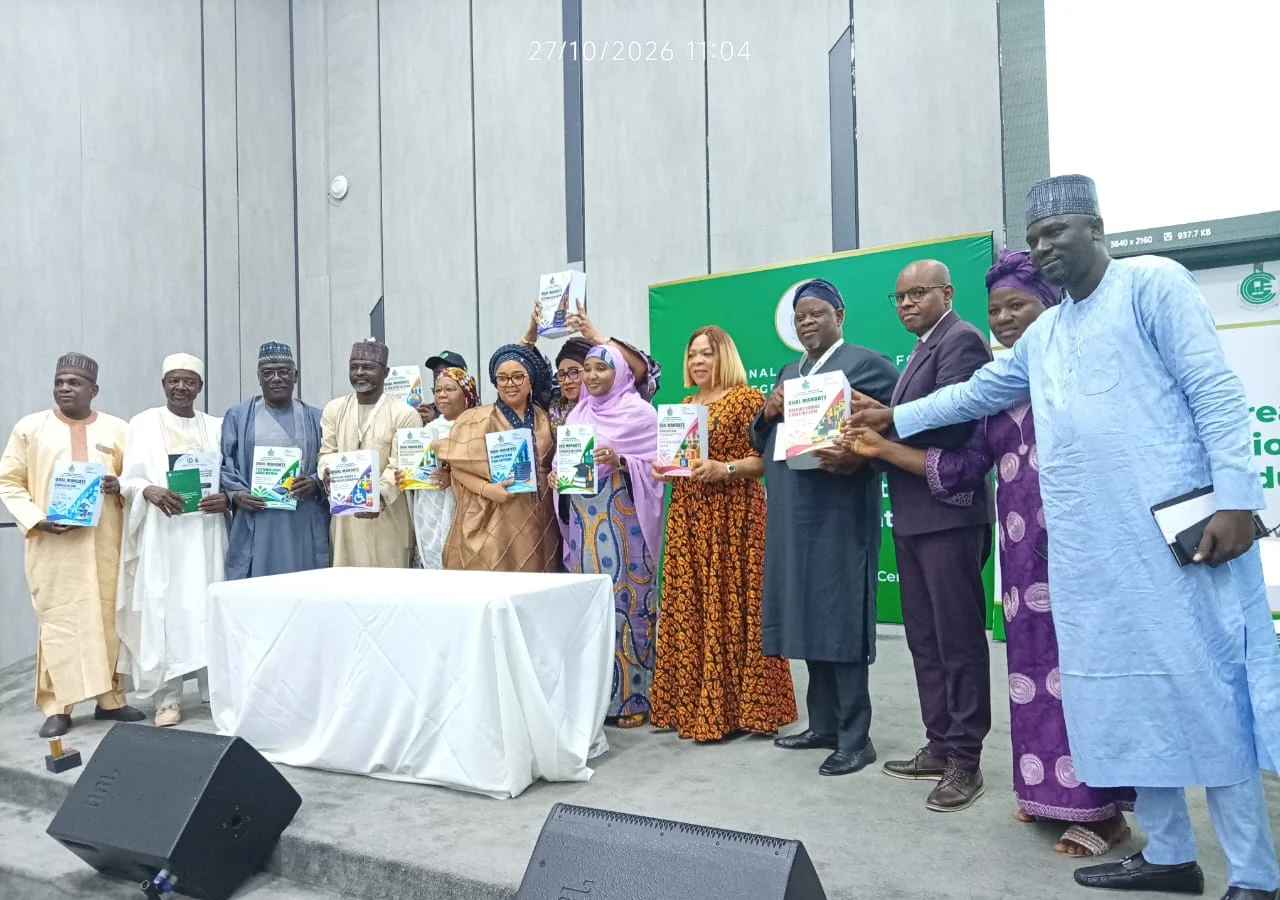
The retreat, themed “Effective Implementation of the Dual Mandate of Education in Nigeria and the Unveiling of the New Dual Mandate Curriculum,” focused on strategies for effective implementation of the reform.
Ahmad described the dual-mode system as a major reform in Nigeria’s tertiary education landscape, offering Colleges of Education an opportunity to retain their traditional responsibility of producing competent teachers while expanding their capacity to award degrees.
She emphasised that institutions must satisfy all established regulatory requirements before commencing degree programmes, warning that the approval of the dual mandate should not be interpreted as automatic permission to introduce such programmes.
“There are regulatory requirements for you to adhere to. It is not just to say that I am in College of Education, now I want to do a degree programme. You must satisfy those requirements,” she said.
The minister said teachers remained the bedrock of human capital development, stressing that the success of the reform would depend on the quality of graduates produced rather than the number of institutions introducing degree programmes.
“I wish to emphasise that implementation must be guided by accountability, institutional readiness and strict adherence to established regulatory standards,” Ahmad said.
She explained that every institution seeking to implement the mandate must demonstrate the availability of qualified academic staff, appropriate teaching and learning facilities, and functional quality assurance mechanisms.
Ahmad described the new dual-mode curriculum as a significant development in teacher education, noting that it established minimum academic standards for degree programmes and provided a foundation for curriculum development and student advancement.
She urged the NCCE to ensure effective dissemination of the curriculum and promote consistency in its implementation, while establishing mechanisms to monitor institutional compliance with the prescribed standards.
The minister also charged provosts of Colleges of Education to prioritise continuous professional development for lecturers, noting that academic and professional capacity was essential to achieving the objectives of the reform.
“Continuous professional development is key. I encourage staff to go for further training, not only academic masters and PhD, but to also publish so that they have the necessary capacity to implement the curriculum,” she said.
Ahmad disclosed that the Federal Ministry of Education was developing a more concise accreditation process under which each lecturer would be assigned a unique identifier to improve monitoring and accountability.
She emphasised that institutions must provide the necessary infrastructure and employ qualified personnel before seeking accreditation for their degree programmes.
According to her, Colleges of Education must align their institutional development plans with the NCCE Strategic Plan, provide the required facilities and translate the outcomes of the retreat into practical action plans.
Earlier, the Executive Secretary of the NCCE, Dr Angela Ajala, said the dual-mode mandate represented more than an opportunity to introduce additional academic programmes, describing it as a call for fundamental changes in institutional governance and educational delivery.
“Every meaningful transformation begins with a vision, but its success depends on the courage to act, the discipline to remain, and the determination to sustain progress,” Ajala said.
She described President Bola Tinubu’s approval of the dual-mode mandate as a visionary and historic decision that recognised the changing demands of teacher education and the need to prepare educators for emerging challenges.
Ajala said the retreat came at a critical stage of implementation and would become an annual event to assess progress, identify institutional challenges and determine the support required to sustain the reform.
“The dual-mode mandate is not merely a permission to introduce additional academic programmes. It is an invitation to all colleges to rethink how we are governed, how lecturers teach, how students learn, how we are financed, and how we measure performance,” she said.
She maintained that a curriculum, regardless of its quality, could not transform classroom learning without effective leadership, adequate funding and sustained institutional commitment.
Ajala assured participants that the commission would continue to provide policy direction and guidance to provosts to ensure that the dual-mode mandate achieved its intended objectives.
“We must leave this place not merely better informed, but better prepared, not merely inspired, but equipped to act, not merely united in aspiration, but aligned for results,” she said.
The NCCE executive secretary added that transforming teacher education would have far-reaching effects on teachers, learners, classrooms, communities and the nation, warning that inadequately prepared teachers could undermine children’s educational development.
Also speaking, UNESCO representative, Mr Isaias Rosa, said the quality of any educational system depended largely on the competence of its teachers, noting that Colleges of Education played a decisive role in improving learning outcomes in Nigerian classrooms.
Rosa said UNESCO was pleased to support the reform in partnership with the NCCE and the Federal Ministry of Education, with funding from the European Union through the Education and Youth Empowerment in Nigeria project (EISS).
He disclosed that the national review of the 2020 minimum standards involved 563 participants who examined 45 academic programmes and identified priority areas, including practical teacher preparation, inclusive pedagogy and digital literacy.
“These are not optional additions. Teachers increasingly need to help learners navigate a world shaped by technology. They must be equipped not only to use digital tools, but to apply them critically, ethically and effectively,” he said.
Rosa identified three priorities for implementing the reform as translating standards into practice, ensuring that all institutions benefited from the changes, and measuring success through tangible outcomes, including gender equality and disability inclusion.
Also speaking, Dr Ademola Salami, the Chairman of the Committee of Provosts of Colleges of Education, commended Ajala for advancing implementation through training and retraining programmes conducted across different zones.
Salami, who is also the Provost of the Federal College of Education (Special), Oyo State, said the commission had made substantial progress, adding that provosts must now demonstrate commitment by translating the training received into practical implementation.
“The curriculum can’t do this on its own. It is the tool that will make it work. Whatever training we have, if we are not ready to do this, we certainly cannot achieve it,” he said.
He urged provosts to recognise their central responsibility in implementing the dual-mode mandate and provide the necessary leadership and institutional support to ensure its success.
Salami stressed that the reform could only achieve its objectives if college administrators demonstrated the willingness to implement the curriculum, strengthen institutional capacity and maintain the required academic standards.(NAN) www.nannews.ng
Edited by Deji Abdulwahab
Comments