


By Suleiman Shehu
The Nigerian Institute of Social and Economic Research (NISER) and the International Water Management Institute (IWMI) say Nigeria must urgently reform its agriculture to boost productivity and tackle food crises.
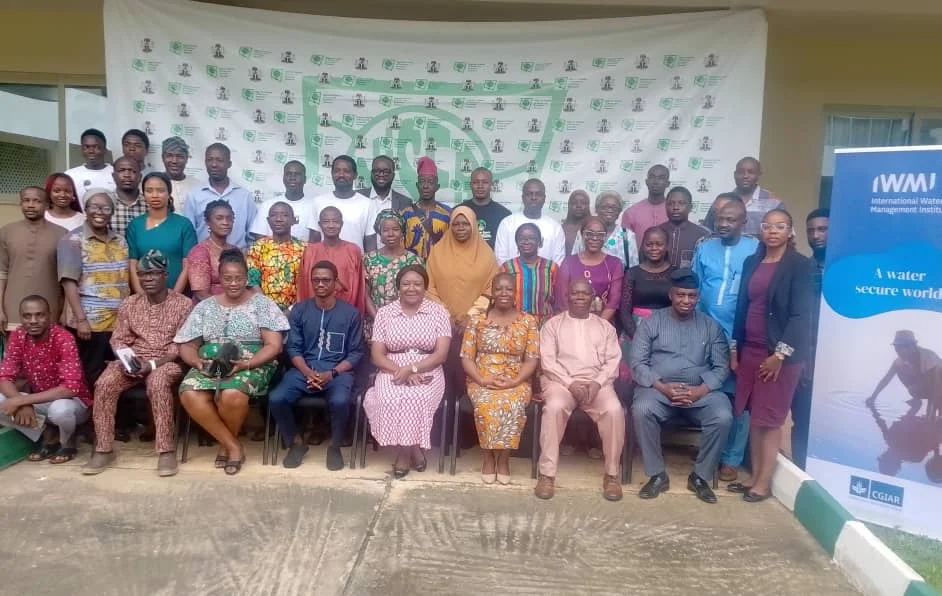
The institutions made the call at a stakeholders’ seminar and validation roundtable in Ibadan on Thursday.
The seminar, themed “Strengthening Nigeria’s Agrifood Knowledge and Innovation System for Demand-Driving Scaling (AKIS-DS), was organised by NISER in collaboration with IWMI.
It was organised under the CGIAR’s Scaling for Impact program.
The News Agency of Nigeria (NAN) reports that the AKIS-DS initiative seeks to understand how Nigeria’s agricultural knowledge and innovation system works.
This includes the roles and relationships among research institutions, extension and advisory services, government agencies, private sector and farmer organisations.
NISER Director-General (DG), Prof. Antonia Simbine, said Nigeria’s persistent food inflation and rising food insecurity show the need to reform agricultural knowledge and innovation systems.
Simbine said it was unacceptable that Nigeria’s agriculture continues to face high food inflation and insecurity.
According to her, the sector contributes approximately 28 per cent of Gross Domestic Product (GDP) and employs 50 per cent to 70 per cent of the rural workforce.
Simbine emphasised that Nigeria’s food crises should not be exclusively attributed to prevailing conflicts and global developments, saying longstanding structural weaknesses in the agricultural sector also contribute significantly.
She said the predominance of smallholder farmers cultivating less than two hectares, heavy dependence on rain-fed agriculture, outdated farming technologies and post-harvest losses were among the factors undermining food production.
The DG also identified climate change and insecurity across major food-producing communities as critical challenges confronting the agricultural sector.
She was concerned that insecurity had disrupted farming activities and forced many rural residents to abandon their communities in states such as Plateau and Benue, recognised for their agricultural contributions.
Simbine called for improved agricultural research, modernisation of fertiliser practices, sustainable land management, mechanisation and infrastructural investment to boost productivity.
She emphasised the need to accelerate the adoption of climate-smart and digital agricultural technologies, reminding research institutions of their responsibility to generate relevant innovations and ensure they reach smallholder farmers.
The IWMI Country Focal Point in Nigeria, Dr Charity Osei-Amponsah, said developing agricultural technologies alone without effective mechanisms to ensure innovations reach the intended beneficiaries was inadequate.
Osei-Amponsah said agricultural technologies must reach the right users, particularly smallholder farmers, and be adopted and used effectively to improve productivity and access to markets and finance.
She further stressed the importance of replicating successful innovations across different farming communities and states to expand their impact.
Osei-Amponsah maintained that stronger collaboration among agricultural stakeholders, improved knowledge-sharing mechanisms and institutional reforms were necessary to ensure research findings translated into practical benefits for farmers.
In his presentation, IWMI intern, Mr Mubaraq Owolabi, identified the need to strengthen connections among research institutions, extension services, farmers and financial institutions.
Owolabi further said that ensuring a monitoring and evaluation system would strengthen Nigeria’s agricultural innovation.
“Strengthening these institutional linkages and promoting effective coordination among stakeholders are essential to ensuring that agricultural research translates into practical benefits for farmers in Nigeria,” he said. (NAN)
Edited by Moses Solanke



Comments