


By Stellamaris Ashinze
Women’s rights advocates on Thursday called for stronger policies, regional cooperation and accountability to combat technology-facilitated violence against women and girls.
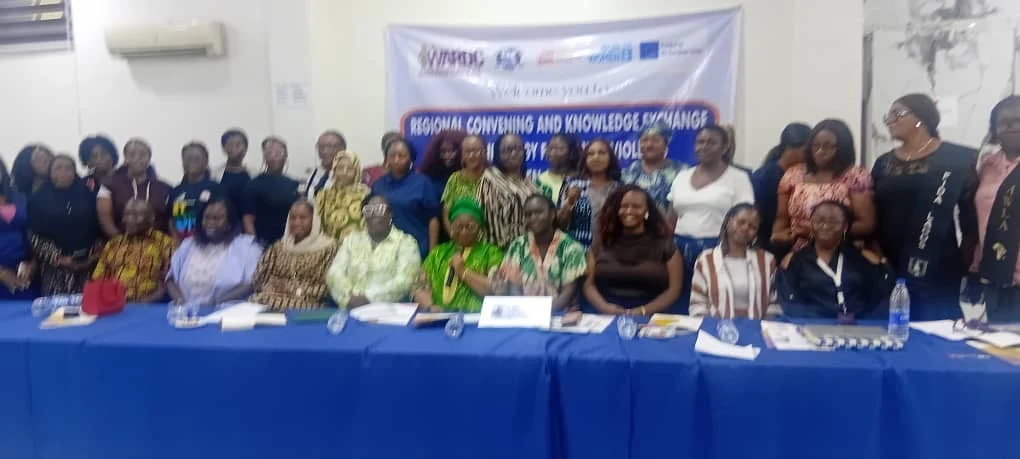
They made the call at a regional convening on Technology-Facilitated Violence Against Women and Girls (TFVAWG), organised by the Women Advocates Research and Documentation Centre (WARDC) in Lagos.
WARDC Executive Director, Ms Emmanuela Azu, said digital platforms had expanded women’s access to information, networks and public participation but exposed them to harassment, cyberbullying and sextortion.
She said technology-facilitated violence often extended beyond online spaces, threatening victims’ safety, mental health and participation in society.
“There is an urgent need for stakeholders to build a united movement and develop effective policy frameworks to prevent abuse and protect women and girls,” Azu said.
She expressed concern that women seeking political office could face online attacks, particularly as Nigeria approached another election cycle.
Azu said tackling the problem required improved digital literacy, stronger protection measures, advocacy and accountability mechanisms to address emerging forms of online violence.
The Chairman of the Governing Council of the National Centre for Women Development (NCWD), Abuja, Ms Joan Idonije, said technology should empower women and girls.
She said digital platforms should not expose them to intimidation and abuse.
Idonije, who also represented the Federal Ministry of Women Affairs, said online harassment, blackmail and non-consensual sharing of intimate images undermined women’s participation in society.
She added that AI-generated sexual abuse threatened women’s participation in education, business, leadership and national development.
Idonije said Nigeria had legal frameworks, including the Violence Against Persons (Prohibition) Act, 2015, and the Child Rights Act, to address abuse.
However, she said implementation challenges and limited access to justice continued to hinder effective protection.
According to her, existing laws and national gender policies require regular review to address emerging forms of technology-facilitated violence and improve support for survivors.
Idonije called for stronger digital literacy, effective reporting mechanisms, greater accountability from technology platforms and deeper regional cooperation to protect women and girls.
She said safeguarding women in digital spaces was essential to protecting families, strengthening communities and advancing inclusive development.
The Programme Officer of the UNTF ACT Project, Ms Tomilayo Oduyebo, said the initiative sought to strengthen intergenerational movements and networks.
She said the project aimed to combat technology-facilitated gender-based violence across sub-Saharan Africa through stronger collaboration and accountability.
Presenting the project’s progress, Oduyebo said it sought to unite women’s rights organisations, grassroots movements, young activists and experienced feminist leaders.
She said the collaboration would help address emerging forms of violence against women and girls.
Oduyebo said research conducted under the project identified cyberbullying, non-consensual sharing of intimate images, psychological harassment and online extortion as major concerns.
She said the research also revealed gaps in institutional responses, with some survivors receiving inadequate support or being discouraged from reporting digital abuse.
Oduyebo said collaboration between experienced feminist leaders and younger activists could strengthen advocacy, improve digital responses and increase pressure on state and non-state actors.
The convening brought together stakeholders from Nigeria, Kenya, Sierra Leone, Uganda, Senegal and other parts of the region.
They exchanged knowledge and explored collective responses to technology-facilitated gender-based violence. (NAN)
Edited by Kamal Tayo Oropo



Comments