


By Ijeoma Olorunfemi
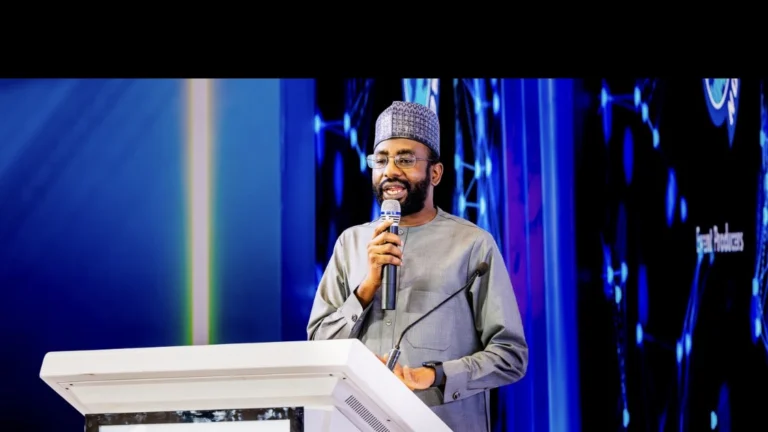
Dr Faisal Orakzai, Chief Executive Officer of Digifloat LLC, says Nigeria does not need another data centre, but a sovereign Artificial Intelligence (AI) stack to maximise existing infrastructure for data sovereignty.
Orakzai said this on Wednesday at the ongoing Digital Nigeria International Conference and Exhibition (DNICE) in Abuja.
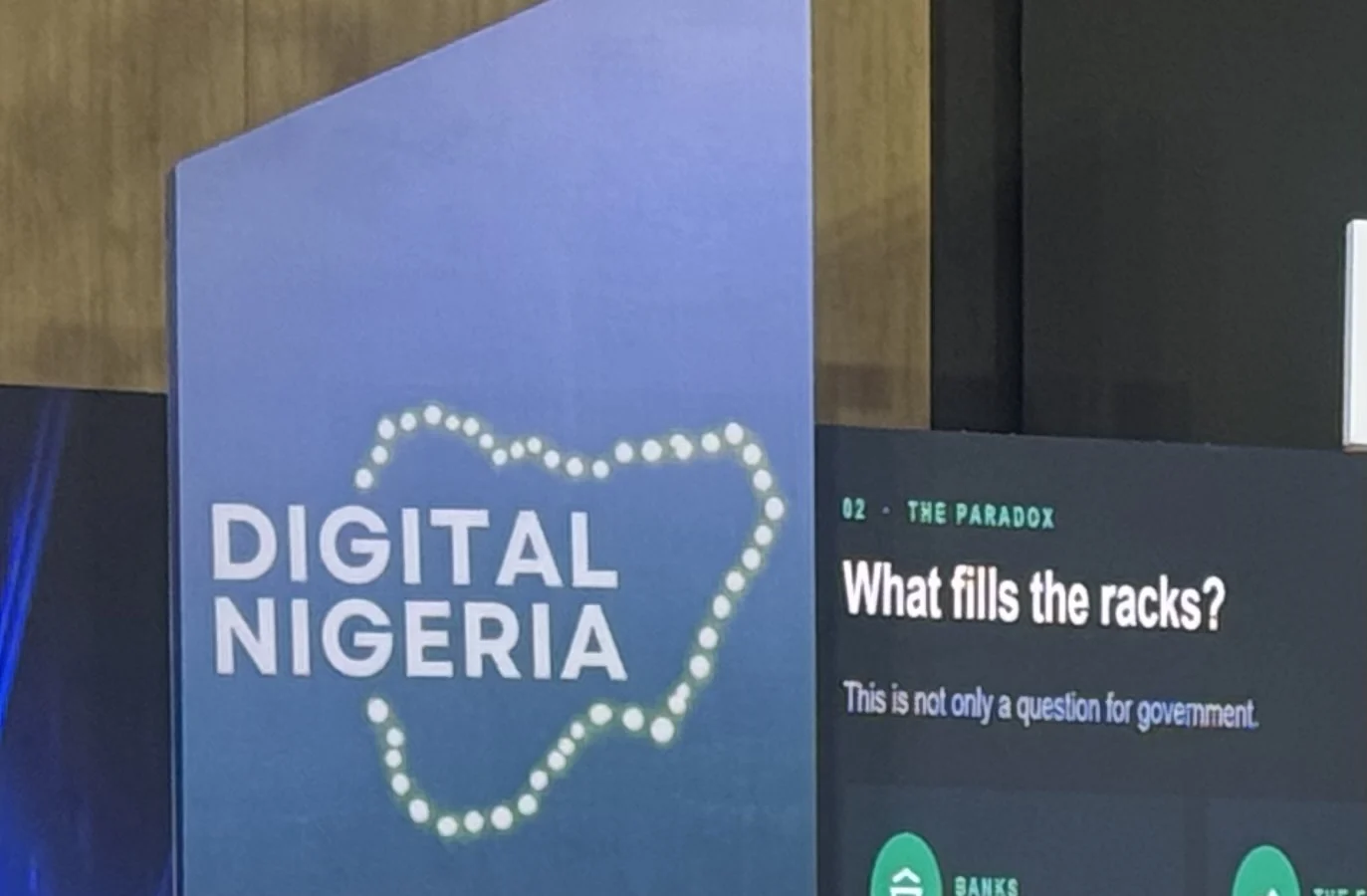
The expert, speaking on “Beyond the Racks: Turning Nigeria’s Sovereign Cloud into a Sovereign AI Economy”, said AI stack would strengthen data ownership and drive the country’s digital economy.
He noted that the country had made significant investments in data centre infrastructure, but needed to focus on the software platforms and applications that would make the facilities productive.
According to him, Nigeria has more than 20 data centres, making it the second-largest data centre market in Africa after South Africa.
He however, said that in spite of the available infrastructure, more than 90 per cent of Nigeria’s data was still hosted outside the country, while annual offshore cloud spending was estimated at 850 million dollars.
“We have built the racks, but the workloads have not come on. The question is, why do the workloads stay away?
“When a government agency goes to a local data centre today, mostly what it gets is a virtual machine, an empty rack or an empty container.
“Everything that makes that server useful, including the data platform, AI models, security operations and applications, has to be built by the agency itself or sourced from foreign service providers,” he said.
Orakzai explained that a functional sovereign cloud required five interconnected layers; hosting infrastructure, data platforms, security operations, AI models and applications.
He said Nigeria had made considerable progress in the hosting infrastructure layer, but needed to develop the remaining four layers to ensure that data and digital services remained under local control.
According to him, data sovereignty is not determined solely by the physical location of servers but also by who controls the software and platforms through which data is accessed and processed.
The Digifloat CEO also highlighted the financial implications of foreign cloud dependence, noting that exchange rate fluctuations had significantly increased the cost of technology contracts.
According to him, a sovereign technology platform priced in Naira would help protect government and private-sector technology budgets against foreign exchange volatility.
Orakzai identified the Central Bank of Nigeria’s directive requiring local hosting of payment data from Jan. 1, 2027, as an important opportunity to accelerate the adoption of local digital infrastructure.
He also disclosed that more than two billion dollars in data centre investments were expected in Nigeria through 2027, stressing that such investments required sufficient workloads to guarantee returns.
He said a shared sovereign AI platform would enable government agencies to access common data, security and AI infrastructure rather than independently investing in separate systems.
He however, cautioned against attempting to develop every technology from scratch, saying Nigeria needed a hybrid strategy that combined locally developed solutions, imported sovereign systems and licenced software.
Orakzai stressed the need to train Nigerian engineers to operate and maintain the platforms to ensure that the model could be replicated across other data centres.
“Let’s not build another data centre. Nigeria already has data centres. Instead, we need a sovereign AI stack that sits on top of them.
“Let’s fill those facilities with data that works for Nigerians, intelligence built in Nigeria, bills paid in Naira, hosted in Nigeria, and powered in Nigeria. Let’s go beyond the racks,” he said.(NAN)
Edited by Deborah Coker

Comments