


By Catherine Egwuom
Dr Efunbo Dosekun, Chief Executive Officer, Outreach Hospital Group, says innovation and empathy can improve healthcare delivery.
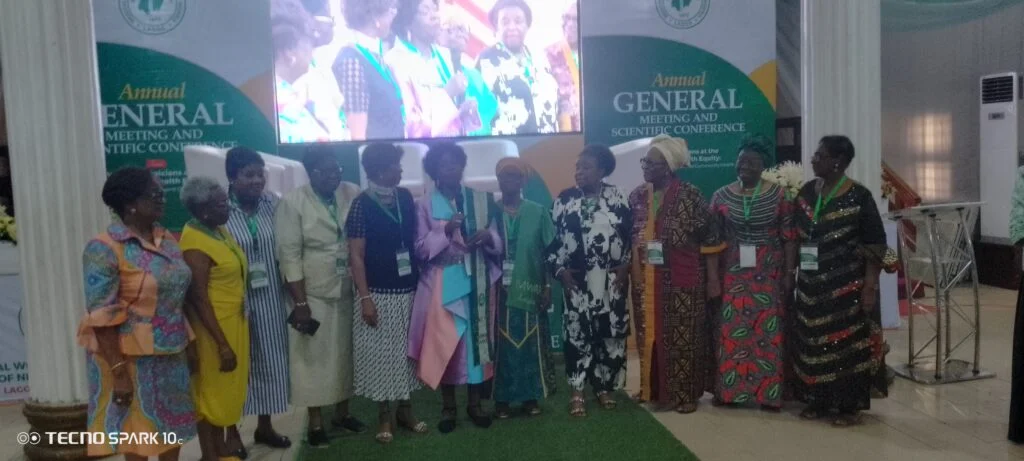
She disclosed this during a panel session at the 2026 Medical Women’s Association of Nigeria (MWAN), Lagos State Chapter, conference in Ikeja on Wednesday.
The theme of the panel session is “Transforming Healthcare Through Innovation and Using Artificial Intelligence to Improve Healthcare Delivery”.
The founder said that her hospital established a 100-bed neonatal unit in Kano to address the high neonatal mortality rate in the state, opening within six months.
Dosekun said that the facility had attended to 3,600 newborns in six months, recording a 93.6 per cent survival rate.
“We only look after preterm babies and sick babies that are outborn,” she said, explaining the hospital’s focus on vulnerable newborns.
She said the facility provided accommodation for mothers and organised care through specialised wards for sepsis, jaundice, HIV, preterm babies and other conditions.
“Empathy is not a technology, but it is a strategy for engagement,” Dosekun added, highlighting the importance of compassionate care.
She said that nurses also triaged patients and prioritised critically ill babies for emergency care, resuscitation and stabilisation.
Speaking on using artificial intelligence to improve healthcare delivery, Dr Adebanke Odunsi, Head, Digital Health, Lagos State Ministry of Health, said technology must be designed around the needs and circumstances of intended users.
She said that healthcare technology should be affordable, accessible and simple enough for people with limited education and internet connectivity to use effectively.
Odunsi said that mobile phones could be used to send pregnant women and mothers text messages and WhatsApp reminders about antenatal appointments and child immunisation.
She said that technology could also educate community health workers, strengthening healthcare delivery at the grassroots and improving maternal and child health services.
She emphasised the need for effective referral systems to transfer patients from primary healthcare centres to bigger facilities offering advanced services such as telemedicine.
“If your technology doesn’t speak to the people that need to use it, then it’s a big waste,” she said.
Adding her perspective in an interview with the News Agency of Nigeria (NAN) a public health expert, Prof. Kikelomo Wright, said digital technology could improve maternal healthcare through pregnancy tracking and monitoring.
Wright, Professor of Community Medicine, Lagos State University College of Medicine, said that mobile phones could help healthcare workers track pregnant women, particularly those lost to follow-up, and ensure high-risk pregnancies were linked to appropriate healthcare facilities.
“Through mobile phones, we can track them, monitor them and continue to reach out to them to ensure that pregnancies that are at risk are linked to care,” she said.
Wright said that drones could also be used to deliver blood to hospitals during emergencies, particularly cases of postpartum haemorrhage, to improve timely access to treatment.
She said that telemedicine could support healthcare workers in hard-to-reach communities through remote guidance, virtual training and consultations during medical emergencies.
According to her, there is need to use digital platforms to monitor antenatal attendance, assess pregnant women’s health conditions and classify pregnancies as high-risk or low-risk.(NAN)
==========
Edited by Olawunmi Ashafa


Comments