


By Franca Ofili
The Federal Government has endorsed a nationwide youth peace dialogue competition aimed at promoting peaceful elections, strengthening democratic participation and addressing insecurity through constructive engagement nationwide.
The initiative, organised by the Idimuwem Peace and Governance Initiative (IPGI), will engage young Nigerians in discussions on peacebuilding, conflict prevention and responsible citizenship across the country.
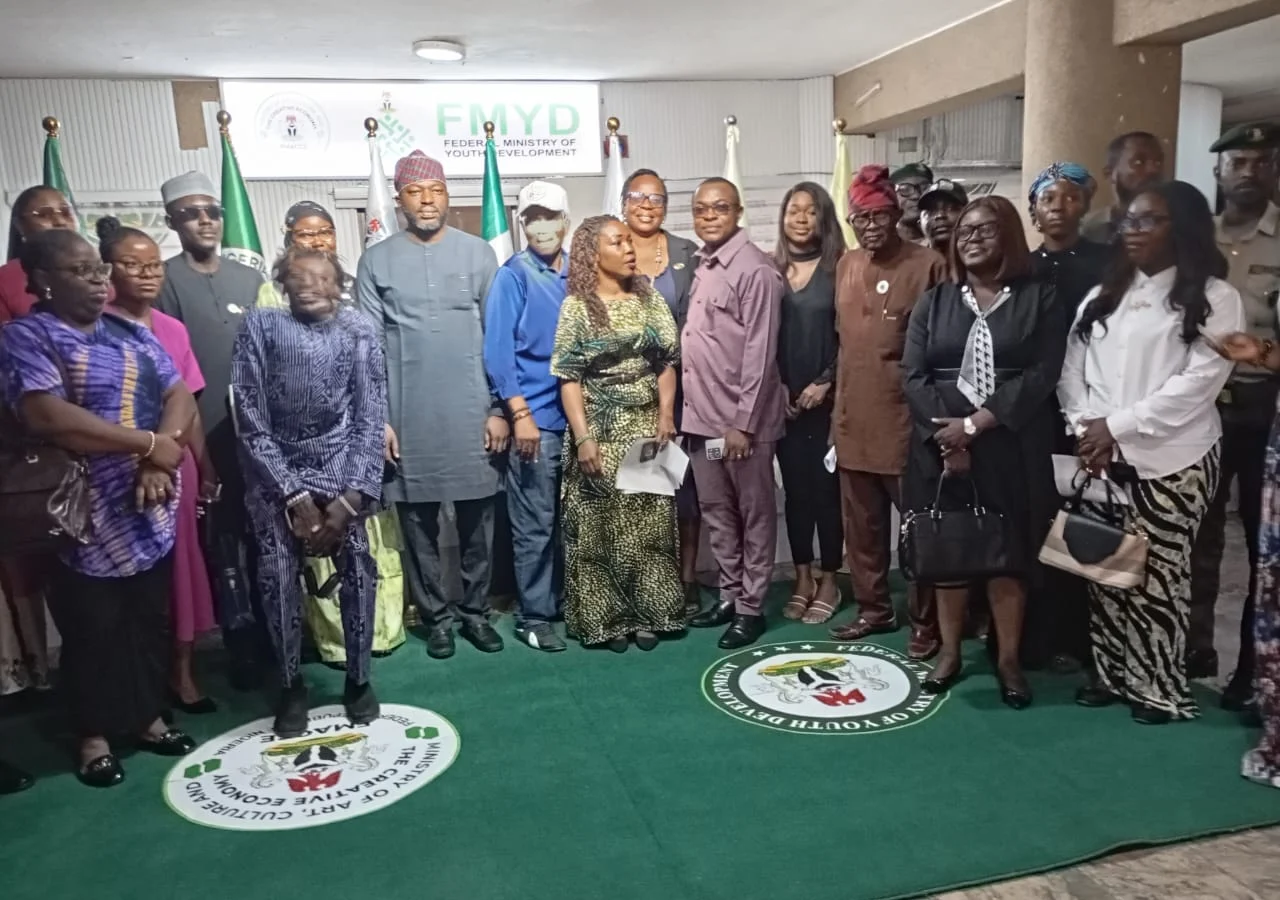
The Minister of Youth Development, Mr Ayodele Olawande, expressed the government’s support on Thursday in Abuja at the official unveiling of the 2026 National Peace Dialogue Competition.
Olawande, represented by Mr Oyekan Adedoyin, Head of Department, Youth Migration and Climate Action Resilience in the ministry, described the initiative as timely and important.
He said Nigeria’s complex peace and security challenges required collective action and the active involvement of young people in building lasting peace across communities nationwide.
“The competition will engage Nigerians aged 18 to 35 across the 36 states and the Federal Capital Territory (FCT),” he said.
He said the competition would provide a platform for discussions on peace, security, conflict prevention, responsible citizenship and democratic participation among young Nigerians from diverse backgrounds.
The minister said young people should not be seen merely as beneficiaries of peace and security interventions, but as critical stakeholders and agents of positive social transformation.
He commended the initiative’s non-partisan and inclusive approach, emphasising that peacebuilding should transcend political affiliations, religious beliefs, ethnic identities and geographical differences across the country.
Olawande urged the organisers to ensure transparency and fairness in the selection process, while adequately considering young women, persons with disabilities, out-of-school youths and other underrepresented groups.
He also called for sustainable partnerships with government institutions, educational establishments, traditional and religious leaders, development partners and youth-focused civil society organisations to strengthen the initiative’s impact.
According to him, the competition’s success should be measured by the quality of conversations generated, relationships built across social divides and conflicts prevented in participating communities.
He added that the implementation of practical peacebuilding initiatives in communities should also form part of the assessment of the competition’s overall impact nationwide.
Also speaking, the competition’s Coordinator, Ms Uduak-Abasi Akpabio, said the initiative was designed to equip young Nigerians with practical dialogue skills through experiential learning and participation.
Akpabio said participants in each state would organise dialogue sessions and produce outcome documents containing three major components to guide action by stakeholders and young people.
She listed the components as expectations of electoral and political actors, young people’s commitments to peace and credible elections, and strategies for translating both into action.
She explained that the documents would form the basis for assessing participating states, with emphasis on the practicality, measurability and achievability of proposed solutions and commitments.
“We want our young people to understand what they can do and identify little things that are achievable. Little things that are doable are equally valuable,” she said.
Akpabio said the nationwide dialogue sessions were expected to hold in the second week of December, bringing young people together to discuss peace and elections.
She added that the organisers had established partnerships with the Federal Ministry of Youth Development, the Institute for Peace and Conflict Resolution, the Nigerian Youth Parliament and other organisations nationwide.
According to her, the initiative builds on IPGI’s previous peace competition programmes, including peace storytelling and peace art competitions, aimed at promoting peaceful coexistence and unity in diversity.
In his remarks, the Chairman of IPGI’s Board of Trustees, Mr Bayo Omole, said the organisation initiated the programme because young people constituted a significant proportion of Nigeria’s population.
Omole said that young people were often at the forefront of conflicts and agitations, making their involvement in peacebuilding particularly important for national stability and development.
He said peace was fundamental to economic development, noting that insecurity and communal unrest had disrupted economic activities, particularly agriculture, in several parts of the country.
He emphasised that peace should be cultivated as a way of life rather than treated as a one-off event, adding that constructive dialogue remained a better alternative to violence.
Also speaking, Mr Taofik Hussain, representative of the Institute for Peace and Conflict Resolution, expressed support for the initiative and its focus on youth engagement.
Hussain said early engagement of young people in peace education was important to building a peaceful society and strengthening their capacity to resolve disagreements constructively.
He said the institute recognised programmes that helped young Nigerians understand the value of peace and its implications for national development and peaceful coexistence.
The competition is expected to strengthen young people’s capacity to engage constructively on political and electoral issues while promoting peaceful coexistence in their communities across Nigeria.(NAN)
Edited by Abiemwense Moru

Comments