


By Jessica Dogo
The Centre for Journalism Innovation and Development (CJID) and some other stakeholders have called for responsible use of Artificial Intelligence (AI) and stronger media institutions.
They also called for sustainable journalism funding to protect democracy in Africa.
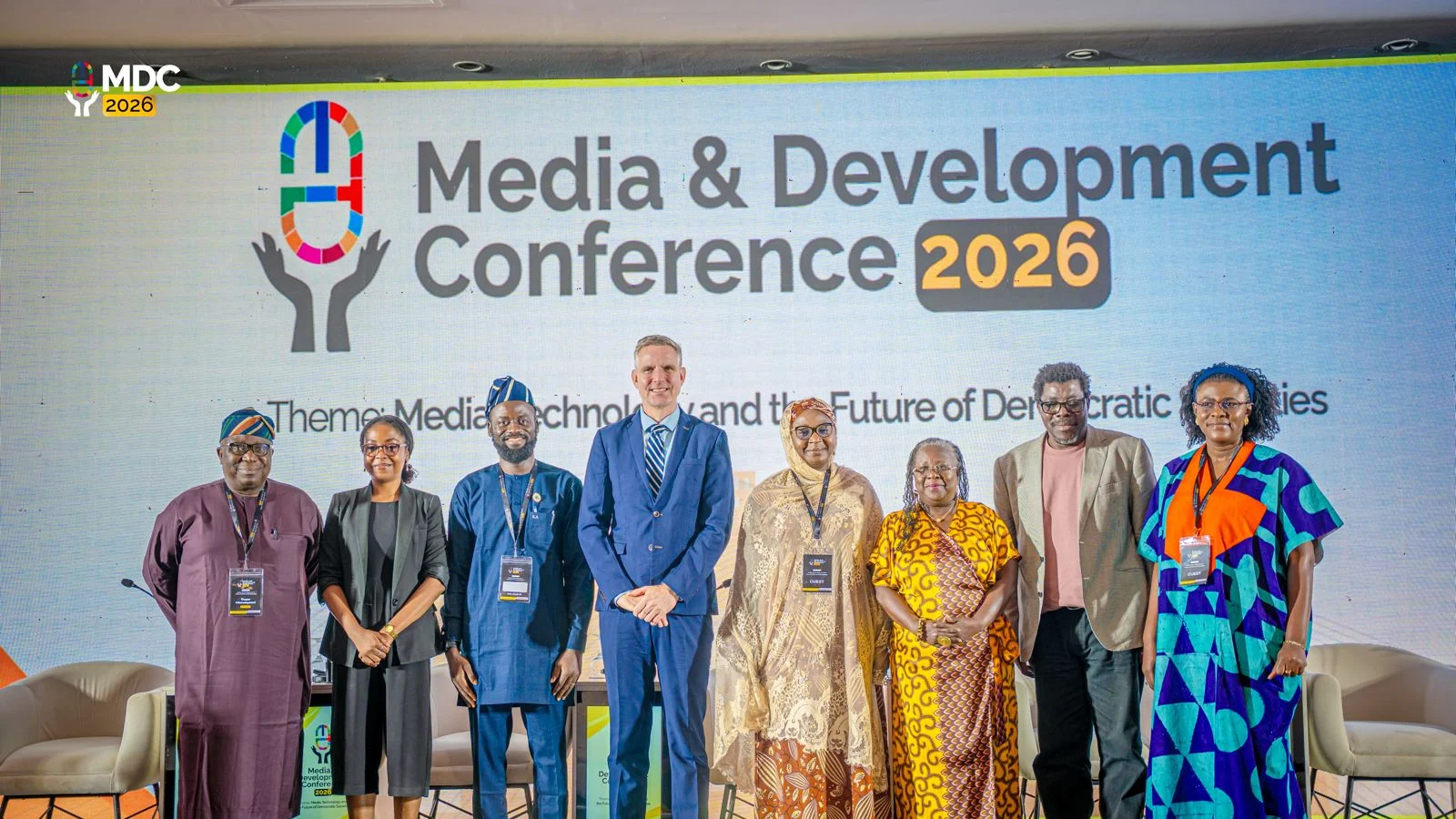
They made the call on Monday in Abuja, at the 2026 Media and Development Conference (MDC), where discussions focused on journalism, technology, democratic governance and the impact of AI on the media landscape.
The theme of the conference was, “Media, Technology and the Future of Democratic Societies”.
In his welcome address, the Chief Executive Officer (CEO) of CJID, Dapo Olorunyomi, described journalism as an essential democratic infrastructure rather than merely a commercial enterprise.
Olorunyomi said independent journalism played a critical role in preserving national history, promoting accountability and providing citizens with credible information to participate in democratic processes.
He expressed concern over laws purportedly designed to combat misinformation in some West African countries, but increasingly used to suppress criticism and restrict freedom of expression.
He said that vaguely defined offences, disproportionate penalties and excessive executive powers to remove online content could create fear, encourage self-censorship and discourage investigative journalism.
Olorunyomi said that the regulations addressing digital harms must be necessary, proportionate, transparent and consistent with fundamental human rights, while enforcement should be subject to independent oversight and judicial review.
He called for stronger media institutions supported by credible internal policies, sustainable revenue models and professional development opportunities for young journalists.
He urged media organisations to move beyond dependence on short-term development projects and build lasting institutional capacity that would enable them to survive beyond external funding.
On AI, Olorunyomi said the technology offered opportunities for journalism through transcription, translation, data analysis and investigations into public expenditure.
He, however, warned against its potential to generate misinformation and reproduce existing inequalities.
He urged newsrooms to establish clear editorial policies on AI-generated content, ensure rigorous verification, protect confidential sources and uphold professional integrity.
In his remarks, Ronald Sonnemans, Deputy Ambassador of the Netherlands to Nigeria, said journalists globally faced increasing pressure, including harassment, threats, imprisonment and killings for performing their duties.
Sonnemans described journalism as the oxygen of democracy, adding that without free and credible information, democratic institutions gradually lost their ability to hold leaders accountable and sustain public trust.
He said that AI could help smaller newsrooms analyse large volumes of documents, support fact-checking and translate stories into local languages.
He warned against the misuse of AI to generate fake images, cloned voices and fabricated stories.
The envoy reaffirmed the Netherlands’ commitment to supporting press freedom through journalist training, dialogue platforms, innovative tools and research in partnership with organisations such as CJID.
Also speaking, Dr Kole Shettima, African Director of the MacArthur Foundation, described journalism as indispensable to functional democracy.
Shettima, who was represented by the Deputy Director MacArthur Foundation, Amina Salihu, said that citizens must not only receive credible information but also use it to engage government.
He urged development partners to support media organisations in ways that protected editorial independence while providing flexibility to respond to emerging challenges.
He expressed concern over limited awareness of Nigeria’s National AI strategy, urging journalists and media organisations to understand emerging policies and actively participate in technology and governance discussions.
According to him, the MacArthur Foundation’s priorities for the next five years includ young people, prosperity and ensuring that technology create opportunities accessible to all, while warning that unequal access could deepen existing social divisions.
He called for stronger collaboration among African journalists, researchers, policymakers and technology stakeholders.
He said that the continent must move beyond being merely a source of data to actively shaping and benefiting from the global digital economy.(NAN)
Edited by Kadiri Abdulrahman



Comments