


By Perpetua Onuegbu
Stakeholders have urged the Federal Government to prioritise asset recovery and strengthen the implementation of the Proceeds of Crime Act (POCA) 2022 ahead of international evaluations.
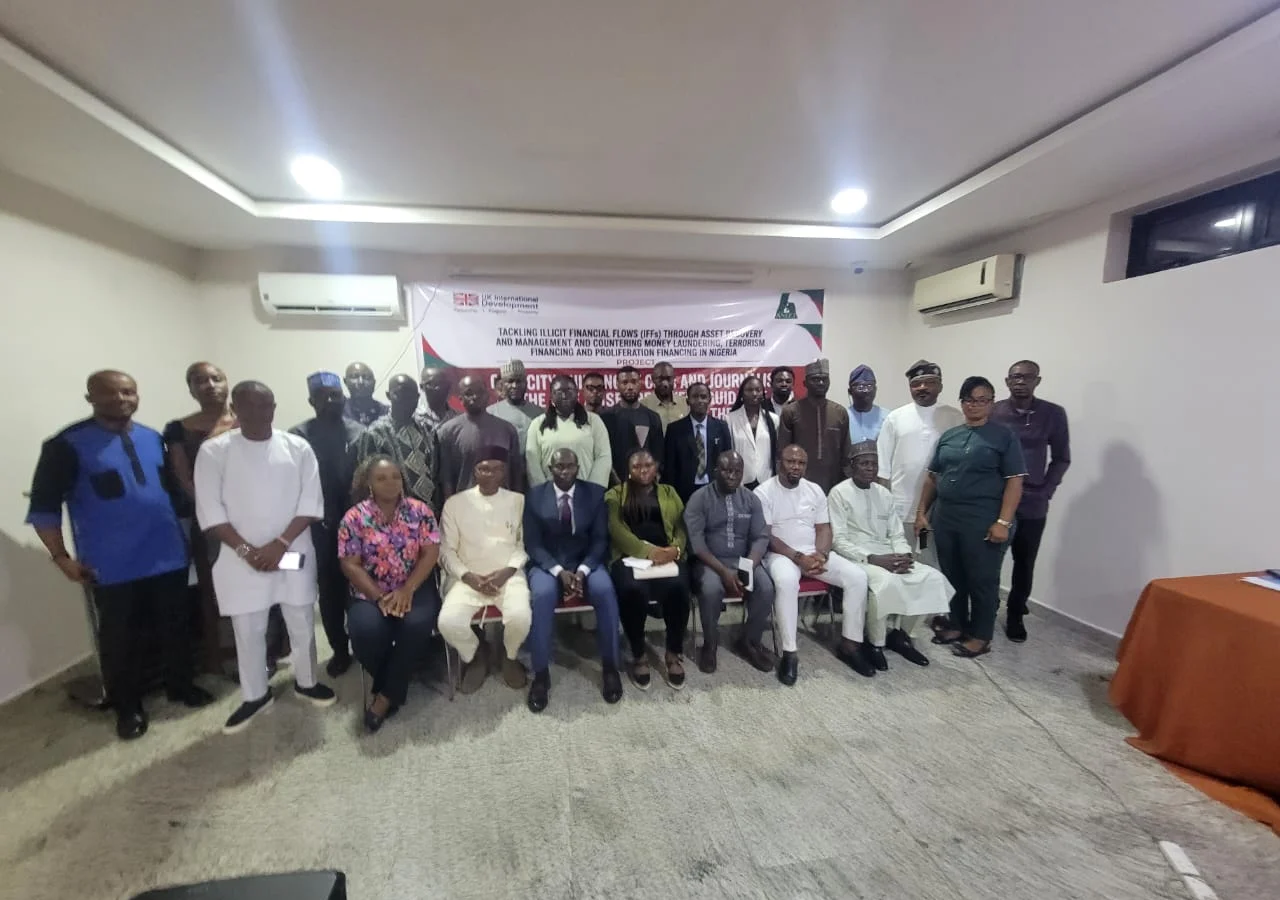
The call was made in Abuja on Tuesday at a workshop organised by the Africa Network for Environment and Economic Justice (ANEEJ), with support from the United Kingdom’s Foreign, Commonwealth and Development Office (FCDO).
Speaking at the event, ANEEJ Executive Director, David Ugolor, said Nigeria lost huge public resources to corruption, money laundering and illicit financial flows, which must be recovered for citizens.
He explained that the Financial Action Task Force (FATF) issued comprehensive asset recovery guidelines in November 2025, requiring countries to demonstrate measurable results in tracing and confiscating stolen assets.
Ugolor stressed that meeting global standards was not the responsibility of government alone, urging civil society organisations and journalists to monitor performance and advocate necessary reforms.
“We are using the FATF guidelines to evaluate what is going on in Nigeria, particularly the Proceeds of Crime Act, which is the legal framework for Nigerian asset recovery.
“The whole aim of this workshop is that we want to bring the knowledge to both journalists and civil society so that they can raise awareness.
“In that process, they can generate political support for reforms where required.
“Where political support is required to empower law enforcement agencies mentioned in the Proceeds of Crime Act, like EFCC, ICPC and other relevant agencies, they can begin to push the fight.
“The absence of this law would have put us in more mess. Now that the Nigerian Government is preparing for future evaluation next year, this is the better time for us to get prepared,” Ugolor said.
He also described the election of the ICPC chairman to lead the African Asset Recovery Practitioners’ Forum as commendable.
“For 54 countries to come together to elect Nigeria as the chairman, that’s an endorsement of our anti-corruption crusade. It indicates that we’re doing well,” he said.
Speaking on the benefits of recovered assets to citizens, Ugolor said proceeds recovered from the Abacha loot had supported cash transfers to more than two million poor Nigerians.
He also cited the recovery of 311 million dollars from the United States, which funded three projects, including the Abuja-Kano and Lagos-Ibadan roads and the Second Niger Bridge.
The ANEEJ executive director said another one million dollars recovered from former Bayelsa Governor Diepreye Alamieyeseigha would support the construction of eight primary healthcare centres.
He said the facilities would be built across eight local government areas.
The Chairman of the Independent Corrupt Practices and Other Related Offences Commission (ICPC), Dr Musa Aliyu, commended ANEEJ and its partners for organising the workshop.
Aliyu, represented by the Head of Assets Disposal, ICPC, Adamu Baba, highlighted Nigeria’s POCA 2022 and global Financial Investigation and Enforcement Guidelines (FiDEF).
He emphasised proactive asset freezing, proper management, transparent disposal and the need to overcome enforcement challenges through strong inter-agency collaboration.
The ICPC chairman urged journalists and civil society organisations to promote transparency, noting that effective asset recovery builds public trust and delivers economic justice to Nigerians.
Also speaking, the representative of the Foreign, Commonwealth and Development Office, Anicetus Atakpu, said the workshop provided an important opportunity for Nigeria to strengthen its asset recovery framework.
He said the framework required greater effectiveness, transparency and accountability.
“As Nigeria consolidates its gains following its exit from the FATF grey list, the focus must now shift towards sustaining implementation, institutional coordination and measurable results.
“Civil society organisations and the media have critical roles to play in promoting transparency, strengthening public accountability and ensuring that recovered assets deliver tangible benefits to citizens.
“The British High Commission remains committed to supporting Nigeria’s efforts to strengthen its illicit financial resilience and advance international best practices in asset recovery,” he said.
Journalists from broadcast and print media, civil society organisations and government officials attended the workshop.
Representatives of the ICPC, Economic and Financial Crimes Commission (EFCC), Police and Open Government Partnership (OGP) National Secretariat were also present. (NAN)
Edited by Grace Alegba


Comments