


By Aderogba George
The International Institute for Democracy and Electoral Assistance (International IDEA) has pledged continued support for Nigeria’s efforts to strengthen child protection legislation and address gaps in the Child Rights Act.
The commitment is being implemented through the European Union (EU)-funded Support to End Sexual and Gender-Based Violence (ESGBV) Programme, which provides technical assistance for reforms to prevent and respond to violence against children.
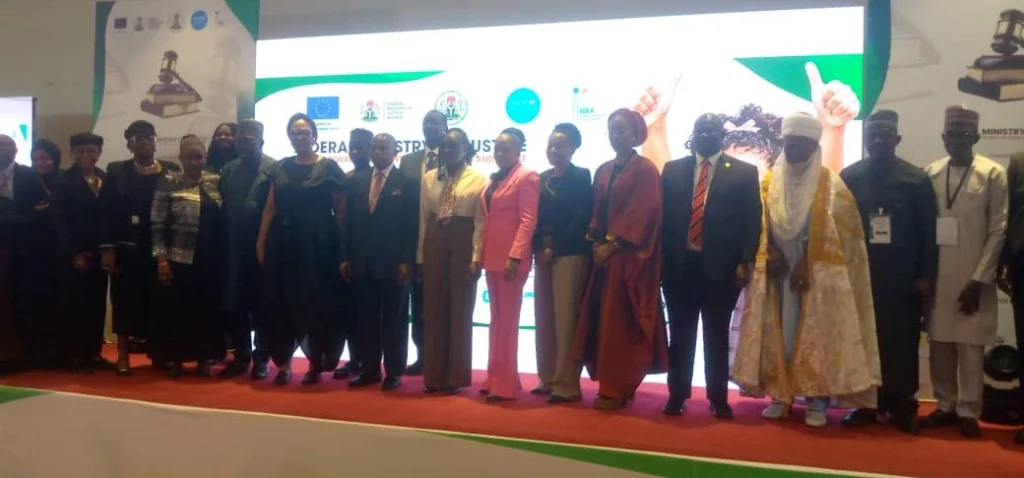
Mr Danladi Plang, Head of Nigeria Programmes, International IDEA, made the pledge at a validation workshop on the draft Child Rights Act (Amendment) Bill, 2023, on Tuesday in Abuja.
Plang said the review was necessary to update the legislation to reflect changing social realities, technological developments and emerging threats to children.
He said International IDEA supported the Federal Ministry of Justice in bringing stakeholders together to ensure inclusive consultations and national ownership of the proposed amendments.
He said the organisation provided technical guidance, including legislative approaches from other countries, without imposing its preferred provisions on Nigeria.
According to him, the review committee incorporated a substantial number of the organisation’s recommendations to strengthen child protection.
He said the proposed amendments covered prevention, safeguarding, reporting, investigation, victim support, confidentiality and accountability, beyond criminalising offences.
The proposed reforms include stronger protection against rape and other sexual offences, as well as new prohibitions addressing child sexual exploitation, grooming and abuse.
Other measures include mandatory reporting, protection for individuals reporting suspected abuse in good faith and specialised child-friendly investigation procedures.
The draft Bill also proposes improved access to medical, psychosocial and legal support for child victims, alongside safeguarding obligations for organisations working with children.
The Attorney-General of the Federation and Minister of Justice, Mr Lateef Fagbemi, said the review aimed to bridge the gap between children’s legal rights and their actual experiences.
Fagbemi, who delivered the keynote address, said the process involved a National Review Committee, five thematic groups and a technical committee, alongside nationwide stakeholder consultations.
He said the proposed amendments would strengthen protection against abuse, exploitation, neglect, trafficking, harmful traditional practices and emerging risks in digital environments.
The minister said the review also sought to improve child justice administration through legal aid, diversion, restorative justice, rehabilitation and reintegration.
He emphasised that detention of children should remain a measure of last resort and be imposed for the shortest appropriate period.
Meanwhile, the Minister of Women Affairs, Hajia Imaan Sulaiman-Ibrahim, said President Bola Tinubu had approved the establishment of a proposed National Child Protection Agency.
Sulaiman-Ibrahim, represented by Mr Ali Madugu, Director of Child Development in the ministry, said the agency would strengthen coordination, monitoring and accountability in child protection interventions.
She said the ministry was working with relevant government institutions to prepare the agency’s Bill for presentation to the National Assembly as an Executive Bill.
The minister urged stakeholders to ensure that the proposed amendments clearly defined institutional responsibilities, strengthened enforcement and provided sustainable financing for child protection interventions.
Earlier, the Chairperson of the National Child Rights Act Review Committee, Justice Suzzette Nyesom-Wike, said the proposed amendments addressed cyberbullying, online exploitation and harmful digital content.
Nyesom-Wike, a Justice of the Court of Appeal, said the review also addressed implementation gaps relating to child marriage, betrothal, child labour, trafficking, abuse and neglect.
She said the committee, inaugurated on April 29, 2026, had worked with government institutions, the judiciary, civil society organisations and development partners.
She added that children’s participation had been incorporated into the review, with their views considered in developing the proposed amendments.
In her welcome address, Mrs Leticia Ayoola-Daniels, Director, Administration of Criminal Justice Reform Department, Federal Ministry of Justice, said the draft proposed banning corporal punishment in homes, schools, religious institutions and care settings.
She said it also provided for stronger penalties for female genital mutilation and expanded liability for individuals facilitating child marriage or betrothal.
The Child Rights Act was enacted in 2003 to provide a legal framework for protecting children’s rights and welfare in Nigeria.(NAN)
Edited by Abiemwense Moru




Comments