


By Millicent Ifeanyichukwu
The United Nations Children’s Fund (UNICEF) on Thursday described investment in children as critical infrastructure for economic transformation.
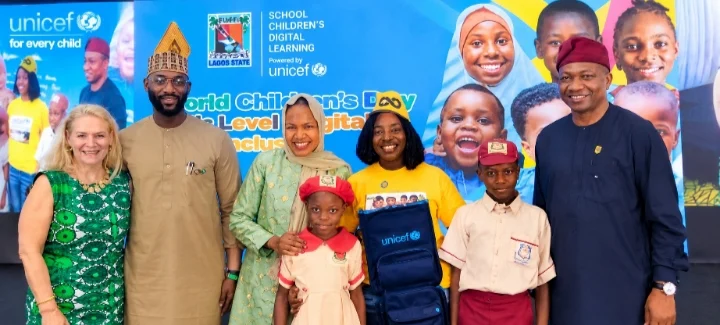
UNICEF Representative in Nigeria, Ms Wafaa Saeed, said this at the World Children’s Day 2026 Media Symposium, organised in partnership with the Nigerian Guild of Editors (NGE) and the Diamond Awards for Media Excellence (DAME) in Lagos.
Saeed said that Nigeria cannot achieve its ambition of becoming a one-trillion-dollar economy by 2030 without adequately investing in the children’s survival, health and education.
She said that Nigeria’s greatest asset was its people, adding that the foundation of the country’s future prosperity and competitiveness was being built through the lives of its children.
Citing the World Bank Human Capital Index, the representative said that Nigeria scored 0.36, meaning that a child born in the country could achieve only 36 per cent of their potential future productivity compared with what would be possible with full health and education.
“Investment in children is not simply a social expenditure. It is economic infrastructure. It is an investment in economic transformation, peace and stability,” she said.
Saeed said that under-five mortality had declined from 128 deaths per 1,000 live births in 2013 to 110 in 2023.
She, however, expressed concern that 40 per cent of children under five were stunted and nearly one in three children, aged 12 to 23 months had not received routine vaccinations.
Saeed also said that up to three in four children, aged seven to 14 lacked foundational reading or numeracy skills.
She urged the media to humanise statistics, sustain coverage of children’s issues throughout the year, highlight successful interventions and make the economic case for investment in children.
“Where a child is born should not determine whether that child lives or dies,” she said.
Earlier, Ms Lone Hvass, the Chief of Communication, Advocacy and Partnerships, UNICEF Nigeria, said that Nigeria’s future depended on decisions taken today to protect and invest in its children.
Hvass said that child survival, education and learning were interconnected, noting that children excluded from school were also denied opportunities for protection, participation and the realisation of their potential.
She urged journalists to move beyond occasional coverage of children’s issues to sustained reporting that connected individual experiences with broader challenges and followed up on government commitments.
“The media does much more than report on children’s issues. Media helps determine which issues receive public attention, which voices are heard, which assumptions are challenged, and which movements are followed through,” Hvass said.
She also stressed the importance of involving children and young people in decisions affecting them, saying that their views should shape policies and interventions.
The President of NGE, Mr Eze Anaba, described the number of out-of-school children in Nigeria as alarming and called for collective action to address the challenge.
Citing a UNICEF report indicating that 18.3 million Nigerian children were out of school, Anaba challenged government, community leaders, media organisations and the private sector to assess their contributions towards improving children’s welfare.
“In a country of over 200 million people, 18 million-plus of that population is on the streets, not going to school. It’s not only alarming; it’s a collective responsibility,” he said.
Anaba urged stakeholders to develop concrete action plans rather than limit discussions on children’s welfare to annual commemorations.
Also, the Trustee of DAME, Mr Lanre Idowu, said that the partnership among UNICEF, NGE and DAME, established in April 2024, aimed to use the media to advance children’s rights and welfare.
Idowu said that the collaboration had trained more than 300 journalists across Nigeria on child rights and ethical reporting.
He said that the training covered responsible reporting of children’s issues, protection of their privacy and dignity, informed consent and the need to avoid sensationalism when reporting vulnerable children.
The trustee added that DAME had expanded its child-focused awards from two categories to three, covering reporting, photography and media organisations.
He urged journalists to go beyond reporting events and statistics by conducting investigations, following up on commitments and holding institutions accountable for the welfare of children.
Idowu challenged the media to continually ask what had changed in the lives of children as a result of policies, programmes and interventions.
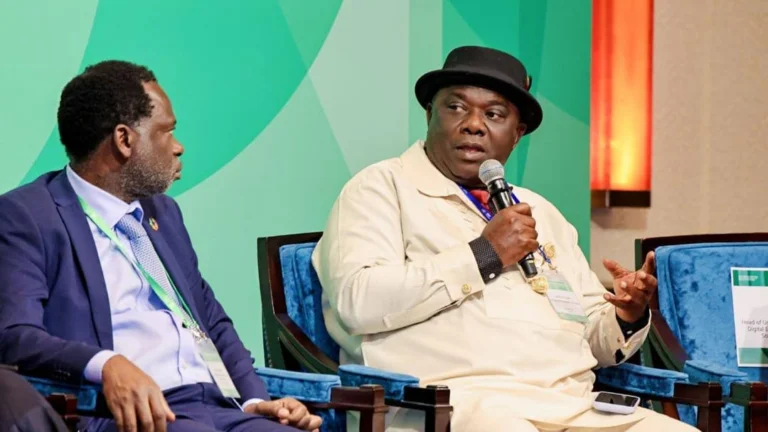
The symposium brought together government officials, media executives, development partners, private sector representatives, civil society organisations, parents and young people to deliberate on child survival, learning and development. (NAN)(NAN)
MIL/FON
========
Edited by Florence Onuegbu


Comments