


By Lucy Ogalue
Africa needs to close a financing gap of about 402.2 billion dollars annually by 2030 to fast-track its structural transformation.
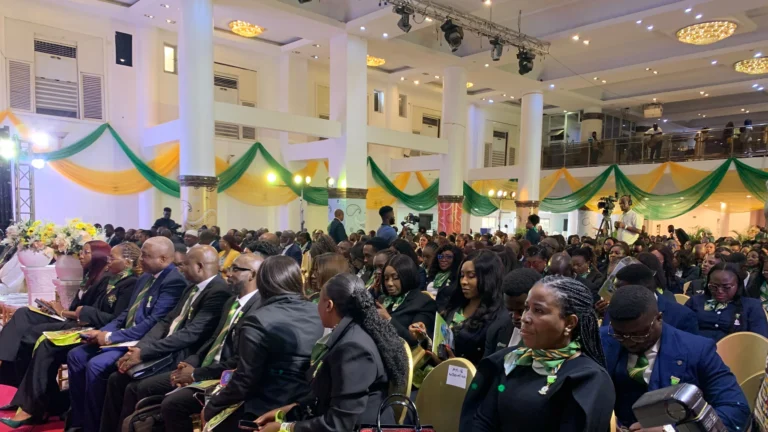
Dr Akinwumi Adesina, President, African Development Bank (AfDB), said this during the presentation of the African Economic Outlook (AEO) 2024 at the ongoing AfDB Annual Meetings in Nairobi.
“The report highlights the glaring inadequacies of the current global financial system in closing Africa’s financing gap for structural transformation, estimated at 402.2 billion dollars annually between now and 2030.
“To rectify these disparities, the report proposes a bold agenda for reforming the global financial architecture, including in the five following key areas,” Adesina said.
According to him, the AEO 2024 calls for overhauling the global financial architecture to transform African economies.
He said this included giving Africa a greater voice in Multilateral Development Banks (MDBs) and International Financial Institutions (IFI), reflecting its growing global gross domestic product share and rich natural resources.
Adesina said: “let us be clear. By seeking to transform the global financial architecture, Africa is just asking for a fair share of access and availability of resources to build on our vast economic opportunities.”
“The AEO advocates for greater private sector participation to complement public investments, particularly in areas with high social returns such as climate action and human capital development.
“The report calls for streamlining the global climate finance architecture to enhance coordination and facilitate access for African countries disproportionately affected by climate change.”
Adesina said the report urged MDBs to revise their business models to provide long-term concessional financing at scale to developing countries to bolster their capital positions.
“It urged the channelling of a portion of the IMF’s Special Drawing Rights (SDRs) to MDBs and ensured a healthy replenishment of the concessional windows of the AfDB, the World Bank, ADF and the International Development Association.
“Recognising the slow and cumbersome nature of existing debt resolution mechanisms, the African Economic Outlook advocates for reforms to expedite debt workouts.
“It said this will ensure sustainable debt management, including innovative market-based solutions like “Brady bonds,” debt relief for climate purposes, and sovereign debt authority systems,” he said.
Adesina said the report emphasised the importance of strengthening domestic revenue mobilisation through improved tax policies and enhanced government revenue collection and utilisation efficiency.
He reiterated the importance of combating illicit financial flows, tax avoidance, and leveraging Africa’s abundant natural resources.
“Domestic resource mobilisation is good, but so is the prudent use of such resources. Countries should, therefore, strengthen their capacity to improve public finance management.
“Every year, the African Economic Outlook report provides timely evidence and analysis crucial for African policymakers, empowering them to make informed decisions,” Adesina said.
For his part, the bank’s Vice President and Chief Economist, Prof. Kevin Urama, underscored why strategic policies and firm political commitment are key to effectively using resource wealth for domestic revenue generation.
Urama described hard infrastructure, including roads, railways, and bridges, and soft infrastructure, including knowledge and institutional governance capacity, as “two wings of an aircraft”.
He said: “investing in productive infrastructure is key to accelerating Africa’s structural transformation.
“Growth prospects vary across Africa’s regions, reflecting differences in economic structure, commodity dependence, and policies.” (NAN)(www.nannews.ng)
==========
Edited by Sadiya Hamza
Comments