


Skills in football become evident in a modest backyard playing area long before joining an academy. It may be enough to impress with some moves and passes, yet one’s natural skills need to be developed further. How coaches train their players, how they handle mistakes and analyze the game determines the way the game is perceived. In this case, the education of coaches becomes significant for every team, from local teams in Mauritania to professional teams competing all around the continent.
Passion for football goes far beyond the borders of training areas. While adults discuss statistics of football matches, make bets, or download Melbet (Arabic: تنزيل melbet) in order to watch entertainment sports online, coaches analyze these games, but for an entirely different purpose. Their job is to decipher what is going on behind players’ moves and actions and make effective drills on this basis.
Good Coaching Begins With Understanding Players
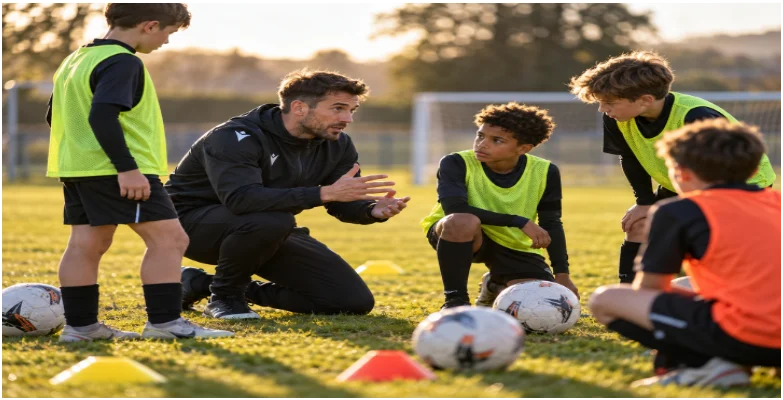
A former player can provide information about a certain skill through his own experience. When teaching the skill to a group of players, one should possess additional skills. The children develop differently; what is comprehensible for the teenager can cause confusion in a younger child. Training courses for coaches teach them to modify their language and teaching methods. Proper demonstrations and correcting players patiently make the training session entertaining but do not take its main sense away.
Playing football also unites adults when there is no official match schedule. After playing a local match, the people can talk about their favorite odds and play a video game. One may say, “Let’s play the Gates of Olympus slot game (Arabic: لعب لعبة سلوت Gates of Olympus).” These conversations become a part of their entertainment. The coach on the training ground engages the players in a different way – in an entertaining training process.
Education allows coaches to have a process to test the effectiveness of the exercises. They are no longer dependent on how tired people were after the session but rather on improved first touches or reaction time. An effective training program should have an objective and be open to adjustments based on players’ needs.
| Area of coaching | What education helps improve |
| Training design | Sessions with a clear learning purpose |
| Communication | Instructions suited to players’ ages |
| Match preparation | Decisions based on how opponents play |
| Player welfare | Safe practice and appropriate workloads |
| Feedback | Useful guidance after errors and success |
Turning Knowledge Into Daily Practice
Classes can be most effective when the teacher tries out his or her theories on the pitch. A coach can study how to teach a passing technique in class and carry out a possession activity with real players. Later on, an educator can talk about the decisions that were made during the practice. Doing this repeatedly develops experience that cannot be learned from books.
Another good instructor always knows how not to talk too much. When playing a game with reduced numbers, players should have time to discover spaces and find solutions. A coach can stop the play, ask a quick question, and allow the game to go on. The goal is to develop independent thinkers on the football pitch.
Youth Football Needs Age-Appropriate Teaching
Different young athletes have different levels of development. Some young people can play the ball properly but will have problems positioning themselves. There are those who understand spaces but cannot pass the ball in the right way. The qualified coach knows how to identify these differences and provide challenges that the young athletes can take up.
A youth session can include several simple teaching choices:
- Begin with ball play to start the session with fast action.
- Divide into smaller groups to ensure that each child gets many touches.
- Provide quick feedback on a single skill.
- End with a game allowing players to use their skills.
Protecting Players While Building Confidence
Coaching children is not just about technique. The coach needs to identify symptoms of tiredness, keep physical contact safe, and be respectful at all times. The coach also needs clear guidelines on how to deal with the case of a child raising an issue. The importance of appropriate training of adults working with young football players is emphasized in the FIFA guidelines regarding safeguarding.
Trust develops because players feel comfortable enough to ask questions. Not making the pass becomes an experience without the embarrassment of failure. Coaches should recognize good decisions regardless of whether the ball was passed. Slowly, the youth athlete learns how to take criticism constructively and accepts personal responsibility for improvement.
Mauritania Is Building Its Own Coaching Pathway
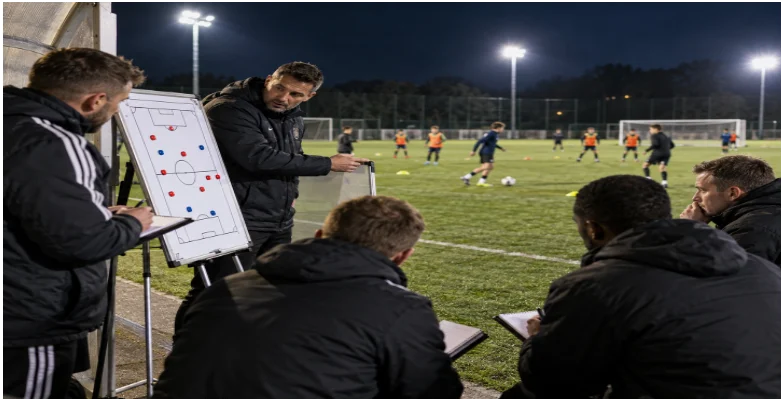
There is an excellent case study of Mauritania in this context. The Mauritanian Football Federation, called FFRIM, has tried to develop coaching credentials through its technical department. In July 2026, they arranged the opening modules of a CAF C license training that was partially intended for former international players as well as aspiring coaches. Their experience of playing football can be utilized to make the process of teaching more structured.
In addition, in February 2025, the FIFA Talent Academy was launched in Nouakchott, Mauritania. This initiative integrates the aspects of player development and education/coaching. The FIFA talent coaches assist in making sure that the knowledge stays inside the country’s football system. Of course, a modern training facility makes a difference, but the daily quality of coaching defines how much the players benefit from it.
Making Education Available Beyond the Capital
The development of football in Mauritania cannot continue in the same way; coaches have to operate in places other than Nouakchott. Coaches will be needed in clubs of Nouadhibou and smaller localities as well. Workshops and mentorship locally can help make training more accessible. The regional coach must be able to benefit from training without being away from the team for long periods.
Practical support can take several forms:
- Workshops that focus on training issues.
- Visits by mentors where the teachers observe local classes.
- Lesson plans that the coaches can modify depending on what pitches are available.
- Feedback sessions between club and academy personnel.
Also, access is necessary for women who wish to become coaches. It is beneficial to have more female trainers, as this can enable girls to find appropriate platforms to participate in football. Education programs should make it easier for individuals to access and progress through the process. Each individual who becomes a coach can pass along good practices to another school or community.
Clubs Improve When Coaches Learn Together
An educated coach can contribute to a team’s performance. An association of such coaches who exchange their views can positively impact the whole club. As young and senior trainers exchange their views about their method of teaching players to pass and defend space, the players come across the same concepts when they move up through the age brackets.
Reviewing Matches With a Clear Purpose
Cooperation can be facilitated by video analysis and simple notes. Following a game, the coach should select one pattern that needs to be worked on, for instance, bad spacing during attacks. This problem can be solved during the next practice session using a game approach. High-tech equipment is not necessarily needed. All that is needed is good observation and frank discussion.
The coaches must also learn after gaining the certificate. Football strategy evolves, while new studies bring fresh concepts regarding physical fitness and recovery. Courses serve as a starting point. Through observations, discussions with fellow coaches, and working with various age groups, instructors are able to develop their teaching methods independently of fashion trends.
Stronger Coaches Shape the Next Generation
The importance of coaching education is realized through normal activities. The child gets to know the need for a scan before getting the ball. The local team is now able to move more with purpose. Every outcome starts with the coach who can convert theory into practice. In relation to Mauritania, the significance of this is that they are developing people who will fill the gap between grassroots enthusiasm and better academies. The infrastructure and competitions provide the opportunity for football to be nurtured.