


Why Mobile Entertainment Continues to Outgrow Traditional Media
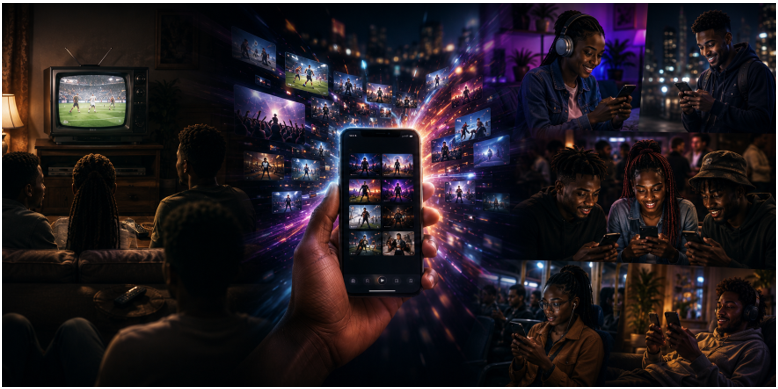
Television used to dictate when people watched something. A show aired at a set time, and if you missed it, you waited for a repeat. That world barely exists anymore, and smartphones are the main reason why.
Across Africa, mobile devices have become the primary screen for entertainment, not a secondary option squeezed in between TV sessions. Understanding why requires looking at how habits, expectations, and access have all shifted together.
Mobile-First Generation
For a huge portion of internet users across the continent, a smartphone was their first connected device, arriving before a home computer or even reliable home internet. That order matters, because it shaped how people expect entertainment to work.
Traditional media assumed a household gathered around one screen at a scheduled time. Mobile entertainment flipped that assumption entirely. Each person now carries their own screen, their own schedule, and their own preferences, with no need to negotiate what plays next.
This shift happened faster than infrastructure planners expected. Falling smartphone prices and expanding mobile data coverage meant millions of users skipped desktop computing almost entirely, moving straight from no internet access to a fully mobile experience. Platforms like Pin Up grew directly out of this environment, built mobile-first rather than adapted from an older desktop model.
Content on Demand
The single biggest advantage mobile entertainment holds over traditional media is control. Users choose what to watch, play, or listen to, and when, rather than accepting whatever a broadcaster decided to air that evening.
This applies well beyond video streaming. Music, mobile games, sports highlights, and even live betting content now follow the same on-demand logic. A user opens an app, gets exactly what they came for, and closes it, without waiting through unrelated programming first.
Entertainment apps built around this expectation tend to perform best. The Pin-Up App, for example, lets users jump straight into the content or game they want without unnecessary friction, illustrating how mobile-first design now shapes user retention more than content volume alone.
A few patterns define successful on-demand platforms:
- Instant access: content loads immediately without forcing users through irrelevant menus first.
- Personalized recommendations: apps surface what a specific user is likely to want based on past behavior.
- Cross-device continuity: a session started on one device picks up seamlessly on another.
These features didn’t exist in traditional broadcasting, and their absence is exactly why appointment-based media has struggled to hold onto younger, mobile-first audiences.
User Expectations
Once people experience on-demand entertainment, going back to scheduled programming feels genuinely inconvenient. That shift in expectation has real consequences for any platform trying to compete for attention.
Load times matter enormously now. A user waiting more than a few seconds for content to appear will often close the app and try something else, since so many alternatives exist. That impatience wasn’t really a factor when television was the only realistic option.
Data costs also shape expectations differently across markets. Apps that manage bandwidth efficiently, offering lower-quality streaming options or offline downloads, tend to retain users better than those assuming unlimited high-speed data. This practical concern has pushed developers to prioritize efficiency alongside features.
Younger audiences in particular have grown up without ever depending on scheduled programming, which makes mobile-first platforms feel like the default rather than an alternative. That generational gap continues widening as older audiences gradually adopt similar habits. Mobile entertainment also benefits from built-in shareability, since a clip, highlight, or game moment can spread across social platforms within minutes, something traditional broadcast content struggles to replicate at the same speed.
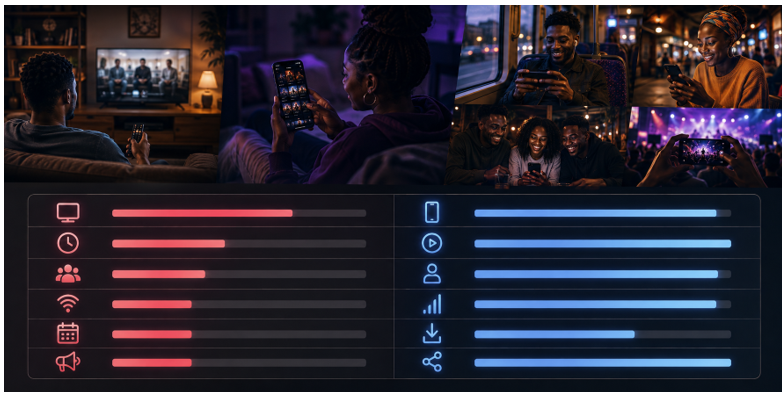
The table below compares core differences between traditional media habits and mobile entertainment habits observed across many markets.
| Factor | Traditional Media | Mobile Entertainment |
| Content timing | Fixed schedule | On-demand, anytime |
| Device ownership | Shared household screen | Individual, personal device |
| Content discovery | Programming guide | Algorithm-driven suggestions |
| Data sensitivity | Not applicable | High priority for many users |
That comparison explains why mobile entertainment platforms keep gaining ground even in markets where traditional broadcasters still have large existing audiences.
Future Growth
Mobile entertainment isn’t close to plateauing. Expanding 4G and 5G coverage across more African cities will keep improving load times and streaming quality, narrowing the gap between flagship and budget devices.
Operators are adjusting their offerings as connectivity improves, betting that richer, faster mobile experiences will keep pulling users away from traditional formats rather than supplementing them. Local content production is also expanding to meet mobile-first demand specifically, rather than repurposing content originally built for television.
That shift toward mobile-native content, built with vertical screens and shorter attention spans in mind, is likely to accelerate as more creators recognize where their audience actually spends time. Services such as PinUp are a clear example of that broader industry direction.
Conclusion
In conclusion, mobile entertainment continues outgrowing traditional media because it matches how people actually want to consume content: on their own schedule, on their own device, without unnecessary friction. As mobile-first platforms keep refining that experience, the gap between mobile entertainment and traditional broadcasting is likely to keep widening throughout 2026 and beyond.