


The arrival of aerial birds is the best testament to a city’s ecological health. Today, Xi’an, Shaanxi boasts clear rivers and lakes and lush vegetation, and the increasingly improved ecological environment has attracted many birds to settle here. These small birds flitting among waterways and forests bear witness to the gradual changes in the environment of this ancient capital. Through their presence, we can see the tangible results of ecological protection in Xi’an.
Egret
The egret is a kind of state-protected “three-value” wildlife and a representative water bird in the river, lake, and wetland areas in Xi’an. Adult egrets measure 55–65 cm in length and typically inhabit urban waterfront shallow areas such as the Weihe River, the Chanba Wetland, and the moat around the City Wall. Highly sensitive to the environment, egrets prefer places with clean water and less human disturbance. Their stable settlement directly reflects the success of Xi’an in water environment governance and wetland restoration.
Diurnal by nature, egrets often stand alone or in small flocks in shallow areas to prey on fish, shrimps, and aquatic insects. They are agile and highly vigilant. Noise, water pollution, and the destruction of tidal flats will all affect their habitat. Their stable reproduction in Xi’an indicates a healthy and improving local river, lake, and wetland ecosystem.

Red-billed Blue Magpie
The red-billed blue magpie is another kind of state-protected “three-value” wildlife and a resident bird found in the northern foot of the Qinling Mountains, urban parks, and riparian forest belts in Xi’an. With a relatively large size — adults measuring 54–68 cm in length — and long tail feathers, it does not migrate. This bird benefits agriculture and forestry by preying on forest pests, playing a positive role in maintaining the ecological balance of forest land and urban greening.
With its bright and melodious call, the red-billed blue magpie is highly recognizable in local forests. It often moves in small flocks, leaping and gliding among trees. Its diet varies seasonally: it feeds on agricultural and forest pests in summer, while consuming fruits and seeds of trees in autumn and winter. Between May and July, it builds its nest and raises its chicks on tall tree branches and fiercely defends them, ensuring stable population reproduction locally.
White-headed Bulbul
The white-headed bulbul, commonly known as the Chinese bulbul, is also a kind of state-protected “three-value” wildlife and a small resident bird with wide distribution and strong adaptability in Xi’an. Adults measure 17–22 cm in length and widely inhabit urban residential areas, campuses, roadside green spaces, parks, and riparian forest belts. Highly adapted to human living environment, they do not migrate and are the most representative companion bird in Xi’an.
As an omnivorous bird beneficial to urban greening, the white-headed bulbul preys on garden pests in spring and summer, while feeding on fruits, nectar, and seeds in autumn and winter, aiding seed dispersal. With wide distribution and a stable population, it plays a significant role in maintaining the ecological balance of urban greening in Xi’an.

Black-winged Stilt
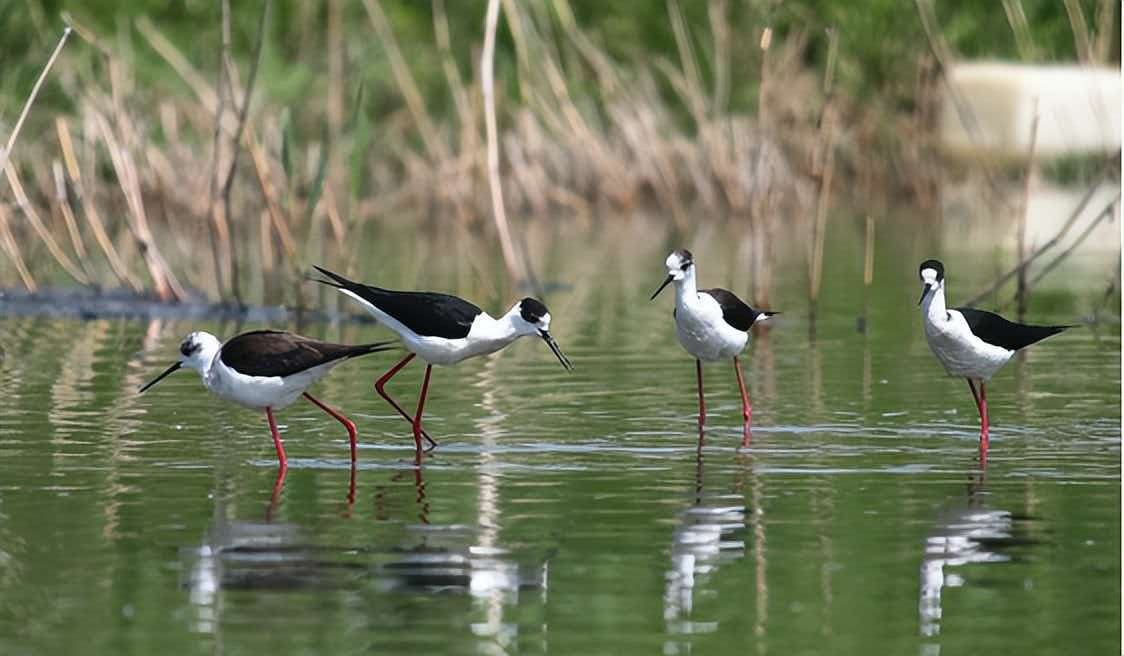
The black-winged stilt is also a kind of state-protected “three-value” wildlife and a common migratory bird passing through the tidal flats of the Weihe River, wetlands, and lakes in Xi’an. It is a medium-sized wader, with an adult measuring 35–40 cm in length. It has highly distinctive long red legs and typically inhabits shallow waters, marshes, and riverbank wetlands.
The black-winged stilts often gather in flocks on shallow beaches to forage for aquatic insects, small shrimps, and mollusks. During the breeding season, they build nests on bare ground on river beaches. Naturally alert, they will emit alarm calls when disturbed. Frequently seen in groups during spring and autumn migration seasons across the wetlands around Xi’an, they stand as a symbol of the region’s improving wetland ecology.
