




















By Usman Aliyu, News Agency of Nigeria (NAN)
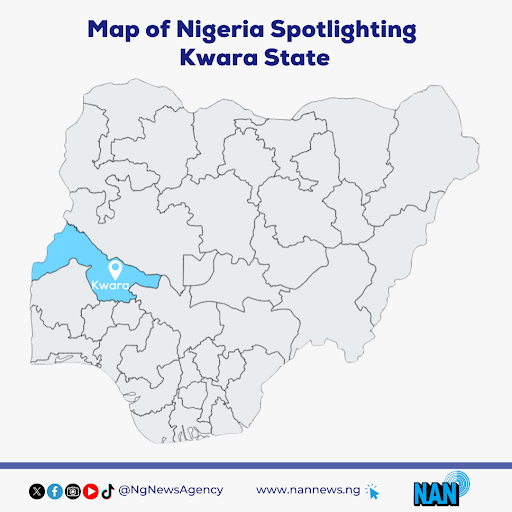
At the dawn of Aug. 8, 2025, the village of Babanla in Ifelodun Local Government Area of Kwara stirred into the familiar rhythms of another day.
Roosters crowed and the first call to prayer drifted across the settlement. Thereafter, traders lifted shop shutters while farmers prepared motorcycles for distant fields.
Smoke curled gently from cooking fires. Then gunshots erupted.
Saadat Alabi had just arranged provisions outside her roadside shop when armed men emerged from the thick forest corridor linking Baba-Sango to neighbouring settlements. Within seconds, panic spread across the community.
“They came from the forest shooting everywhere. People were running without knowing where to go.’’
Residents fled into bushes as attackers moved house-to-house. Some victims were shot while attempting escape; others were trapped indoors.
A statement from the police confirmed that five persons, including a police officer, Adejumo Wasiu, were killed during the attack.
Alabi’s teenage son, Kamal, was among those killed.
“He was running ahead of me. When I heard people shouting his name, I knew something terrible had happened.”
What shocked many residents more than the violence itself was recognition.
“The attackers were people who lived around us for years. Everybody knew their leader,” she said.
Many residents confirm that one of the leaders of the bandits grew up in the area and moved freely for years in spite of widespread suspicion about his criminal links.
“He knew every path; he knew who had motorcycles, who had money, who lived where,” said Ibrahim Abdulrasheed, a youth volunteer who helped evacuate victims during the attack.
The attack on Babanla was only one chapter in a longer story of fear unfolding across Ifelodun Local Government Area.
Long before gunmen stormed the town, several neighbouring settlements had already fallen silent.
Communities such as Eka, Upper Eka, Lower Eka, Kudagbari, Gbanmu, Oloruntele, Baba-Sango, Ibudo Idowu, Ibudo Olosun, Ayetoro and Apata Olosun had gradually been deserted as repeated attacks forced residents to abandon homes, farms and ancestral lands in search of safety.
Empty compounds, overgrown pathways and abandoned farmlands became quiet evidence that insecurity had been creeping closer for years.

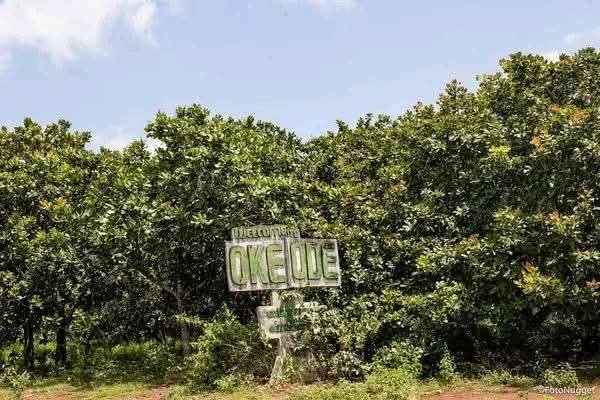
Then, on Sept. 28, 2025, the violence returned; this time to Oke-Ode, a once peaceful agrarian town in the same local government area. Residents woke before sunrise to the sharp, continuous crack of gunfire.
“It sounded like war. People ran without even knowing where their children were,” a resident, Ibrahim Ishola recounted.
When the shooting stopped and the smoke cleared, grief settled heavily over the town.
No fewer than 17 persons were confirmed dead; among them hunters, vigilantes, traders and young men who had attempted to defend their community.
Also killed was Abdulwasiu Abdulkareem, the Baale (village head) of Ogba Ayo, alongside his brother, Fatai Abdulkareem.
Both men had served as part of the community’s first line of defence against earlier threats.
Local sources identified other victims as Ishola Muhammed, a prince from Agunjin; Abdulfatai Elemosho and Salaudeen Bashir from Babaloma; Saheed from Abayan; Olowo-Ila from Oke-Ode; as well as Oluode Ologomo, Oji and Saheed Matubi.
This scale of violence reflected a troubling trend already captured by data.
The Armed Conflict Location & Event Data (ACLED), an independent conflict monitoring platform, recorded at least 93 conflict-related deaths in Ifelodun Local Government Area between August and October 2025.
The incident was one of the deadliest insecurity spikes ever documented in Kwara South, a region once considered relatively safe from Nigeria’s expanding banditry crisis.
These fatalities represented only those who never returned home.
They did not include the hundreds of villagers abducted across Ifelodun’s rural settlements between 2024 and 2025; men taken from farms, women seized along footpaths, traders intercepted on lonely roads, and children dragged from sleeping homes under cover of darkness.
In many families, survival came at a devastating price.
Relatives sold inherited farmland that had sustained generations. Livestock meant for harvest seasons disappeared overnight into emergency markets.
Motorcycles, household belongings and savings carefully built over years were traded away in desperate negotiations with kidnappers operating deep inside surrounding forests.
Across Ifelodun’s rural landscape, thick forests separate farming communities.
For generations, those forests provided firewood, game and fertile land. But over time, they also became safe havens for armed groups.
Residents said the men who later turned into bandits did not arrive as enemies. They first appeared as hunters and migrant settlers.
They bought food freely in local markets; they greeted elders respectfully; some married within the communities.
“They lived among us; we never believed they would become our problem,” Sulaiman Issa, a resident of Babanla said quietly.
Over the years, the strangers blended into daily life while establishing camps deep inside surrounding forests.
Because attacks were happening in distant towns, many locals assumed an unspoken understanding existed — that their own communities would be spared.
That belief proved dangerously wrong.
Chief Oyin Zubair, Coordinator of Joint Security Watch, Kwara South and an indigene of Oke-Ode, said the tragedy did not begin with gunshots but with decisions made years earlier.
According to him, what began as hospitality slowly created vulnerability.
“They came peacefully at first. But gradually, they became a nuisance, and later a threat,” the security watch coordinator explained.
By the time violence finally reached home, the networks had already taken root, the forests already mapped, and the communities already exposed.
What followed, residents admitted , was not entirely unexpected, but only delayed.
“We have told our fathers (traditional rulers) that most of these problems started from them; strangers were accommodated without proper checks. Gradually, they became a nuisance.”
According to him, communities tolerated suspicious elements under an informal survival logic – as long as attacks happened elsewhere.
“People believed if they stayed quiet, the bandits would not attack them. Unfortunately, that silence later cost lives.”
He confirmed that the leader of the attackers had longstanding ties within the community before turning fully to criminality.
“He grew up around Babanla; he knew everything about the area; now he is on the run,” Zubair said.
The aftermath remains severe. The coordinator regretted that many communities in the area were now ghosts of their former selves.
“We have villages today that are empty; many people have not returned home; the trauma is deep.”
Zubair described the experience as a painful awakening.
“We have learnt that security is not the government’s job alone. It is everybody’s responsibility,” he said.
Security authorities say the Ifelodun attacks illustrate a recurring pattern in rural insecurity; criminal groups thriving through community intelligence failures.
The Commissioner of Police in Kwara, Adekimi Ojo, said armed groups rarely operate successfully without insider information.
“The bandit cannot operate without information; they know the terrain because some grew up there or receive support from locals,” Ojo said.

According to him, collaboration occurs in complex ways – through fear, financial inducement or ignorance.
“Some residents are threatened; others are rewarded; some believe the criminals are fighting security forces elsewhere,” Ojo explained, saying they forgot, eventually, those same criminals return.
Police investigations, the police commissioner said, revealed that information often leaked unintentionally. Traders disclosed travel patterns. Residents discussed wealthy households. Transporters unknowingly supplied logistics.
He asserted, also, that trust deficits between communities and security agencies further worsened intelligence gaps.
“Without trust, people will not give information. That is why we are strengthening community engagement,” the police chief said.
At the local government level, officials acknowledge that informant networks had already taken root before authorities intervened.
Chairman of Ifelodun Local Government Council, Femi Yusuf, said insecurity persisted partly because communities underestimated early warning signs.
“Honestly, anyone who says they didn’t know insecurity existed is deceiving himself,” he said.
He bemoaned how efforts by the council to introduce resident registration and visitor documentation met resistance from locals unwilling to submit personal details.
“Many refused to register strangers living with them. But later we discovered that some communities had already been infiltrated.”
The council chairman disclosed that some residents unknowingly shared sensitive information with suspicious visitors through routine commercial interactions.
“A stranger buys goods at high prices and begins asking questions, and people talk freely without knowing they are giving intelligence,” he said.
According to him, dismantling such entrenched networks remains difficult because informants were recruited both voluntarily and under coercion.
Retired Superintendent of Police Ajayi Okasanmi, a security expert and former Police Public Relations Officer in Kwara, described the attacks as a failure of community policing fundamentals.
He said community policing collapsed when citizens withhold intelligence.
“The police are not magicians. They work on information given by the people.”
According to him, rural residents possess the strongest surveillance advantage because they understand local terrain and social networks.
“If strange faces appear, the community should notice first. Failure to report early allows criminals to establish themselves,” he noted.
Okasanmi explained that many communities unknowingly aid criminal logistics.
“A stranger buys goods at inflated prices, asks questions, and people respond freely because they see business.
“Without knowing, they are already giving intelligence,” he said.
The security expert stressed that patriotism and vigilance, not weaponry, remained the first defense against insecurity.
He emphasised early reporting, youth surveillance groups and emergency alert systems as critical preventive measures.
In attempts at recovery, security reforms have, however, been intensified across Ifelodun.
The commissioner of police said the authorities had begun sustained engagements with traditional rulers, encouraging profiling of newcomers under a “Know Your Neighbour” campaign.
More than 2,000 forest guards, he said, had been trained statewide to strengthen intelligence gathering.
Neighbourhood watch groups, according to him, are also emerging as first responders.
According to Ojo, rebuilding trust between residents and security agencies is now central.
“Security is a shared responsibility. When communities trust us, they give information, and prevention becomes possible,” said the police chief.
Yusuf also said the local government had reorganised patrol operations, increased vigilante remuneration and formally integrated hunters into structured neighbourhood security networks.
“We inaugurated hundreds of local hunters for patrol duties. Daily patrols now cover vulnerable routes,” the council chair said.
According to him, markets are also being encouraged to establish internal monitoring systems to track unfamiliar visitors, an acknowledgement that commerce had previously served as an intelligence loophole.
Unarguably, the Ifelodun attacks demonstrate how insecurity often evolves gradually – beginning not with violence but tolerance, fear, misplaced assumptions of safety and complicity.
For security experts, the lesson extends beyond Kwara.
Where communities fail to question strangers, share intelligence or cooperate with authorities, criminal networks gain time to entrench themselves.
The lesson, stakeholders agreed, is painful but clear: insecurity rarely arrives suddenly. It grows quietly — tolerated, ignored, rationalised — until it becomes uncontrollable.
As Okasanmi puts it, “When you see something, say something; silence only postpones the danger.”
For the residents of Babanla, Sagbe, Oke-Ode, and Baba-Sango, the grim reality arrived at dawn, brought by gunshots that shattered an ordinary morning and exposed the devastating cost of collective silence. (NANFeatures)
This report was commissioned with support from the Centre for Journalism Innovation and Development (CJID) under a journalism support initiative funded by the Royal Norwegian Embassy.
***If used, please credit the writer and the News Agency of Nigeria.