


















By Nefishetu Yakubu
Inter-Party Advisory Council (IPAC) has threatened to boycott the 2027 general elections if the National Assembly fails to address concerns in the Electoral Act 2026.
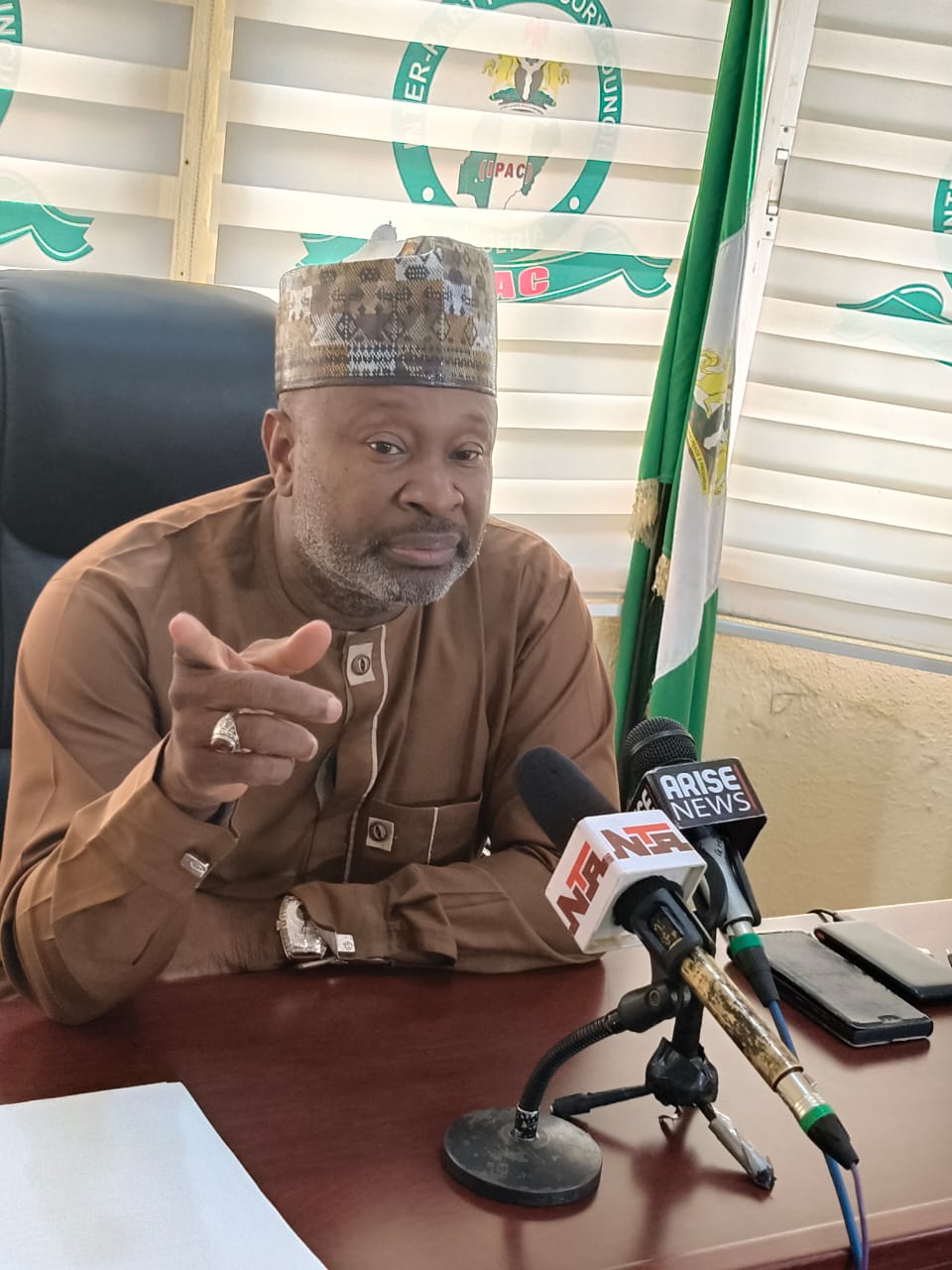
The threat is contained in a communiqué issued after the council’s General Assembly meeting held at the council’s secretariat in Abuja on Thursday.
The News Agency of Nigeria NAN reports that the communique was jointly signed by the IPAC National Chairman, Yusuf Dantalle and National Secretary, Maxwell Mgbudem.
Reading the communiqué, Dantalle said that some provisions in the Electoral Act 2026 introduced new issues that were not conducive to political party development in Nigeria’s multi-party democracy.
He said that the council observed that certain sections of the law undermined the fundamental objectives of political parties and contradicted the principles guiding democratic participation and political inclusion.
“In the present circumstances, IPAC cannot fold its arms. The time to act is now,” he said.
Dantalle said that IPAC had resolved to draw the attention of Nigerians and the international community, including the United Nations, European Union and Economic Community of West African States, to the issues.
According to him, the council has outlined minimum conditions that must be addressed by the National Assembly to guarantee free, fair, credible and inclusive elections in 2027.
He noted that IPAC reserved the right to challenge some contentious provisions of the Electoral Act 2026 in court if the issues remained unresolved.
“Should the National Assembly fail to address these anomalies through urgent amendments, political parties under IPAC will be compelled to boycott the 2027 elections.
“In such circumstances, the outcome of the elections will be rejected as illegitimate and will not be recognised by political parties,” he stated.
The IPAC national chairman said that the recently-passed amended Act was meant to correct anomalies in the Electoral Act 2022, adding, however, that it had introduced fresh concerns.
The communique maintained that political parties possess constitutional rights to manage their internal affairs, including determining the mode of selecting candidates for elections.
It criticised Section 84(2) of the Act which excluded indirect primaries, describing the provision as a violation of the rights of political parties.
IPAC warned that failure to restore indirect primaries could weaken party structures and undermine the growth of multi-party democracy in the country.
It also called for the removal of the requirement for political party members to upload their National Identification Number (NIN) during party registration processes.
According to IPAC, the provision is capable of disenfranchising millions of Nigerians who do not yet possess the identification number and therefore limit their participation in politics.
It further demanded the expungement of Sections 77(4), (5) (6) and (7) which, it argued, infringed on citizens’ constitutional right to freedom of association.
IPAC also called for the restoration of mandatory electronic transmission of election results immediately after voting at polling units.
It noted that the absence of electronic transmission created controversies during the 2023 presidential election.
The council recommended stronger penalties for vote buying, describing the practice as one of the major threats to the credibility of elections.
It equally urged lawmakers to restore forged certificates as valid grounds for election petitions, stressing that leadership integrity remained fundamental to democratic governance.
The council recalled its role in defending the democratic process during the collation of results in the 2023 presidential election.
While reiterating its commitment to strengthening democracy, it, however , warned that electoral reforms must reflect transparency, inclusiveness and respect for constitutional principles.(NAN)(www.nannews.ng)
NY/WAS
Edited by ‘Wale Sadeeq