
















By Perpetua Onuegbu
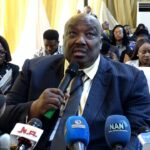
Executive Director of Civil Society Legislative Advocacy Centre (CISLAC), Auwal Rafsanjani, has called for stronger collaboration among civil society organisations (CSOs) to enhance legislative accountability and transparency in Nigeria.
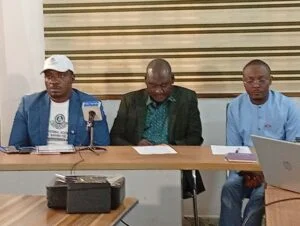
Rafsanjani made the call at a Strategic Stakeholders’ Coalition Convening, under the auspices of Coalition for Legislative Governance Accountability in Nigeria (CoLGAN), on Tuesday in Abuja.
The News Agency of Nigeria (NAN) reports that the programme was aimed at strengthening legislative accountability in Nigeria through the Erudite Growth and Advancement Foundation-Africa (ERGAF-Africa) NASS Barometer Report Project.
Rafsanjani said that the initiative was built on three key pillars: advocacy, capacity enhancement and legislative monitoring.
According to him, while several organisations in Nigeria have been working independently on aspects of legislative engagement, there is a growing need for a more formidable and coordinated network that can consolidate efforts and drive sustainable impact.
“There are a number of organisations in Nigeria working on advocacy, capacity building and legislative monitoring. But what we are trying to do now is to see how we can come together as a more formidable network,” he said.
Rafsanjani explained that the proposed network would focus on information sharing, performance tracking and evaluation of the legislature, conducting legislative public opinion polls and providing technical support for data entry and verification.
“It is about promoting knowledge of the activities of the legislature which many Nigerians don’t really have much of. It is also about deploying digital tools and social media to capture legislative activities and improve media engagement,” he said.
He added that collaboration with the media—both in the Senate and the House of Representatives—remained critical to amplifying civil society perspectives on issues debated within the legislature.
The CISLAC executive director said that the network would not only operate at the national level but also extend to state houses of assembly to institutionalise legislative accountability at all tiers of government.
“Our objective is not just to promote legislative accountability at the national level but also to ensure that it is instituted in the various state Houses of Assembly in Nigeria,” he stated.
Rafsanjani said that CISLAC had worked with the leadership of the National Assembly to ensure that a civil society liaison office is operational, allowing CSOs easier access to legislative processes and committee activities.
He also stressed the importance of building the technical capacity of CSOs to understand the functioning of the legislature, including law making, oversight and constituency outreach.
The executive director noted that misconceptions still persist about legislative oversight, with some perceiving it as harassment of government agencies rather than a constitutional mechanism for improving governance.
“Legislative oversight is not about intimidation. It is about examining whether a legal framework is working, identifying gaps, assessing resource allocation and determining whether laws need to be strengthened or better implemented,” he explained.
According to him, effective oversight can help address budgetary allocation challenges, legal loopholes, poor coordination and implementation gaps within government agencies.
He said that efforts would be made to support legislative committees with technical knowledge in areas such as bill analysis and proactive law making to promote peace, stability and sound legal frameworks in the country.
“We believe that by coming together, we can leverage the expertise of various organisations and our development partners to build a strong platform for constructive legislative engagement in Nigeria,” he said.
In his remarks, the Head of Impact, Christian Aid, West and Central Africa, Mr Temitope Fashola, reaffirmed his organisation’s commitment to strengthening legislative accountability and democratic governance in the country.
Fashola, represented by the organisation’s Programme Manager, Mr Ugochukwu Munachi, said that the accountability tools developed through the initiative had a significant potential to deepen public oversight and strengthen policy dialogue.
He, however, stressed that its impact would depend on sustained collaboration and wider adoption among civil society groups, development partners and policymakers.
Fashola, therefore, called on stakeholders to build a renewed coalition for legislative transparency to ensure that such initiatives become enduring tools for empowering citizens and improving democratic governance.
On his part, the President of ERGAF-Africa, Chibuzo Okereke, said at the heart of the barometer was empowering citizens with data-orientated tools to conduct oversight of the legislature.
This, he said, would enable citizens to participate in the policy process, influence reform and engage in participatory democracy.
“Legislative practice and procedure is a complex, dynamic and technical area, and advocacy and knowledge sharing is important for citizens to be equipped.
“So this barometer offers us data-driven tools for us to assess those key roles of the legislature.
“What we have done is to reduce this important constitutional role that is critical to our democratic survival into empirical data that is key to advancing our democracy across key areas,” he said.
Earlier, the ERGAF-AFRICA Data Analyst, Raphael Tarbo, said the initiative was to provide clear, easy-to-understand information on legislative performance and policy priorities as well as how well the National Assembly was responding to the people.
“Representation should not only be about procedures and debates; it should truly reflect the needs, concerns and hopes of Nigerians.
“Together, we can use these tools to track progress, identify gaps and engage lawmakers constructively.
“Our goal is to encourage greater citizen participation, improve oversight and support a more responsive legislature,” he said.
NAN reports that the meeting featured a Live Demo of the ERGAF-AFRICA NASS Deliberative and Policy Focus Productivity Report on the activities or inactivities of each member of the National Assembly.
NAN also reports that the initiative is expected to foster greater transparency, responsiveness and accessibility within Nigeria’s legislative institutions, while deepening democratic accountability nationwide.(NAN)(www.nannews.ng)
Edited by ‘Wale Sadeeq