



















By Rachael Abujah
The Royal Commonwealth Society (RCS), Nigeria Branch, has emphasised the need for stronger collaboration among Commonwealth nations to unlock opportunities for shared prosperity and sustainable development.
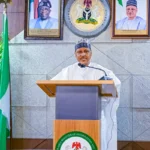
The Country Director, RCS, Mr Blackson Bayewumi, made the call on Monday in Abuja during the 2026 Commonwealth Day celebration hosted by the Federal Ministry of Education.
Bayewumi was represented by Capt. Bukola Agbenike, a member of the society.
The theme for the 2026 celebration is “Unlocking Opportunities Together for a Prosperous Commonwealth’’.
Bayewumi said the theme underscored the importance of multilateral cooperation, partnerships and collective action in addressing global challenges and advancing development among member states.
He noted that the modern Commonwealth was established through the London Declaration of April 26, 1949.
He said it transformed the former colonial relationship among member states into a voluntary partnership founded on equality, mutual respect and shared values.
‘’From its early membership of eight countries, the Commonwealth has grown into a global association of 56 independent nations spread across Africa, Asia, the Caribbean, Europe, the Americas, the Mediterranean and the Pacific.
“With a combined population of more than 2.7 billion people, representing nearly one-third of the world’s population, the Commonwealth is one of the most diverse international networks in existence.
“Despite differences in culture, religion, language and levels of development, member states are united by shared aspirations and values such as democracy, human rights, the rule of law, good governance, peace and sustainable development,” he said.
Bayewumi noted that the society operated on voluntary membership and consensus, unlike many international organisations, making cooperation among members critical to achieving shared goals.
He said Nigeria, one of the largest members of the Commonwealth, continued to play vital roles in promoting the ideals of the association.
These roles, he said, were particularly in areas such as education, youth empowerment, trade, governance and sustainable development.
The director described education as a powerful tool for unlocking opportunities across the Commonwealth through academic exchanges, scholarships, research partnerships and skills development initiatives.
He added that empowering young people with knowledge and relevant skills would enable them to thrive in a rapidly changing global environment.
Bayewumi called for stronger commitment by member states to the Commonwealth Charter.
According to him, the charter outlines the guiding principles of the association, including democracy, human rights, rule of law, gender equality and sustainable development.
He said the charter, adopted by Commonwealth Heads of Government in 2011 and formally signed in 2013, also emphasised access to education, health, food and shelter, as well as environmental protection and the role of civil society.
Bayewumi urged member states to strengthen democratic institutions, promote peace, empower young people and advance education to ensure a more prosperous and inclusive Commonwealth.
“As we celebrate Commonwealth Day today, we must reaffirm our shared responsibility to work together in promoting peace, strengthening democratic institutions and fostering sustainable development across the Commonwealth,” he said. (NAN)(www.nannews.ng)
Edited by Esenvosa Izah/Funmilayo Adeyemi