


By Salamat Abu
A coalition of Civil Society Organisations (CSOs) in Kogi have called for stronger synergy, legislative reforms, and timely funding to curb Gender-Based Violence (GBV) in the state.
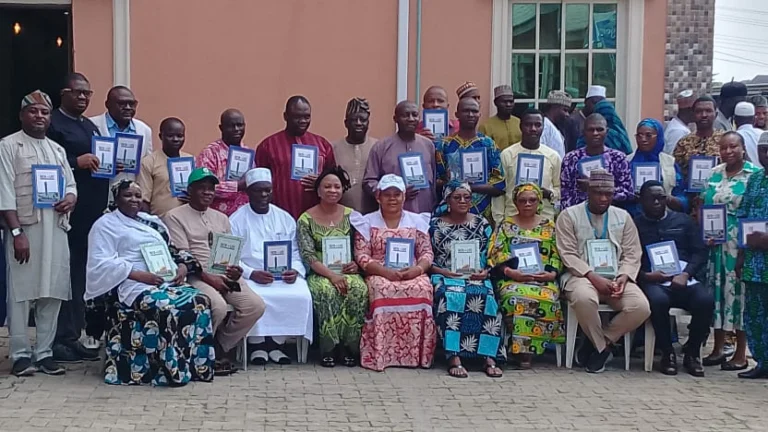
The CSOs made the call at a high-level policy dialogue held in Lokoja.
The meeting brought together state and non-state actors to review progress and challenges in preventing Intimate Partner Violence (IPV) and broader GBV across the state.
In her remarks, the state Commissioner for Women Affairs and Social Development, Mrs Acharu Okpanachi, said that the ministry was committed to a multi-sector collaboration in tackling GBV in Kogi.
Represented by the Acting Permanent Secretary in the ministry, Hajia Jummai Bello, the commissioner said that the state government was also committed to ensuring that no perpetrator of GBV goes unpunished.
Similarly, the Coordinator of the CSOs Racheal Akande, described the dialogue as a critical step toward advancing the prevention of GBV in the state.
Akande, also the Executive Director of Participation Initiative for Behavioural Change in Development, (PIBCID), commended the efforts of partners including the Development Initiative of West Africa (DIWA), the Ministry of Justice, PDCRC, JNI, and traditional and religious institutions.
In the same vein, Amb. Idris Muraina, Executive Director, Renaissance Care and Empowerment Foundation (RECEF), emphasised the need for a unified voice to achieve shared objectives in tackling GBV in the state.
Reinforcing the call for synergy, Ibrahim Yakubu, Secretary of the coalition and Programme Manager, Centre for Family Rescue, Law & Development, stressed the need for a collective action in eliminating GBV.
“This policy dialogue is designed to bring us together as one and ensure that we pool resources, as well as drive campaign that will reduce GBV to the barest minimum,” he said.
The News Agency of Nigeria (NAN) reports that stakeholders at the meeting presented briefs on interventions implemented, challenges encountered, and proposed solutions.
The updates were aimed at helping all parties assess progress made in GBV responses.
They cited funding gaps, weak institutions, poor logistics, lack of office space, social interference, and poor collaboration as major challenges in tackling GBV.
The stakeholders recommended amending the Violence Against Person’s Prohibition (VAPP) Law, releasing funds promptly, training personnel, providing offices for gender desk officers, creating a case committee, and reactivating quarterly GBV working group meetings.
Stakeholders present at the event include the Federation of Women Lawyers (FIDA), Public Defender and Citizen’s Rights Commission (PDCRC), Directorate of Gender-Based Violence, Ministries of Justice and Health, NAWOJ, Security agencies, as well as Religious and Traditional leaders, among others.(NAN)(www.nannews.ng)
Edited by Deborah Coker


Comments