


















By Joan Odafe,
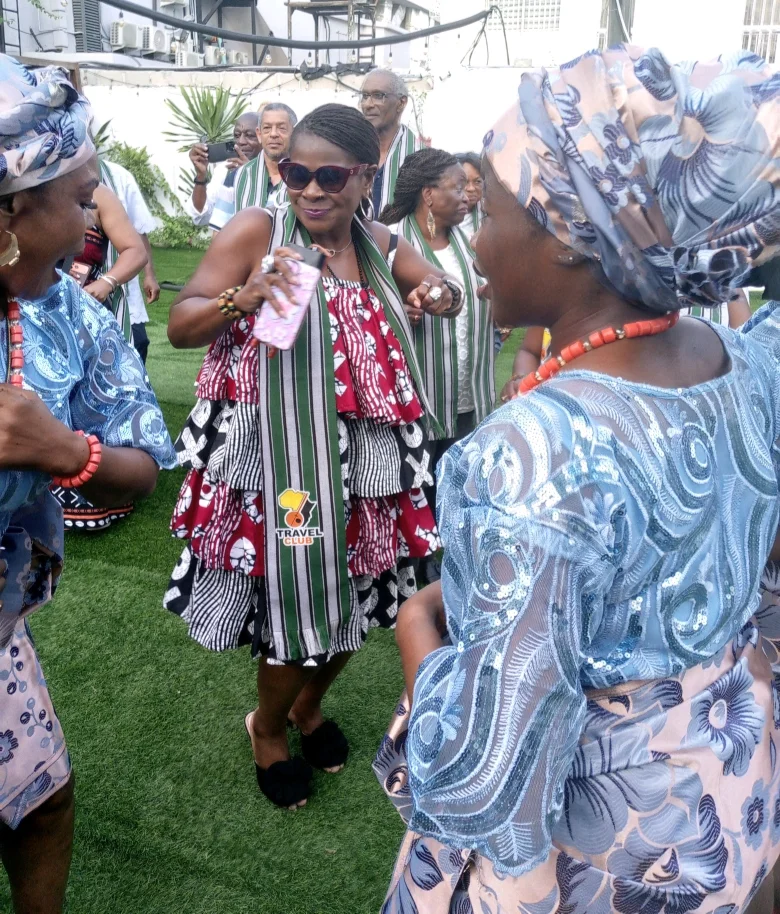
From the bustling markets and heritage sites to music, food and nightlife, a group of 19 visitors from the United States are discovering Lagos through a curated cultural tour that offers both rich experiences and hard lessons for Nigeria’s tourism sector.
The News Agency of Nigeria (NAN) reports that the week-long visit, organised by Goge Africa Travel Club, took the diaspora travellers across different parts of the city, exposing them to its culture, people and everyday life.
Chief Executive Officer of the travel platform, Isaac Moses, said the tours were designed to go beyond seasonal events, and present Nigeria as a year-round destination.
“For us at Goge Africa, it’s not about Detty December. We have always brought in people, January to January.
“Nigerian tourism is not an event. It’s something continuous,” he said.
Moses said that many visitors arrive with uncertainty shaped by what they hear abroad but leave with more balanced perspectives after experiencing the country firsthand.
“Normally, they come with their fingers crossed.
“They hear things. They don’t know what exactly to expect.
“So, they come in with a little scepticism but we allow them to experience the good, the bad, the ugly but we believe they’re going to have more good,” he said.
The group stayed in major hotels, and toured sites across Lagos, while also engaging in cultural experiences such as dancing, eating traditional meals and receiving indigenous names.
The group shopped at Akerele St. in Surulere and Balogun Market for readymade Adire, aso-oke fabrics and Nigerian jerseys.
They also toured museums, arts and crafts markets, galleries, a conservation centre, indigenous Nigerian restaurants, among others.
Moses noted, however, that infrastructure gaps remain a concern, particularly transportation.
“We don’t have tour buses. Some of them are tall, they feel their knees cramped,” he said.
He urged investors to provide buses suited for tourists as seen in other African destinations.
At the policy level, Lagos is also positioning culture as a driver of tourism and economic growth.
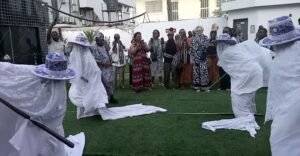
Director of the Lagos State Council for Arts and Culture, Idowu Johnson, said the state deliberately uses its cultural assets to attract both international and domestic visitors.
“What we do is that we preserve, we promote and we document Lagos indigenous culture,” he said.
Johnson added that the aim was to counter misconceptions that Lagos lacks cultural identity.
“People think that Lagos is no man’s land but Lagos has a culture,” he said.
He cited festivals and traditions across Badagry, the mainland and other parts of the state.
Beyond culture, he emphasised the economic value of such visits.
“The person that comes from abroad is coming with his dollar to spend, at the end of the day, it increases our economic turnover,” he said.
For the visitors, the experience was both eye-opening and challenging.
Karen Morris-Clarke, who led the 19-member group, said the trip was part of a broader motherland tour that began in Ghana.
“I’ve never been, always heard about Nigeria. So, I extended the trip and brought the group with me,” she said.
Morris-Clarke, who discovered Nigerian ancestry through a DNA test, described the visit as a personal journey.
“I realised that I have Nigerian ancestry in me, so I wanted to come home,” she said.
While she praised the hospitality and safety experienced during the trip, she highlighted areas needing improvement.
“The first issue we had was the condition of the bus, we were honestly very cramped,” she said.
She also pointed to delays in meal service for large groups and the need for better coordination.
“I’m not sure if groups are not a big thing for Nigeria, the food has to be normally pre-ordered.”
In spite of the challenges, she said the group felt safe and welcomed.
“The hospitality has been super; we feel safe and that was number one for me,” she said.
Morris-Clarke, however, noted that perceptions abroad still affect travel decisions.
“There’s this negativity still associated with Nigeria, a stigma that I think needs to be worked on,” she said.
She called for stronger institutional support for tourism.
“I want to see where they cater to tourists, a tourist board where I can call and get what I need,” she said.
Even so, she expressed willingness to return.
“For me, I would come again. I would love to see how this place is improving and growing,” she said.
Though she admitted that some members of the group were less convinced due to culture shock and visible poverty.
Another visitor, Collette Guthrie, described her experience as her first on the African continent, noting both surprises and contrasts with expectations.
“I expected to experience a lot of cultural stuff, which I did,” she said.
Guthrie said the diversity in fashion and traditions stood out.
“I thought that all of Africa just wore the same colours but I noticed the men are more traditional in their wear, and the women, the prints are beautiful,” she said.
She said visits to the market and entertainment spots offered deeper insight into Lagos life, even as some experiences were overwhelming.
“The market was a shock, just how many sellers there were,” she said.
She also noted challenges at the airport, which she described as distasteful.
“From the first person I encountered; it was asking for money all the way,” she said.
However, she maintained that the overall experience was positive.
“I am pleasantly surprised and I love the culture,” she said.
Food and music formed a central part of the cultural immersion, with visitors sampling local cuisine and participating in culinary activities.
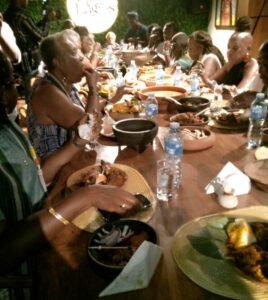
Gbolabo Adebakin, convener of the Nigeria Food Summit, said introducing visitors to Nigerian cuisine helps reshape global narratives.
“Part of the work that we do is hosting guests from across the world, to educate and sensitise on Nigerian food,” he said.
Adebakin, popularly referred to as Chef Gibbs, noted that guests were taught how to properly pair and eat local dishes, addressing common misconceptions.
“There’s a lot of misrepresentation. Some people say it’s too fatty, too heavy; but our food is very communal, very nutritious, very rich,” he said.
For Adebakin, food remains one of Nigeria’s strongest cultural exports.
“Food is the oldest form of tourism, every party, every meeting, every celebration,” he said.
As the tour ends, stakeholders agree that such immersive experiences — combining food, music, markets and heritage — are key to building trust, changing narratives and positioning Lagos as a leading destination for diaspora tourism.(NAN)(www.nannews.ng)
Edited by Folasade Adeniran