
















By Angela Atabo
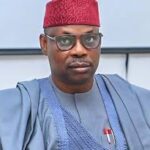
Sen. Seriake Dickson, representing Bayelsa West senatorial District has reiterated his commitment to increasing women’s participation in governance through deliberate legislative action.
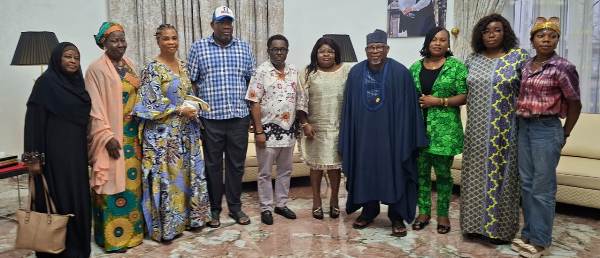
Dickson a former Governor of Bayelsa and the leader of the Nigeria Democratic Congress (NDC), made the commitment when an advocacy group, Women Collective Hub led by Nkoyo Toyo paid him a visit in Abuja.
He described Nigeria’s current level of female political representation as “very shameful,” especially when compared to countries like Rwanda, Senegal, and Liberia.
Speaking on ongoing efforts to reform the political system, the NDC leader emphasised that ensuring women have a place “on the table” is critical to strengthening democracy and inclusiveness.
He pointed to global examples, noting that women in other climes have repeatedly held top leadership roles and Nigerian women are equally capable but are hindered by structural, cultural, and economic challenges.
Dickson threw his weight behind affirmative action policies, particularly the proposed reserved seats bill to increase women’s representation in legislative bodies, arguing that comprehensive electoral reform would boost women’s participation.
“Nigeria has competent women who can lead ,but we have to create a mechanism. This is why these reserved seats and other forms of affirmative action are important.
“This is because until you address this issue of the economic imbalance and all the social and other things that put them down there won’t be headway.
“We need affirmative legal action. If it is constitutional, fine. If it is by any other legislation, fine.But we need something.
“That is why I am fully in support of the reserved seats bill. When we resume plenary, I am going to take it up with the leadership,they already know I am a key supporter.”
Dickson emphasised the need for women voices to be heard, adding that there needed to be more women in governance, whether by appointment, nomination or election.
“So if the bill is passed early, then we can begin to see the benefits in the next election. I want to have women on the table. Even if it is through nomination, what matters is that women are represented,” he said.
The lawmaker said his party, NDC is committed to ensuring that women are given equal opportunities to contest for all elective offices, including the presidency.
“We want women to be as free as men. Women are free to represent for every position. That’s the position of the NDC,” Dickson stated.
Earlier, the Founder of the Women Collective Hub, Toyo, who led the delegation traced the history of women’s political struggle in Nigeria to the late 1990s, highlighting efforts made during the drafting of the 1999 Constitution.
She recalled how women’s groups pushed for at least 25 per cent affirmative action and constitutional guarantees to improve access to governance.
“Those efforts were strong, but when the process became politicised, women’s issues were sidelined. The final constitution did not reflect our expectations.
“We have engaged governments, political parties, and the National Assembly, yet the gap between policy and practice remains wide,” Toyo said.
She expressed concern that women continue to face systemic barriers, including internal party dynamics that favour male candidates, especially during high-stakes elections.
Toyo also raised concerns about ongoing electoral reforms, noting that while proposals such as reserved seats for women are promising, uncertainties around implementation and constituency delineation could delay progress.
She warned that Nigeria risks entering another election cycle without meaningful improvement in women’s representation, which currently remains among the lowest globally.
She therefore, said the visit to Sen. Dickson was aimed at seeking his voice in the quest to guarantee the passage of the bill as well as support the inclusion of more women in politics.
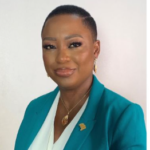
Earlier, the National Women Leader of the Nigeria Democratic Congress (NDC), Dudu Manuga, outlined her party’s strategy to bridge the gender gap, listing adoption of affirmative action policies and removal of structural barriers that discourage women .
“Our approach goes beyond quotas. We are creating an enabling environment through training, empowerment, and transparent processes so women can compete and win,” she said.
She added that the party plans to provide mentorship, capacity building, and limited financial support to female aspirants, particularly at grassroots levels.
“We want women to emerge not just as participants, but as candidates and leaders across all levels, from local government to the presidency,” Manuga stated.(NAN)
Edited by Sadiya Hamza