












Emmanuella Anokam
The Minister of State for Petroleum Resources (Gas), Ekperikpe Ekpo, has emphasised the need for innovative financing models, blended finance and stronger private sector participation to unlock Africa’s gas potential.
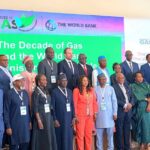
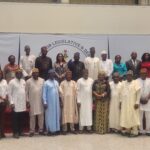
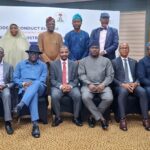
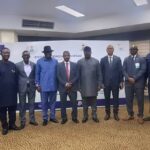
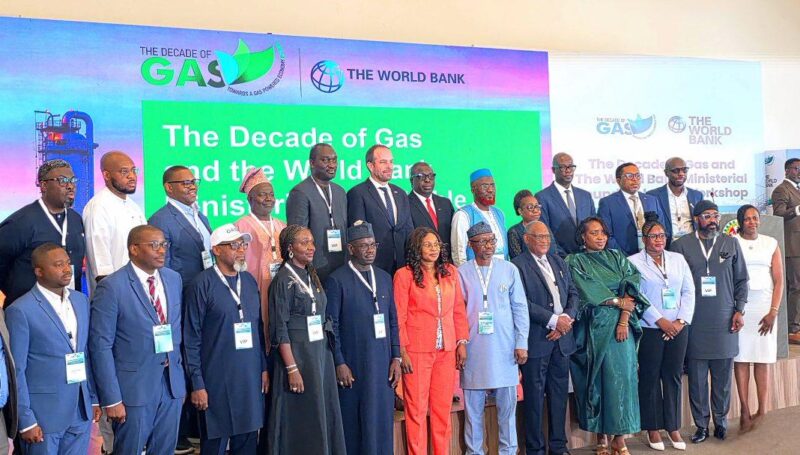
Ekpo made the call on Monday in Abuja at a Ministerial Roundtable on Regional Gas Development and Cooperation in Africa.
The roundtable was organised by the Decade of Gas Secretariat in collaboration with the World Bank.
The News Agency of Nigeria (NAN) reports that the forum brought together key stakeholders to advance implementation of the Decade of Gas initiative and review progress.
Ekpo called for enhanced partnerships with international institutions, including the World Bank, and deeper regional collaboration among African countries to harness the continent’s vast natural gas resources and address energy poverty.
He said Africa’s energy future depended not only on resource abundance but also on collective action and coordinated development.
“Africa holds over 600 trillion cubic feet of proven natural gas reserves, yet more than 600 million people lack access to electricity, while millions rely on traditional fuels for cooking.
“This is not a question of resource availability, but one of coordination, infrastructure and collective action,” he said.
The minister described natural gas as a key driver of industrialisation, energy access and economic resilience, noting that no single country could unlock its full potential alone.
He stressed that regional cooperation must form the foundation of Africa’s energy strategy.
Highlighting Nigeria’s position, Ekpo said the country, with over 210 trillion cubic feet of gas reserves, was implementing its Decade of Gas initiative to become a regional energy hub.
He cited major cross-border projects such as the West African Gas Pipeline, Trans-Sahara Gas Pipeline, Nigeria–Equatorial Guinea Gas Pipeline and the Nigeria–Morocco Gas Pipeline (Africa Atlantic Gas Pipeline) as examples of the benefits of collaboration.
To scale progress, the minister identified four priority areas, including the development of integrated regional gas markets, expansion of gas-to-power and clean cooking initiatives, mobilisation of climate-aligned financing and harmonisation of policy and regulatory frameworks.
Ekpo underscored the importance of regulatory alignment across countries to attract investment and accelerate project delivery, citing Nigeria’s Petroleum Industry Act as a useful model.
He described natural gas as Africa’s “transition fuel”, capable of supporting economic growth while reducing emissions, and called for a just and inclusive energy transition tailored to the continent’s development needs.
Ekpo urged participants to move beyond discussions and focus on concrete outcomes, including identifying bankable cross-border projects and establishing implementation mechanisms.
He reaffirmed Nigeria’s readiness to collaborate, invest and partner in building an integrated African gas market.
“With aligned vision and coordinated efforts, Africa can transform its gas resources into shared prosperity through connected infrastructure, integrated markets and collective ambition,” he added. (NAN)(www.nannews.ng)
Edited by Emmanuel Afonne