

















By Henry Oladele
A Professor of Obstetrics and Gynaecology, Abidoye Gbadegesin, has called for strengthened healthcare systems and policy reforms to safeguard maternal and child health in Nigeria.
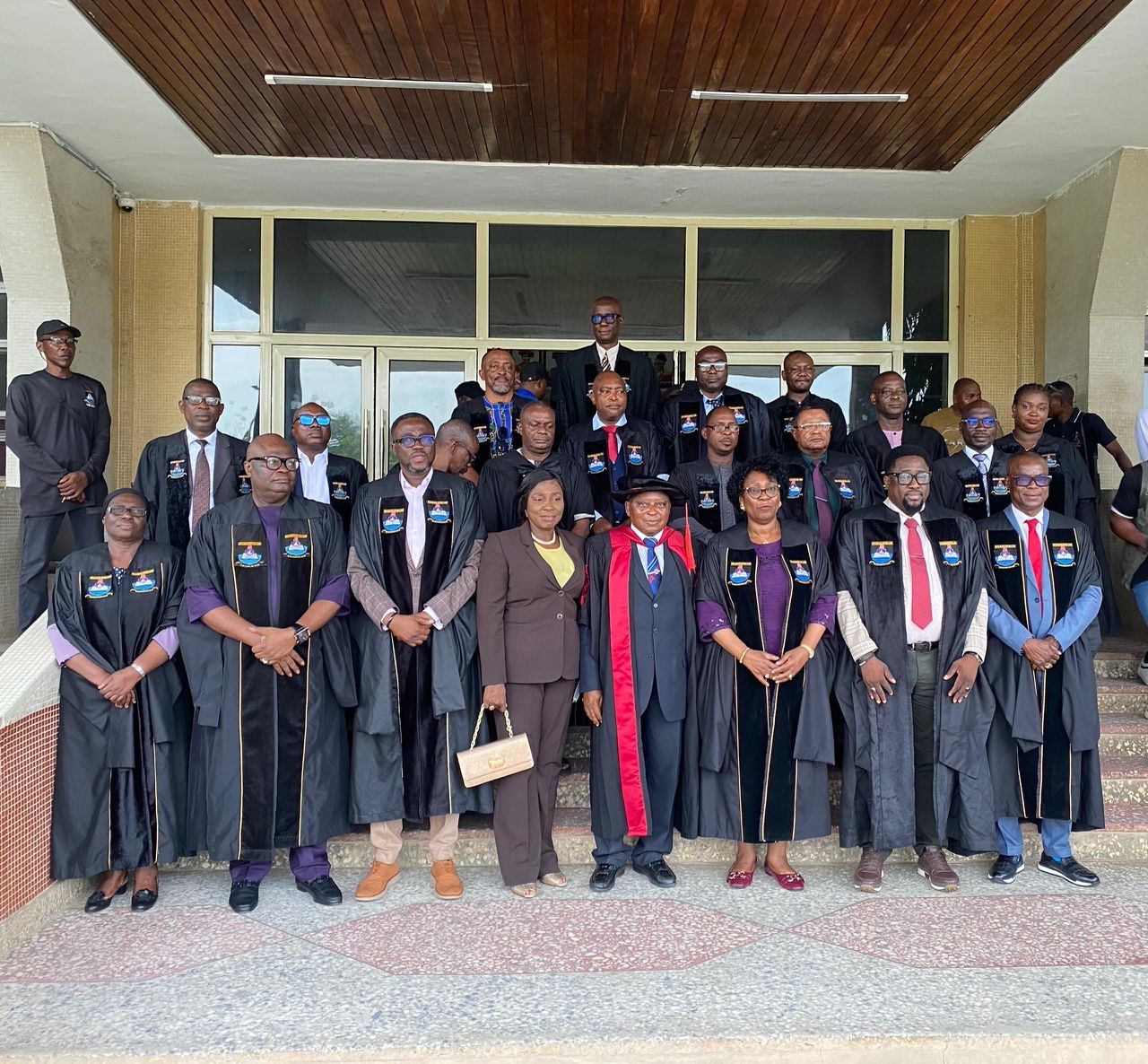
Gbadegesin made the call in Lagos on Wednesday while delivering the 120th Inaugural Lecture of Lagos State University (LASU).
The News Agency of Nigeria (NAN) reports that the lecture was entitled “Safeguarding the Continuation of the Human Race: Challenges and Prospects in Maternal and Child Health”.
Gbadegesin described obstetrics and gynaecology as a critical medical specialty dedicated to the care of women during pregnancy, childbirth and the postpartum period.
He also said that the specialty was dedicated to the overall reproductive health of the woman.
According to him, obstetrics focuses on managing both normal and high-risk pregnancies to ensure the well-being of mothers and newborns.
He added that gynaecology addressed reproductive health issues such as infertility, infections, menstrual disorders and cancers.
“The combined specialty provides a continuum of care, from adolescent reproductive health to childbirth and geriatric gynaecological care,” he said.
The professor traced the evolution of the discipline from ancient, community-based midwifery practices to modern, technology-driven healthcare systems.
He noted that in Nigeria, the development of the specialty had progressed from traditional care in the pre-colonial era to structured medical services introduced during the colonial period.
Gbadegesin identified the establishment of the Society of Gynaecology and Obstetrics of Nigeria in 1965 as a major milestone in advancing reproductive healthcare through research, education and advocacy.
He said that there was 17 per cent decline in maternal deaths in high burden areas in 2024 and 2025, according to the Federal Ministry of Health.
The don added that adoption of the E-Motive protocol for managing postpartum haemorrhage had recorded 60 per cent reduction in severe bleeding during clinical trials in Nigerian hospitals.
He, however, expressed concern that only about 52 per cent of births in the country were attended to by skilled health personnel, with rural areas still lagging behind.
Gbadegesin also highlighted advancements in reproductive technology, noting that Nigeria was among the top five countries in Africa offering In Vitro Fertilisation (IVF) services.
The medical expert said that increasing use of minimally-invasive procedures such as laparoscopy had improved treatment outcomes for conditions such as fibroids and endometriosis.
The professor added that emerging technologies, including artificial intelligence-powered ultrasound devices and mobile health applications, were helping to improve access to care, particularly in underserved communities.
He said that Nigeria still faced a high maternal mortality rate in spite of the improvements.
Gbadegesin identified major causes of maternal mortality to include haemorrhage, pre-eclampsia, obstructed labour, sepsis, and complications from unsafe abortion.
He recommended systemic reforms, including strengthening primary healthcare systems, expanding preventive care, and recruitment of more skilled health workers.
He also called for improved healthcare infrastructure, enhanced data systems, and increased funding for maternal and child healthcare.
The don urged institutions such as LASU and its teaching hospital to expand research, promote interdisciplinary collaboration and improve access to quality care.
He urged stronger collaboration among government, the private sector, non-governmental organisations and communities to address maternal and child health challenges.
According to him, increased budgetary allocation, enforcement of health policies and adoption of digital health innovations are critical to improving outcomes.
Gbadegesin urged public awareness campaigns to promote healthy practices such as exclusive breastfeeding and early health-seeking behaviour.
He expressed the optimism that with sustained commitment and strategic interventions, Nigeria would significantly reduce maternal and child mortality and ensure a healthier future for its population. (NAN)(www.nannews.ng)
Edited by Ijeoma Popoola