














By Aderogba George
The Federal Capital Territory Administration (FCTA) Health Secretariat says it remains committed to the well-being of all residents of the nation’s capital.
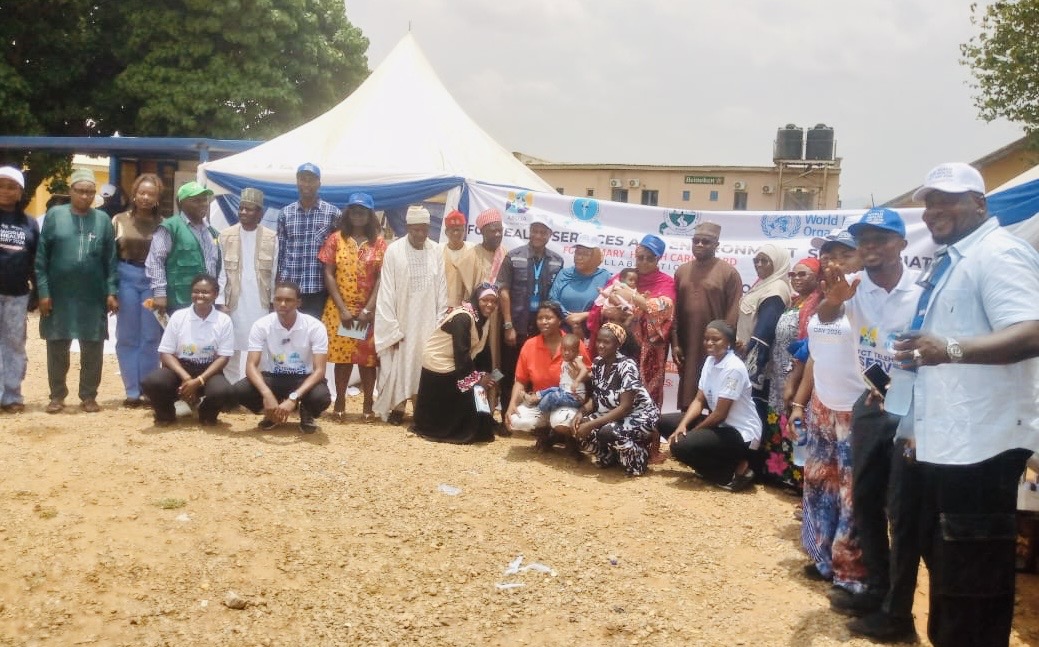
Dr Adedolapo Fasawe, the Mandate Secretary, Health Services and Environment Secretariat (HSES), said this on Monday at an event to mark the 2026 World Health Day.
The programme, organised in collaboration with the World Health Organisation (WHO) and other partners, had the theme “Together for Health, Stand with Science.”
Fasawe, represented by the Acting Executive Secretary of the FCT Primary Health Care Board, Dr Ruqayya Wamakko, also unveiled a Telehealth Platform designed to strengthen primary healthcare services and expand access for residents.
She said the FCT would continue to deliver healthcare services through emergency response systems, maternal health support such as Mama Kits, safer roads, and cleaner energy initiatives.
According to her, these interventions are not just projects but life-impacting decisions aimed at bringing healthcare closer to residents.
“When a mother has to travel long distances just to see a doctor, when a farmer delays care because of transport cost, when a child’s illness worsens because help is far away, that is where health systems fail,” she said.
Fasawe explained that the new solar-powered, satellite-enabled teleconsultation clinics would allow residents to access medical care within their communities without long-distance travel.
“This is not theory, this is science working for the people and strengthening primary healthcare,” she added.
The WHO FCT State Coordinator, Dr Jibrin-Alkassim Musa, said that many health gains in Africa were driven by scientific progress, innovation, and sustained collaboration.
He noted that African scientists and institutions had played key roles in addressing major health challenges, including Ebola and COVID-19.
Musa highlighted the development of Ebola vaccines, genomic sequencing in South Africa that enabled early detection of COVID-19 variants, and WHO-supported mRNA vaccine technology hubs as examples of Africa’s growing scientific capacity.
He said those advances showed how science was not only solving African problems but also contributing to global health solutions.
Musa further urged African governments to increase domestic investment in science, research, and innovation to strengthen health security and sustainable development.
He also called on international partners to support African-led research and expand access to technology and knowledge through equitable partnerships.(NAN)
Edited by Abiemwense Moru