
















By Tosin Kolade
The Federal Government has called for stronger collaborations and increased participation of women in water governance to ensure equitable access to water and sanitation nationwide.
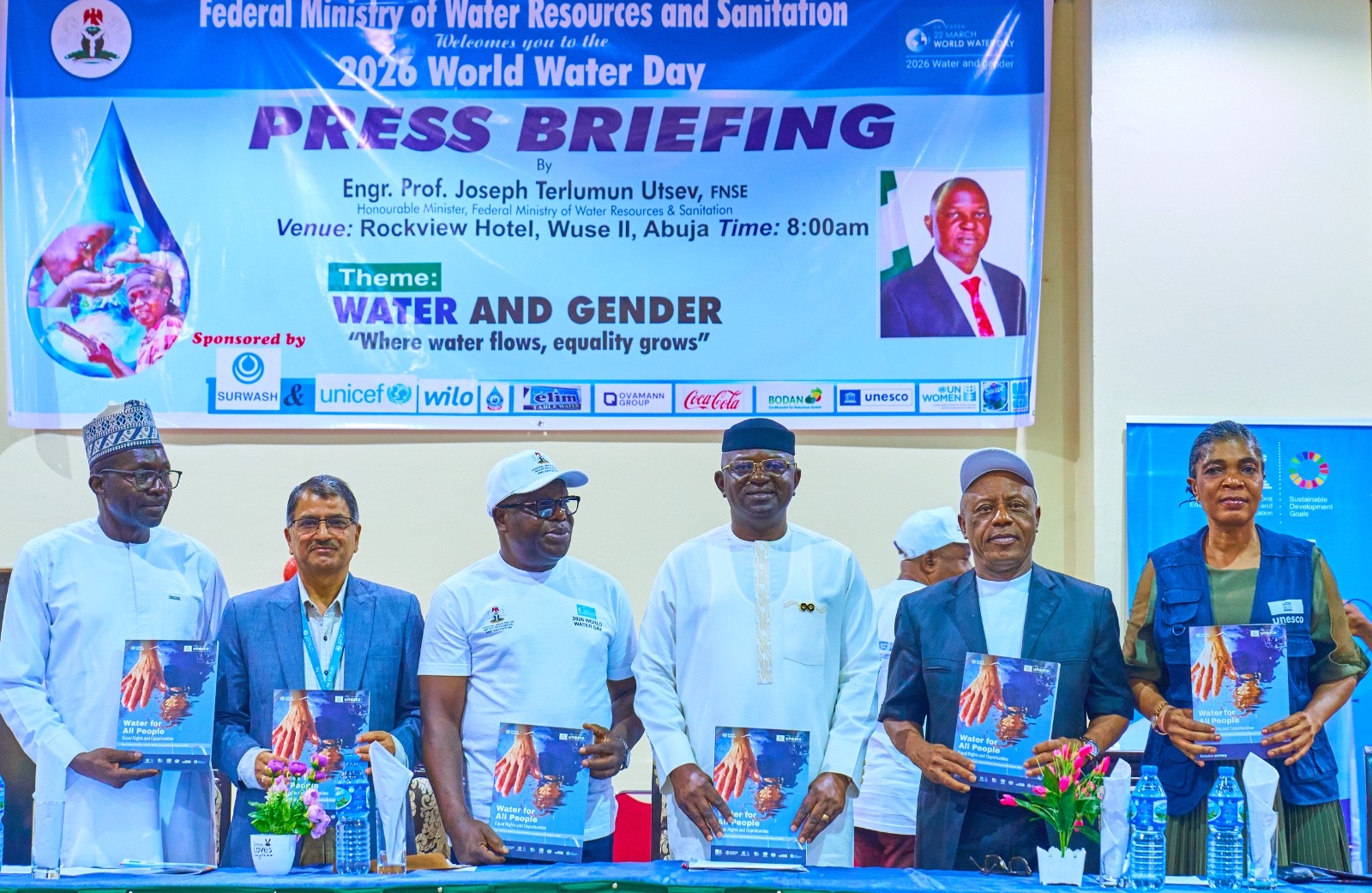
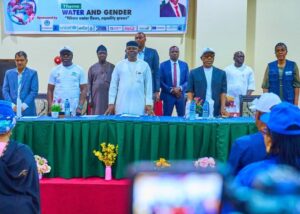
The Minister of Water Resources and Sanitation, Prof. Joseph Utsev, made the call at a news conference to commemorate the 2026 World Water Day.
He said the day, instituted by the United Nations, highlights the importance of freshwater and promotes sustainable management of water resources globally.
Utsev noted that the theme, “Water and Gender: Where Water Flows, Equality Grows,” underscores the link between water access, sanitation and gender equality, aligning with Sustainable Development Goals (SDGs) 5 and 6.
He added that water scarcity and poor sanitation disproportionately affect women and girls, limiting health, dignity, safety, and economic opportunities.
The minister stressed that inclusive governance and women’s participation are essential for sustainable development and national growth.
Utsev said the ministry had constructed and rehabilitated over 6,700 water schemes, providing safe drinking water to more than 32 million Nigerians.
“Rural interventions have benefited over two million people, while about 500 additional projects were implemented across Benue, Jigawa, Gombe, Nasarawa, Bauchi, Borno, Yobe, Ogun, and Niger states.
“On sanitation, over 5,238 public facilities have been constructed, with 162 local government areas certified open defecation-free. Awareness campaigns were strengthened with jingles in English, Pidgin, Igbo, Hausa, and Yoruba,” Utsev added.
According to the minister, the ministry has completed two National Water Quality Reference Laboratories in Asaba and Umuahia to enhance monitoring and protect public health.
He said irrigation and water infrastructure investments boost climate resilience, support dry-season farming, and expand livelihoods for women and youth.
“The Dadin Kowa irrigation scheme delivered 2,000 hectares of land to farmers, including women, while micro-irrigation projects were completed in Jigawa, Oyo, and Kwara, with additional schemes underway in Kebbi,” Utsev said.
He noted that the Kashimbilla Dam’s 40-megawatt hydropower facility now supplies electricity to the national grid, and together with Gurara and Dadin Kowa dams, generates 110 megawatts of renewable energy.
“Other dams recording progress include Mangu, Adada, and Ogbesse, while Alau Dam in Borno is being strengthened to improve flood control and water supply to Maiduguri,” he added.
The minister said the National Water Resources Institute had trained over 1,500 youths in plumbing, drilling, and water technology, while 24 water-use licences were issued to ensure equitable allocation of resources.
He noted that River Basin Development Authorities had developed over 154,000 hectares of irrigable land, benefiting more than 1.6 million farmers.
Utsev reaffirmed government’s commitment to inclusive water access and dignified sanitation, urging all stakeholders to collaborate to ensure no one is left behind.
“Water must become a force for equality, empowerment, and sustainable development,” he said, commending development partners, state governments, civil society organisations, and traditional institutions for their support.
He stressed that sustained investment, stronger coordination across federal, state, and local levels, and political will are key priorities, with women’s meaningful participation in planning and decision-making central to success.
The ministry’s Permanent Secretary, Dr Emanso Umobong, said World Water Day highlights the critical link between water and gender, noting that access to safe water directly affects women’s health, education, and economic empowerment.
Umobong was represented by Dr Adebiyi Tajudeen, Director, Finance and Accounts Department in the ministry.
She said gender-responsive water systems are essential to equitable and inclusive societies, and thanked development partners, civil society, and the diplomatic community for their support.
Umobong added that advancing water and sanitation is a direct pathway to achieving SDG 6 and SDG 5, emphasising that gender-inclusive governance strengthens system sustainability and resilience.
She outlined strategies including gender-responsive planning, targeted financing for schools and health facilities, robust data systems, and partnerships promoting women’s leadership at all levels.
“World Water Day is not merely ceremonial; it is a global call to action,” she said, urging stakeholders to amplify the message: “When water flows, equality grows”.
She added that tangible projects demonstrate the impact of gender-responsive water governance, citing functioning schools, operational clinics, thriving markets, and resilient communities.
Highlights of the event included the presentation of the 2026 UN World Water Development Report, Water for All People: Equal Rights and Opportunities, by Dr Enang Momah from UNESCO.
The report said gender inequalities undermine global water security, disproportionately affecting women and girls, who, in spite of managing household water, remain underrepresented in governance and technical roles.
“Unequal access also affects health, education, livelihoods, and safety, currently, 2.1 billion people lack safely managed drinking water, with women and girls spending 250 million hours daily collecting it”.
The report warned that climate change, water scarcity, and disasters worsen these inequalities, calling for stronger action to ensure equal rights, participation, and opportunities in water management.
The News Agency of Nigeria reports that a sensitisation and awareness campaign was held at the Lugbe axis to promote safe water use, especially among vulnerable populations.
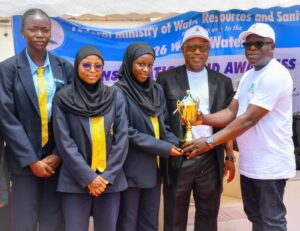
The event also featured the distribution of sanitary products to women and girls, as well as the presentation of trophies to winners of the hygiene video skit competition.
Glisten International School, Jahi, Abuja, emerged as the overall winner, taking first place. (NAN)
Edited by Funmilayo Adeyemi