










By Nana Musa
The Nigerian Financial Intelligence Unit (NFIU) and the Inter-Governmental Action Group against Money Laundering in West Africa (GIABA) have emphasised the role of the media in combating money laundering and terrorist financing.
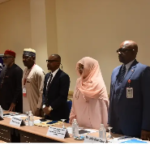
They made the remarks at the National Anti-Money Laundering and Counter-Financing of Terrorism (AML/CFT) media outreach on Tuesday in Abuja.
The Chief Executive Officer of NFIU, Hajiya Hafsat Bakari, described journalists as indispensable partners in promoting accountability and transparency.
“Financial crime thrives in darkness, but accountability grows in the presence of informed public scrutiny. This engagement with the media is not merely a routine event, but a strategic partnership.
“Money laundering and terrorist financing poses significant threats to national stability, as illicit funds often fuels organised crime, corruption, trafficking and violent extremism.
“When such financial flows go undetected, they weaken institutions, distort economies and undermine development efforts.”
Bakari said that responsible media reporting on financial crimes would contribute to awareness creation, deterrence and accountability.
She said that the media served as a bridge between policymakers and citizens by translating technical information into actionable knowledge.
Bakari urged media practitioners to go beyond merely reporting information to questioning, explaining and illuminating issues to enhance public understanding.
“For over a decade, GIABA have recognised that the effectiveness of AML/CFT frameworks depended not only on laws and enforcement agencies, but also on public understanding and civic vigilance.”
Bakari said that the programme would facilitate the establishment of dedicated AML/CFT media desk officers in participating media organisations to improve specialised reporting and sustained engagement.
She said the programme would examine Nigeria’s National Risk Assessment on AML/CFT, emerging regional threats and practical strategies for effective media engagement in combating financial crimes.
In his remarks, the Director-General of GIABA, Mr Edwin Harris, said the workshop would deepen journalists’ understanding of financial crimes and how to expose illicit financial activities.
Harris, who was represented by Mr Timothy Melaye, said that GIABA was a specialised institution of the Economic Community of West African States (ECOWAS).
He said it was established in 2000 by the Authority of Heads of State and Government to safeguard member states’ economies from the proceeds of crime and terrorist financing.
He said that GIABA also serves as a Financial Action Task Force (FATF)-style regional body responsible for ensuring compliance with international AML/CFT standards.
Harris said that the organisation also conducts research and typology studies to identify emerging trends in money laundering and terrorism financing, with a view to strengthening preventive and enforcement mechanisms.
He said that GIABA’s core mandates include promoting the implementation of international AML/CFT standards, and facilitating regional cooperation.
He added that the body also organises mutual evaluations, and supports member states in establishing Financial Intelligence Units (FIUs).
He said that GIABA had recorded significant progress through capacity-building programmes, technical support, and sustained partnerships with international stakeholders.
He urged participants to see the training as an opportunity to renew their commitment to ethical journalism and contribute meaningfully to the fight against corruption and financial crimes.(NAN)(www.nannews.ng)
Edited by Ismail Abdulaziz