
















By Ijeoma Olorunfemi
The National Space Research and Development Agency (NASRDA) and its partners have advocated reliable irrigation cropland data in Nigeria using space technology to boost food security.
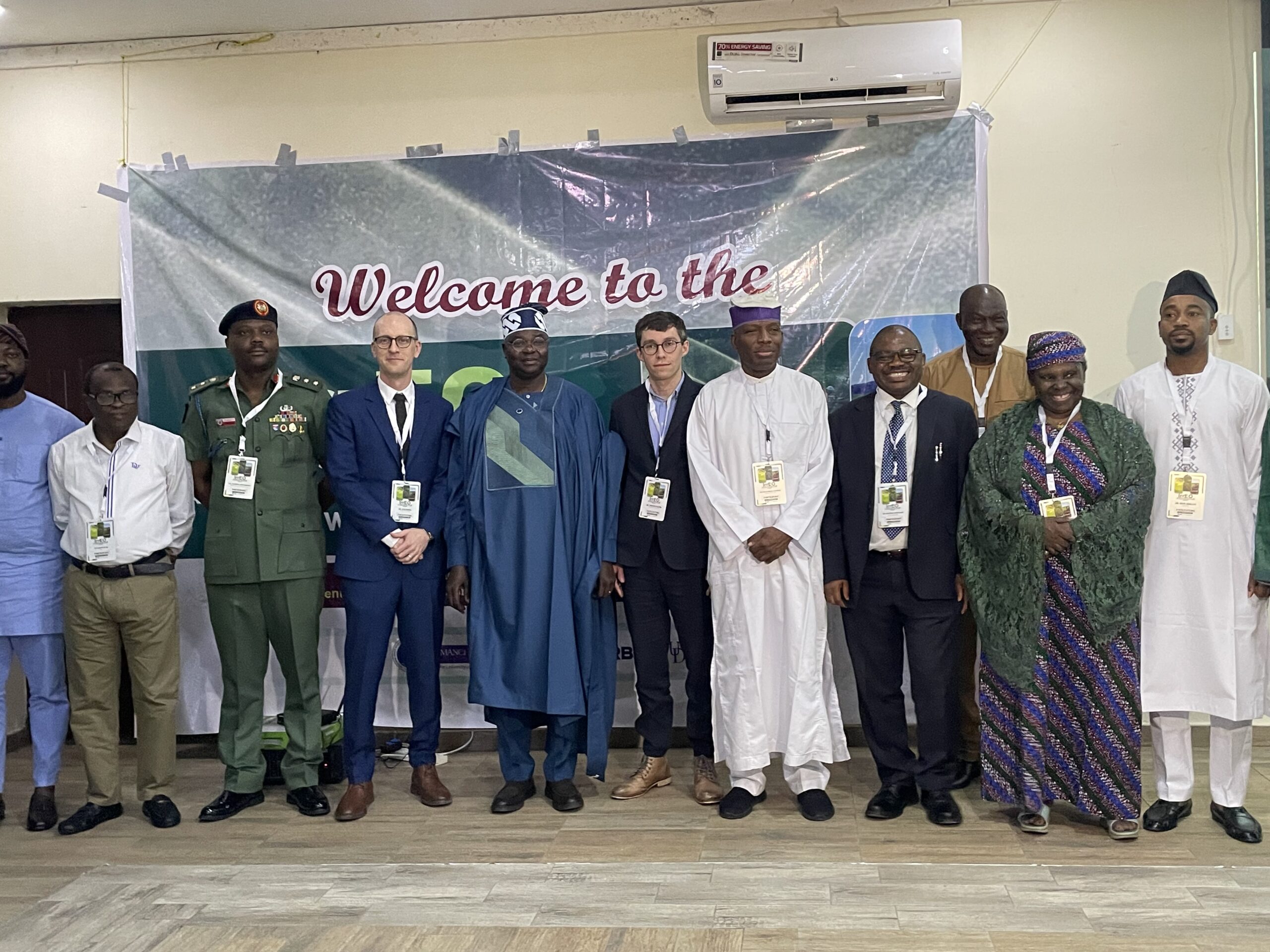
They made the call at the opening of a 3-day workshop on Irrigation Earth Observation (IrrEO) project in collaboration with University of Delaware and University of Manchester, in Abuja.
The workshop, themed “Advancing Satellite-Based Tools to Map Irrigated Croplands in Nigeria,” sought to harness earth observation technology to generate accurate, high-resolution data for irrigation development and agricultural planning nationwide.
Dr Matthew Adepoju, Director-General, NASRDA, described the initiative as a timely intervention to address longstanding data gaps in Nigeria’s agricultural sector.
Adepoju said that insufficient and out-dated irrigation data remained a global challenge.
According to him, earth observation technology offers an unprecedented opportunity to bridge that gap.
“The goal of this project is to harness the potential of earth observation to provide reliable, high-resolution data at national scale that can be regularly updated to support decision-making in irrigation and agricultural planning,” he said.
According to him, beyond technology development, the four-year project will focus on practical applications by working with public institutions, private sector actors and development partners to ensure real impact.
He further said the initiative would promote knowledge exchange with other case-study countries, including Kenya and Ethiopia, while strengthening Nigeria’s technical capacity in satellite-based agricultural monitoring.
Dr Timothy Foster, Director of Manchester’s Environmental Research Institute, said the collaboration would deepen satellite-based agricultural monitoring in Africa.
“By gaining a better understanding of how irrigation is developing, we can tackle food security and livelihood challenges.
“Irrigation improves crop yields, strengthens resilience and increases farmers’ incomes,” he said.
He said the project would run for four years, with plans to deliver an operational irrigation monitoring platform when it elapsed.
Dr Kyle Davis, an Associate Professor at the University of Delaware, said Nigeria’s strategic importance in regional and global food security informed its selection for the project.
According to him, Nigeria’s large and growing population makes rapid agricultural productivity expansion imperative.
“We are already developing irrigation maps, and many of the products will be freely available through NASRDA.
“Over time, these tools will be integrated into government ministries to support evidence-based decision-making,” Davis said.
Dr Seun Adeluyi, Country Lead for the IrrEO project, said Nigeria had irrigation potential of about three million hectares but was currently utilising less than 10 per cent.
He explained that the project would deploy satellite technology to monitor crop production, identify optimal planting periods and promote efficient water use.
“With a combination of irrigated dry-season farming and rain-fed agriculture during the rainy season, Nigeria can significantly boost food production to meet growing demand,” Adeluyi said.
He further said that extensive nationwide fieldwork would be conducted within the first two years, with tangible outputs expected by the third year to guide long-term sustainability.
Dr Godstime James, Director of Strategic Space Applications at NASRDA, earlier said the project would strengthen national irrigation efforts and enhance inter-agency collaboration.
Participants at the workshop included representatives of the Federal Ministries of Agriculture, Water Resources and Livestock Development, researchers, private sector actors, extension workers and development partners.
The project is expected to produce satellite-based irrigation maps, improve water resource management, enhance agricultural productivity and support Nigeria’s drive towards sustainable food security and economic growth. (NAN)http://www.nannews.ng
Edited by Uche Anunne