


















By Olasunkanmi Onifade
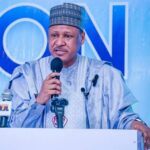
The Minister of Communications, Innovation and Digital Economy, Dr Bosun Tijani, has called for the development of homegrown solutions leveraging satellite technology to drive growth in critical sectors.
Tijani made the call on Monday in Abuja at the Nigerian Communications Satellite (NIGCOMSAT) Limited Satellite Week.
The event, themed “Harnessing Space for an Extraordinary Nigeria,” focused on the role of satellite technology in national development.
He identified agriculture, education, logistics, and security as key sectors where satellite technology could greatly enhance productivity and efficiency.
“We need to see more Nigerian solutions built on satellite technology.
“In agriculture, satellites can improve competitiveness and productivity for our farmers. In education, they can enhance learning outcomes and bridge existing gaps.
“In logistics, satellites can improve efficiency, while in security, they are powerful enablers,” he said.
The minister stressed the need for stronger collaboration between universities, researchers, and industry players.
According to him, no nation achieves sustainable prosperity without prioritising research, science, and technology.
He said the ministry recently announced a N12 million Digital Economy Research Cluster Fund to support six research clusters across the country.
“But infrastructure alone is not enough; what matters is what we build around it.
“If we invest in infrastructure and do not utilise it effectively, it yields little value.
“That is where satellite technology becomes extremely powerful.
“We are already seeing startups testing ideas, policy conversations evolving, and new partnerships forming. This is how we grow the ecosystem and position Nigeria to reap the benefits of this technology,” Tijani said.
Also speaking, the Chief of Army Staff, Lt.-Gen. Olufemi Oluyede, said the gathering of stakeholders reflected a shared recognition that space had become critical to national development and security.
Oluyede was represented by the Commander, Nigerian Army Cyber Warfare Command, Maj.-Gen. Kennedy Osemwegie.
He said collaboration among the military, government institutions, research bodies, private sector, and international partners had strengthened capacity for satellite-based intelligence and operations.
“Such cooperation is essential in addressing evolving threats, including terrorism, insurgency, climate-induced disasters, and cross-border crimes that require real-time, space-enabled intelligence,” he said.
He added that the Nigerian Army remained committed to supporting initiatives that integrate space capabilities into national defence architecture.
In her remarks, the Managing Director of NIGCOMSAT, Mrs Nkechi Egerton-Idehen, said the organisation had evolved from a single-satellite operator into a multi-service provider.
She said the agency now delivers connectivity, broadcasting infrastructure, and broadband services to government, enterprise, and telecommunications clients across Africa and beyond.
“The global space economy is undergoing a major transformation, driven by low Earth orbit commercialisation, satellite broadband expansion, and the growing importance of space-based infrastructure.
“Nigeria is not a spectator; we are active participants, building the technical capacity and institutional frameworks required to compete globally,” she said.
Egerton-Idehen said startups showcasing innovations at the event represented the future of Nigeria’s space ecosystem.
She noted that Nigeria’s decision two decades ago to invest in space technology was not only strategic but essential for participation in emerging global industries.
According to her, NIGCOMSAT recorded over N2 billion revenue in 2023 and has secured partnerships with international organisations, including Intelsat and the Kenya Space Agency.
She said through Project 774, the organisation was expanding satellite connectivity to all local government areas in Nigeria.
“This ensures that the benefits of space technology reach every community, supporting economic activities, healthcare delivery, education, and social services in underserved areas.
“It reflects our belief that Nigeria’s space programme is not about prestige, but about people,” she said.
The News Agency of Nigeria (NAN) reports that NIGCOMSAT Limited provides satellite services for government and commercial use, with coverage spanning over 60 countries across Africa, Europe, and Asia. (NAN) www.nannews.ng
Edited by Tosin Kolade