


















By Felicia Imohimi
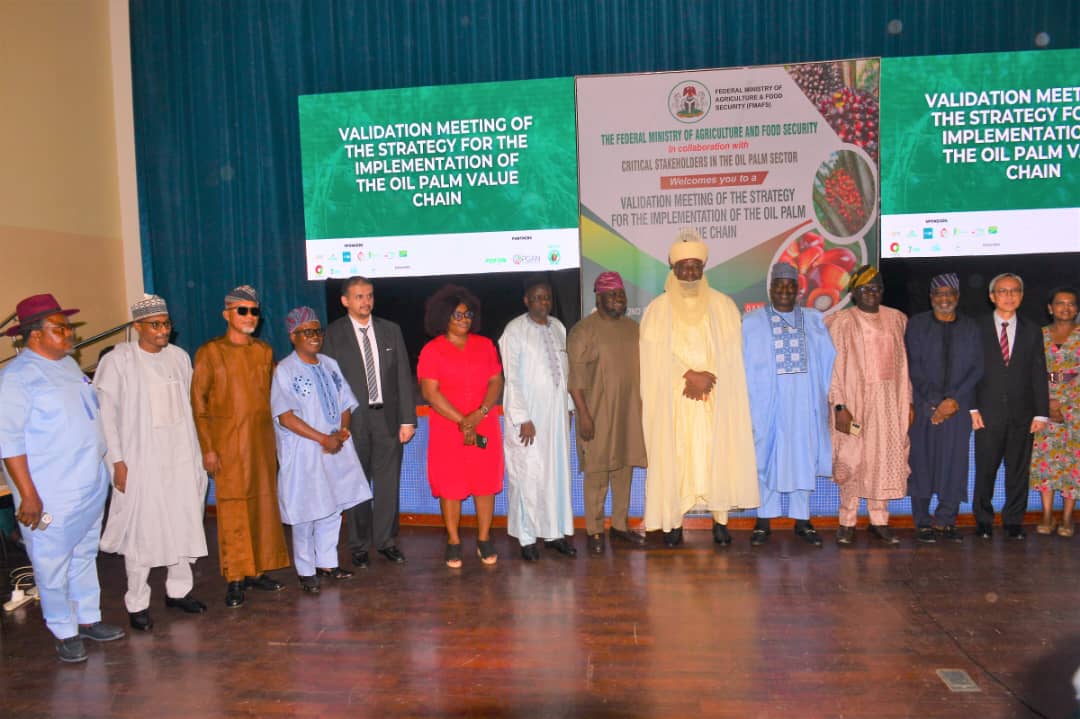
The Federal Government and key stakeholders on Thursday in Abuja validated the Nigerian Oil Palm Development Strategy to boost productivity, achieve self-sufficiency and reduce poverty.
The Minister of State for Agriculture and Food Security, Sen. Aliyu Abdullahi, described the policy as a comprehensive roadmap for the growth and development of the oil palm industry.

The validation meeting, themed “Unlocking Nigeria’s Oil Palm Potential: Pathways to Sustainability and Growth”, focused on the implementation of the oil palm value chain strategy.
Abdullahi said the initiative came at a critical time in efforts to reposition Nigeria’s oil palm industry, noting that the crop remains vital to food security, rural development, industrial growth and export diversification.
According to him, the implementation of the strategy is expected to lift about two million Nigerians out of poverty within six years through increased production.
He added that Nigeria aims to capture at least 10 per cent of the global oil palm market.
“This is not merely an agricultural ambition; it is a national economic development agenda,” he said.
The minister stressed that revitalising the sector would reduce import dependence, improve domestic edible oil supply, create jobs, boost smallholder incomes and strengthen agro-industrial development.
“If we get it right, oil palm can support livelihoods, expand industries and increase export earnings,” he said.
Abdullahi noted that the oil palm industry once played a major role in Nigeria’s economy before the rise of petroleum, contributing greatly to livelihoods and national revenue.
“Oil palm is not just a crop; it is an industrial raw material that connects agriculture to manufacturing and supports multiple value chains,” he said.
He, however, observed that Nigeria had not made expected progress in the sector due to low productivity, weak processing systems, limited financing and poor coordination.
“Countries that came after us have moved ahead with speed, structure and strategic investment,” he said.
The minister expressed optimism that Nigeria could reclaim its position in the global market, citing its vast land, favourable climate and strong domestic demand.
Also speaking, the Permanent Secretary in the ministry, Dr Marcus Ogunbiyi, described the strategy as timely and necessary.
Ogunbiyi said the initiative would enhance productivity, promote value addition, create jobs and improve global competitiveness.
He added that the validation process would ensure the strategy is practical, inclusive and responsive to the realities of the sector.(NAN)(www.nannews.ng)
Edited by Tosin Kolade