

















By Angela Atabo
The Nigerian Institute of Building (NIOB) and the West African Ceramics Limited(WACL) are collaborating to train 1000 inmates and artisans on technical capacity in construction industry.
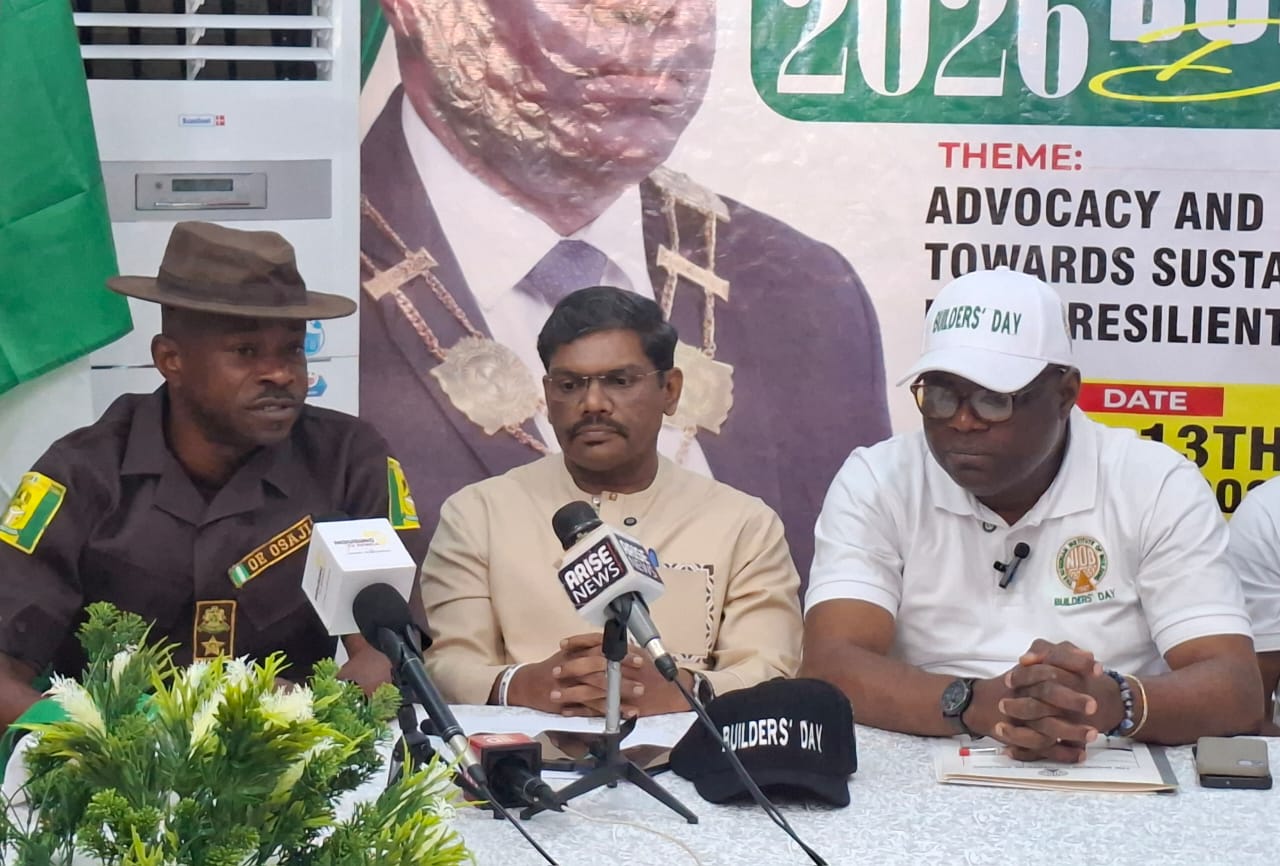
President of NIOB, Daniel Kolade, made this known at a news conference to commemorate the 2026 Builders’ Day celebration on Friday in Abuja.
He said the collaboration, formalised through the signing of a Memorandum of Understanding (MoU), was designed to address the persistent shortage of skilled artisans across the construction value chain.
Kolade said that the partnership represented a significant step towards strengthening technical competence within the construction workforce.
He added that the partnership would promote the use of modern building materials and best construction practices.
He noted that, while construction materials and technologies had advanced significantly, the successful delivery of building projects ultimately depended on the competence and professionalism of artisans who execute the work on site.
“Unfortunately, the industry has continued to face shortage of adequately trained artisans, which often affects the quality of construction work.
“Through this collaboration, structured training programmes will be implemented to equip artisans with practical skills, enhance their technical knowledge and improve overall workmanship in the construction industry.
“The initiative is also expected to support national efforts aimed at promoting vocational training, improving employability and empowering artisans with sustainable livelihood.
“We believe partnerships such as this, will contribute meaningfully to addressing the skill gap within the industry while promoting professionalism and quality assurance in construction delivery,” he said.
Kolade explained that the first phase of the project would begin before the end of March with 30 inmates selected for a three-month training programme under the National Skills Qualification Framework (NSQF).
He said the trainees would undergo different levels of certification programmes facilitated by West African Ceramics, with NIOB serving as the awarding body responsible for certification.
According to him, the programme is expected to run for five years, with about 300 participants trained annually and will eventually be expanded beyond Abuja to correctional facilities across the country.
Kolade said by the end of the partnership, no fewer than 1,000 young Nigerians would have benefited from the training programme.
The president said that beyond skills acquisition, the trainees would also receive starter packs and training kits to enable them to begin practicing the trade upon completion.
“As we celebrate Builders’ Day 2026, I urge all stakeholders to embrace the spirit of collaboration, advocacy and professional responsibility.
“Together, we can influence the reforms needed to transform the construction industry and create safer, more resilient communities for present and future generations,” he said.
The Managing Director of WACL, Franklin Jose, described the partnership as a milestone in the company’s long-standing commitment to supporting the Nigerian construction industry.
Jose noted that artisans play a critical role in bringing building materials to life.
“Even if a product is of the best quality in the factory, if the craftsmanship is not right, it will neither look beautiful nor be durable,” he said.
Jose explained that rapid changes in construction technology made continuous training and upskilling necessary for artisans to remain competitive and improve their earning potential.
Representative of the Federal Capital Territory Command of the Nigerian Correctional Service, Osaji Emmanuel, commended the initiative.
Emmanuel, who is the FCT Command Works Officer, described the initiative as “a strong example of public-private- partnership in inmate rehabilitation”.
He explained that one of the core mandates of the correctional service was the reformation, rehabilitation and reintegration of inmates into the society.
According to him, skill acquisition programmes play a vital role in ensuring inmates become productive members of society after their release.
“We have a large number of people in correctional centres, and this collaboration will go a long way in equipping them with skills that can help them earn a living when they leave custody,” he said.
Emmanuel disclosed that correctional authorities would carefully select participants for the programme based on inmates’ records and suitability for the training.(NAN)(www.nannews.ng)
Edited by Rotimi Ijikanmi