
















By Nana Musa
Malam Ali M. Ali, Managing Director of the News Agency of Nigeria (NAN), has stressed the agency’s commitment to the pursuit of truth, promotion of transparency and the fight against corruption, terrorism and misinformation.
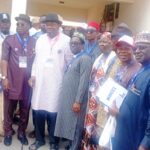
Ali gave the commitment during a courtesy visit of Inter-Governmental Action Group against Money Laundering in West Africa (GIABA) to NAN in Abuja on Wednesday.
He said that the growing threat of fake news and AI-generated content had widened the horizon for responsible journalism and verification of data.
“In this era of misinformation, it is better to err on the side of caution than to rush unverified reports. Accuracy and professionalism must remain our guiding principles,” Ali said.
He expressed the agency’s readiness to collaborate with stakeholders, including regional and international organisations, to enhance media capacity and contribute to safeguarding Nigeria and the West African sub-region.
He assured partners of NAN’s commitment to supporting initiatives aimed at tackling corruption and promoting security through responsible journalism.
“We welcome partnerships that will strengthen capacity building and help protect our societies from the dangers of corruption and criminal activities,” he said.
Ali also commended media professionals present at the event for their dedication, urging continued collaboration in advancing ethical journalism and national development.
He reiterated the agency’s position as a leading voice of credible journalism in Africa.
Ali said that NAN continues to champion truth, professionalism and the fight against corruption, five decades after its establishment.
He said that the agency played a pivotal role in amplifying Africa’s voice during the struggle against apartheid and had since evolved into a nationwide and globally recognised news content provider.
According to him, NAN has over 500 reporters spread across the country, supported by an extensive network of offices in the 36 states and the Federal Capital Territory.
Ali said that the agency had also established international presence over the years, with offices in key global cities including New York, London, United States and South Africa.
He said that efforts were ongoing to strengthen NAN’s global footprint through strategic partnerships with reputable international media organisations such as Reuters and other leading outlets.
“We have built a strong reputation as a reliable and authentic source of news.
“Today, many organisations subscribe to our services because of the credibility we have established over the years,” he said.
A representative of GIABA, Mr Timothy Melaye, said that money laundering was a major driver of crime in the country.
He said that tackling illicit financial flows remains key to curbing corruption and other criminal activities.
Melaye said that the proceeds from crimes such as drug trafficking, human trafficking, kidnapping and corruption often end up being laundered, enabling perpetrators to retain and enjoy illegal gains.
According to him, crime cannot be effectively addressed unless authorities are able to separate criminals from the proceeds of their activities.
“If offenders retain the benefits of crime even after prosecution, there is little deterrence, the focus must be on tracing and recovering illicit funds,” he said.
Melaye said that the Nigerian Financial Intelligence Unit (NFIU) plays a critical role in combating money laundering through the collection, analysis and dissemination of financial data to relevant authorities.
He said that the global cooperation and compliance with international standards were essential, as countries are assessed based on their legal frameworks and effectiveness in implementing anti-money laundering measures.
Melaye warned that weak compliance could expose countries to reputational risks, increased financial scrutiny and economic consequences.
He said that sustained capacity building across agencies, including law enforcement, financial institutions and border authorities, was essential to strengthen detection and prevention mechanisms.
He called for stronger collaboration with the media and civil society to raise public awareness, particularly among youths, on the dangers and consequences of financial crimes.
“Public enlightenment and strategic partnerships are vital in addressing the growing threats of money laundering and related crimes,” Melaye said.
He also commended Nigeria for exiting the Financial Action Task Force (FATF) gray list, saying the country needs to do a lot to maintain its new status.(NAN) (www.nannews.ng)
Edited by Ismail Abdulaziz