


By Abigael Joshua
The Nasarawa State Government has developed a comprehensive strategic framework to combat climate change.
Dr Margaret Elayo, the state’s Commissioner for Environment and Water Resources, made this known at a Stakeholders Dialogue on the Development of Nasarawa State Waste Management Policy on Tuesday.
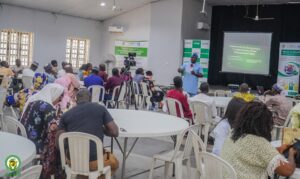
“The state government developed a strategic framework to tackle climate change through the Nasarawa State Policy on Climate Change (NASPOCC).
“This policy aims to mainstream climate action, create a Climate Change Agency, and establish an advisory committee chaired by Gov. Abdullahi Sule,” she said.
She said that without decisive intervention, climate change challenges could undermine the state’s aspirations for sustainable development and improved quality of life.
“This policy was carefully developed through a collaborative and consultative process involving key stakeholders and partners, including the Global Initiative for Food Security and Ecosystem Preservation (GIFSEP).
“The policy outlines clear measures for mitigation and adaptation across short, medium, and long-term horizons, with the aim of strengthening resilience, reducing vulnerability, and ensuring that climate considerations are integrated into development planning.
Elayo assured that the implementation of this policy is expected to drive progress in critical areas such as energy efficiency and food security.
Nasarawa, she said, is currently confronted with the growing challenge of climate change, which poses significant risks to its environment, economy, and public health.
“Addressing this threat requires a comprehensive approach that combines both mitigation and adaptation strategies.
“The impacts, ranging from irregular rainfall patterns to increased flooding and environmental degradation, demand urgent and coordinated action at all levels of governance,” she said.
Mr Ibrahim Abubakar, a representative from the Nasarawa State Ministry of Justice, said that effective waste management is not merely a matter of cleanliness but a fundamental requirement for disease prevention, urban resilience, and sustainable development.
“As we prepare for increased rainfall, it is imperative that all relevant authorities and stakeholders intensify their efforts to maintain a clean and healthy environment across the state.
“It is important to recognise that human wellbeing is anchored on three essential pillars of hygiene: food, personal and environmental hygiene. Among these, environmental hygiene stands out as the foundation upon which the others depend.
“In line with this objective, the establishment of the Nasarawa State Waste Management and Sanitation Authority (NASWAMSA) under Legal Notice No. 18 of 2021 represents a significant step forward.
Abubakar added that the authority has been empowered to perform critical functions, including waste collection and disposal, regulation of sanitation practices, removal of environmental hazards, and collaboration with both public and private stakeholders.
“Together, we can transform waste management in Nasarawa State into a model of efficiency and sustainability, ultimately turning waste into wealth and securing a healthier future for all,” he assured.
Ms Dorcas Nicanor, a representative of GIFSEP said that stakeholders’ expertise is critical to ensure the policy is inclusive, actionable, and impactful for Nasarawa State.
“This policy must go beyond collection and disposal to address waste reduction, recycling, sustainable financing, and importantly, the inclusion of biowaste management.
“Organic waste makes up a significant portion of our waste stream, and with the right framework, it can be converted into valuable resources such as compost and biogas while reducing environmental and health risks.
Mr Envoh Okolo, State Coordinator, Nasarawa State Network on Environment and Climate Justice, said that the group would ensure that waste management is managed properly to bring wealth to the state.(NAN)(www.nannews.ng)
Edited by Sadiya Hamza
Comments