















By Jacinta Nwachukwu
A non-governmental organisation (NGO), International Budget Partnership (IBP), Nigeria, has stressed the need for governments to ensure public participation in Nigeria’s debt management for more transparency and accountability.
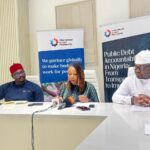
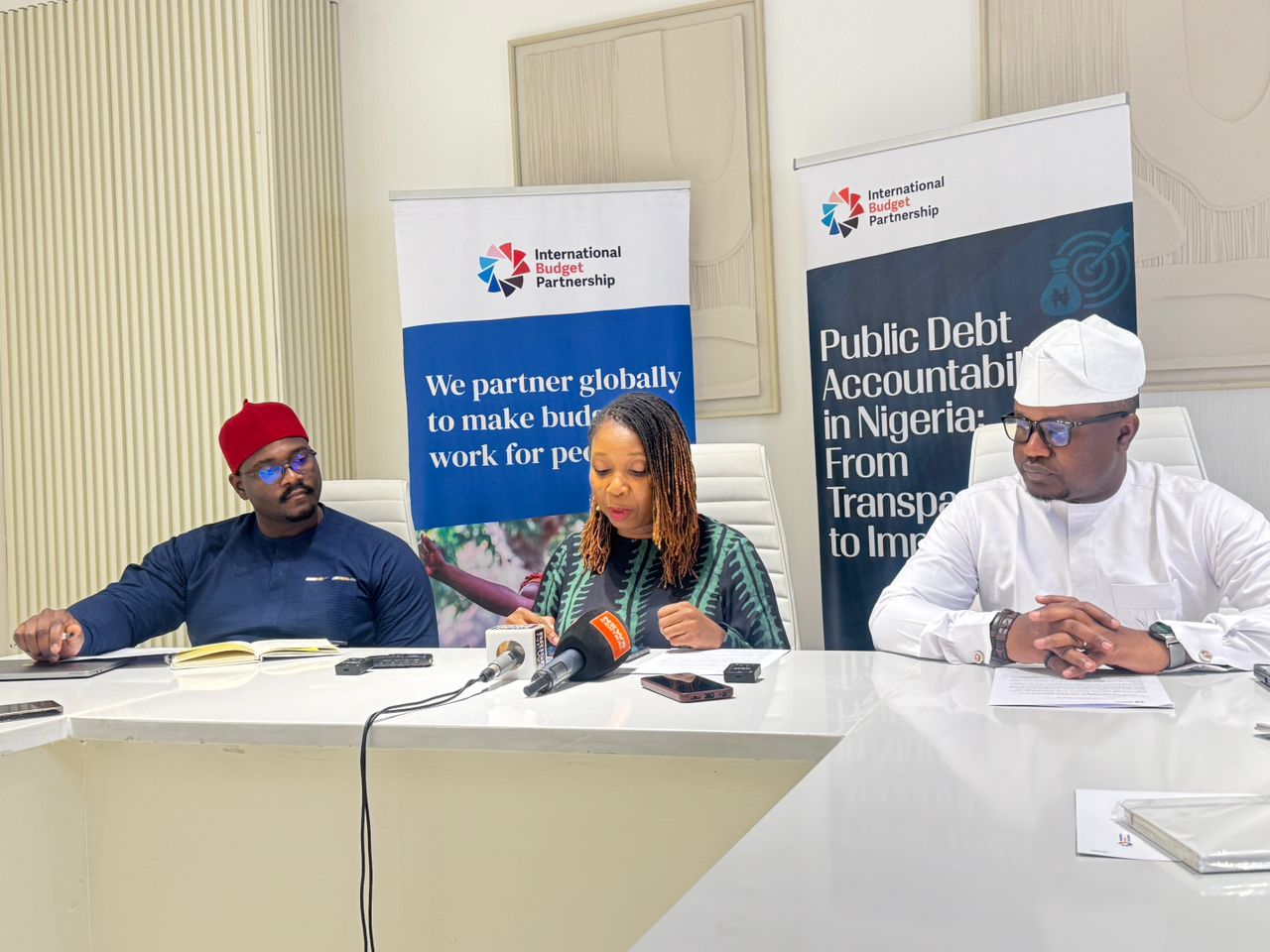
The Country Director, of IBP, Olayinka Babalola, stated this on Tuesday in Abuja at a news conference on the findings of the Open Budget Survey (OBS) 2025, the debt accountability module for Nigeria.
Babalola said that the assessment revealed that public participation on debt management was very weak, saying that the connection between borrowing and visible outcomes for citizens remained weak and often unclear.
She said that the survey also highlighted important gaps in transparency, oversight and public participation in the management of Nigeria’s public debt.
The country director said there was very little evidence of structured opportunities for the public, civil society, media and other stakeholders to engage, specifically on borrowing plans, debt levels or fiscal deficits before key decisions were finalised.
“Public debt is no longer just a technical issue for economists, debt managers or government officials. It has become a public issue.
“It affects fiscal space, service delivery, trust in public institutions and ultimately, the ability of citizens to understand how government borrowing decisions affect their lives,” she said.
According to her, the Open Budget Survey is the world’s only comparative, independent and regular assessment of transparency, oversight and participation in national budgets.
“It is widely used to assess whether budget systems provide the information and accountability needed for public scrutiny.
“The debt accountability module is a pilot extension of our work. It was developed because debt has become an increasingly important part of fiscal policy in many countries, including Nigeria.
“But the accountability side of debt management is often less visible than the numbers themselves.
“In other words, it’s one thing to know how much a country has borrowed; it’s another entirely to know whether there are sufficient systems in place for that borrowing to be transparent, properly overseen and open to public accountability,” she explained.
Babalola explained that for Nigeria, the assessment was based on publicly available information from Jan. 1, 2023 to Dec. 31, 2024.
“Looking at the parameters above, the assessment examined four key areas, such as the legal and institutional framework, debt transparency, debt oversight and public participation,” she said.
The country director said although Nigeria already had the four key structures, yet the system had refused to work in a way that would make debt accountability clear, consistent and accessible.
“There are public documents, and we also have formal rules for the legislature and the auditor-general. So this is not a story of complete absence,” she noted.
Babalola further explained that debt information was not presented in a single accessible way that allows citizens, legislators, journalists or analysts to clearly see what is being borrowed, on what terms and for what intended purpose.
While stating that the process did not fully support accountability, she argued that oversight was stronger in law than in practice.
“The National Assembly has a formal rule in approving domestic borrowing and external loans. The Office of the Auditor-General has the authority to examine debt-related transactions.
“In practice, there is limited publicly available evidence of detailed legislative review of debt strategy during the budget process.
“And all this attention is stronger on financial and compliance issues than on broader debt management performance, among others,” she said.
The country director said that Nigeria’s debt accountability challenge was not just about whether information exists, but about whether the system makes borrowing understandable, traceable, properly scrutinised and open to public engagement.
Addressing the gaps, she emphasised on three priority areas for reform – transparency, oversight and participation, stating that Nigeria needed more practical and consolidated disclosure of borrowing information.
On oversight, she said that debt strategy and borrowing decisions needed to be more meaningfully examined within the budget process.
These, she said, included strengthening legislative review beyond formal approvals and expanding audit attention to include periodic performance assessment of public debt management.
Babalola also noted that if public debt was shaping the country’s fiscal future, then there must be clearer and early opportunities for citizens and stakeholders to engage on borrowing funds, debt levels and fiscal trade-offs before key decisions were finalised.
On his part, Mr Onyekachi Chukwu, Senior Programme Coordinator, Strategy and Policy, IBP, said every country borrows, but stressed the need to borrow responsibly.
“The real issue is not only how much is borrowed, the real issue is whether borrowing decisions are governed in ways that are transparent, accountable and connected to public interest,” Chukwu said.(NAN)(www.nanews.ng)
Edited by ‘Wale Sadeeq