
















“China is ready to work with Nigeria to strengthen policy dialogue, share governance experience, and deepen practical cooperation in areas such as clean energy, disaster prevention and mitigation, desertification control, and green finance…”
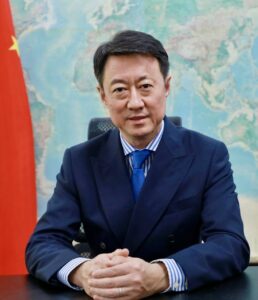
By Yu Dunhai, China’s Ambassador to Nigeria
Balancing development with environmental protection is a major common challenge for the world today.
It is also an eternal task for the sustainable development of human society.
As the world’s largest developing country, China has achieved a green development miracle that has captured global attention.
This has contributed Chinese wisdom, solutions, and strength to global ecological and environmental governance and the building of a clean and beautiful world.
The year 2026 marks the beginning of China’s 15th Five-Year Plan period.
The recently concluded “Two Sessions”, the annual sessions of China’s top legislature and political advisory body, reviewed and approved the Outline of the 15th Five-Year Plan and the Ecological and Environmental Code of the People’s Republic of China.
This paints a blueprint for China’s high-quality economic and social development and comprehensive green transition.
The 15th Five-Year Plan sets the development goals for the next five years, and explicitly calls for accelerating the comprehensive green transition of economic and social development, and actively participating in and leading global climate governance.
This also demands adherence to the principle of common but differentiated responsibilities, and fully implementing the United Nations Framework Convention on Climate Change and its Paris Agreement, and continuously deepening South-South cooperation on climate change.
The Ecological and Environmental Code directly addresses global environmental challenges. Notably, it features a standalone section on “Green and Low-Carbon Development,” a pioneering initiative in global legislative practice.
When green development becomes a national strategic goal, and the vision of harmonious coexistence between humanity and nature is enshrined in law, the path towards sustainable development for mankind is bound to become clearer and broader, thanks to China’s green commitment.
China has always been a steadfast practitioner of ecological civilisation, and has integrated ecological progress into the overarching plan for national development, taking concrete actions to fight pollution.
It became the first developing country to implement systematic PM2.5 pollution control, and has taken the lead in establishing and implementing an “ecological conservation red line” system, accelerating the development of the world’s largest national park system.
China has achieved consecutive years of “double reduction” in desertified and sandified land, and currently contributes one-quarter of the world’s newly increased green area, making it the fastest and most effective country in “greening” the planet.
Every patch of green across the land of China vividly testifies to its practice of the concept of ecological civilisation.
China has always been a pragmatic actor in global climate governance, conscientiously fulfilling its obligations under the Convention.
It has solidly advanced its goals of peaking carbon emissions and achieving carbon neutrality, by committing to achieving the largest reduction in carbon emission intensity in the shortest time globally.
China continues to optimise its energy structure, having built the world’s largest and fastest-growing renewable energy system and the most complete new energy industrial chain.
For ten consecutive years, China has ranked first globally in installed capacity for photovoltaic and wind power; its hydropower and biomass power generation installed capacities remain the largest worldwide.
It currently supplies over 80 per cent of the world’s photovoltaic components and 70 per cent of wind power equipment.
These tangible figures amply demonstrate that China is not just an active advocate but a down-to-earth implementer in climate governance.
China has always been an active leader in global environmental governance, as a participant, contributor, and leader in the global endeavor for ecological civilisation.
The country firmly upholds multilateralism and strives to build a fair, reasonable, and mutually beneficial global environmental governance system.
It vigorously promotes green development under the Belt and Road Initiative, deeply engages in global ecological and environmental governance, and works tirelessly to build a clean and beautiful world.
China actively advances South-South cooperation on climate change, increasing support for countries and regions with fragile ecosystems and weak green development capacities.
It has collaborated on green energy projects with over 100 countries and regions. As the world’s largest exporter of clean technology, China has created 46 per cent of global jobs in the renewable energy sector, injecting strong momentum into worldwide green development.
China and Africa have always been like-minded companions on the journey to address climate change and promote green development.
African countries have drawn on China’s experience with the Three-North Shelterbelt Forest Program to implement the Great Green Wall Initiative, effectively advancing efforts to combat desertification in the Sahara.
In the clean energy sector, China has implemented hundreds of cooperative projects in Africa. The installed capacity of photovoltaic power stations built through China-Africa cooperation alone has exceeded 1.5 gigawatts.
China’s Juncao technology has been introduced to Africa, becoming an exemplary model of “small and beautiful” livelihood cooperation.
Cooperation on green technologies like wind power, geothermal energy, and solar power assists African nations in their energy transition.
Through these tangible practices of green cooperation, China and Africa are setting a prime example of solidarity, cooperation, and shared development for the Global South.
The new journey of the 15th Five-Year Plan period has commenced, opening a new chapter in China’s ecological civilisation development.
Standing at this new historical starting point, China is promoting a comprehensive green transition of its economic and social development with unprecedented determination and effort.
Building an ecological civilisation concerns the common future of humanity. China will unwaveringly pursue a path of green, low-carbon, and high-quality development.
It will continue to contribute wisdom and solutions to global green development, and work hand in hand with countries around the world on the new journey towards an eco-friendly modernisation.
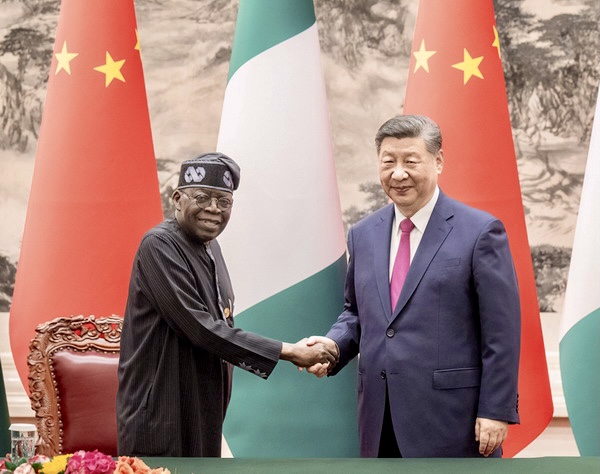
As a major African country and an important global economy, Nigeria plays an irreplaceable role in addressing climate change and promoting regional green development.
China is ready to work with Nigeria to strengthen policy dialogue, share governance experience, and deepen practical cooperation in areas such as clean energy, disaster prevention and mitigation, desertification control, and green finance.
Together, we can jointly paint a beautiful picture of harmonious coexistence between humanity and nature.
This can be done by making the Niger River clearer, the Gulf of Guinea bluer, and ensuring that the green bond of China-Nigeria friendship is passed on with everlasting vitality from generation to generation.(NAN)(www.nannews.ng)
Edited by Mark Longyen