






By Vivian Emoni
Nigeria has reaffirmed commitment to the sustainability and expansion of the West African Gas Pipeline (WAGP) as stakeholders met in Abuja to review progress and plan next phase.
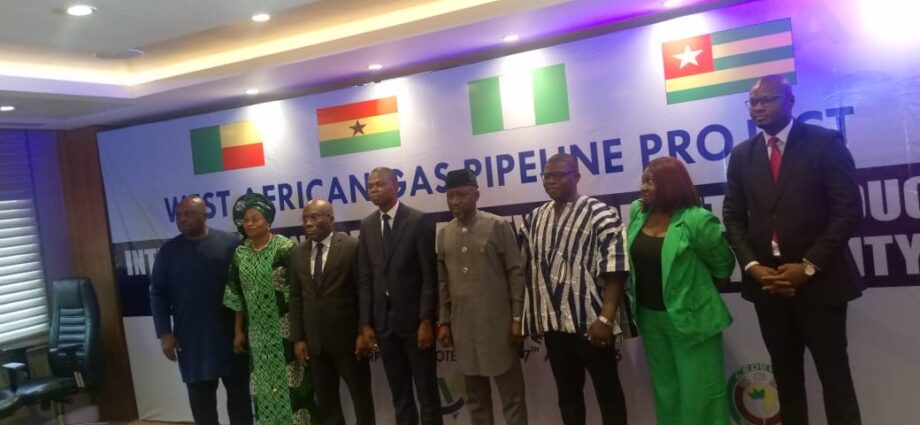
Dr Ekperikpe Ekpo, Minister of State for Petroleum Resources (Gas), said this on Friday in Abuja while declaring open the meeting of the Committee of Ministers of the West African Gas Pipeline Project.
WAGP, a 678 km subsea pipeline, transporting natural gas from Nigeria to Benin, Togo and Ghana for power generation, has remained a critical regional asset after more than 14 years of commercial operations.
Ekpo said the meeting, convened in line with the treaty establishing the project, aimed at reviewing the West African Gas Pipeline Authority (WAGPA) report, addressing implementation issues and agreeing on measures to achieve its objectives.
He said the pipeline, conceived under the ECOWAS energy integration agenda, had continued to deliver measurable results in promoting regional cooperation, energy security and economic development.
“Since inception, the West African Gas Pipeline has transported over 613 million MMBtu of natural gas, with Nigeria supplying more than 68 per cent of the total volume to Benin, Togo and Ghana.
“About 80 million MMBtu of gas has been transported in 2025, representing a 22 per cent increase compared to previous years,” he said.
Ekpo reaffirmed Nigeria’s commitment to strengthening the legal and institutional framework of the WAGP, including ongoing efforts to amend the WAGP Act currently before the National Assembly.
Earlier, WAGPA Director-General, Mrs Chafari Hanawa, commended member states and stakeholders for their continued support, describing the pipeline as one of the most enduring examples of regional integration in West Africa.
Hanawa said gas throughput increased from 30 million MMBtu in 2011 to about 80 million MMBtu in 2025, marking the best performance since the project became operational.
She attributed the growth to improved gas supply from Nigeria and the open access regime, which enabled more shippers to utilise the infrastructure, including reverse gas flow within Ghana.
The director-general also said the project generated more than 32.8 million dollars in corporate income tax for member states in 2025, representing a 156 per cent increase from 2024.
She, however, identified key challenges, including the need to boost gas supply, ensure timely payment for services and complete amendments to the WAGP Act in member countries.
Hanawa said WAGPA would, as part of its 2026 work programme, convene a stakeholders’ workshop to assess operations and explore improvement opportunities.
In his remarks, a representative from the ECOWAS Commission, Mr Arkadius Koumoin, said WAGP had strengthened energy security, supported electricity generation and industrial development and enhanced investor confidence across member states.
He urged continued collaboration among stakeholders to sustain the gains and address outstanding challenges.
Mr Abiodun Bodunrin, Managing Director, WAGP Company (WAPCo), said WAPCo had maintained safety and system integrity, recording over 12 years and 13.75 million workforce hours without any recordable injury, while achieving 99 per cent system reliability in 2025.
Bodunrin said the pipeline had delivered significant economic value, noting that gas supplied to Ghana between 2011 and 2025 generated an estimated three billion dollars in savings compared to liquid fuels for power generation.
The managing director, however, raised concern over the financial health of the gas value chain, disclosing that unsecured overdue invoices exceeded 50 million dollars as of March 30, 2026.
He said the development posed risks to investor confidence and the long-term sustainability of the regional gas market.
He said WAPCo was working with stakeholders to increase pipeline capacity utilisation by 100 MMSCFD in 2026, representing about a 45 per cent increase compared to 2024 levels.
Bodunrin, while urging stronger commitment from stakeholders in securing gas supply and offtake agreements, ensuring timely payments, legislative and regulatory reforms, said efforts were ongoing to expand market opportunities in Tema, Lomé and Cotonou.
“WAGP has demonstrated its value as a safe, reliable and economically important regional infrastructure. Unlocking its next phase requires collective action to strengthen its value chain, improve market confidence and expand utilisation,” he said.
The meeting was attended by ministers and representatives from Nigeria, Benin, Ghana and Togo, as well as officials of ECOWAS, WAGPA and WAPCo. (NAN)
EDited by Vivian Ihechu