









Warning: Undefined array key "HTTP_USER_AGENT" in /home/u310331633/domains/nannews.ng/public_html/wp-content/plugins/ultimate-social-media-plus/libs/sfsi_widget.php on line 2027
Warning: Undefined array key "HTTP_USER_AGENT" in /home/u310331633/domains/nannews.ng/public_html/wp-content/plugins/ultimate-social-media-plus/libs/sfsi_widget.php on line 2027










By Folasade Akpan
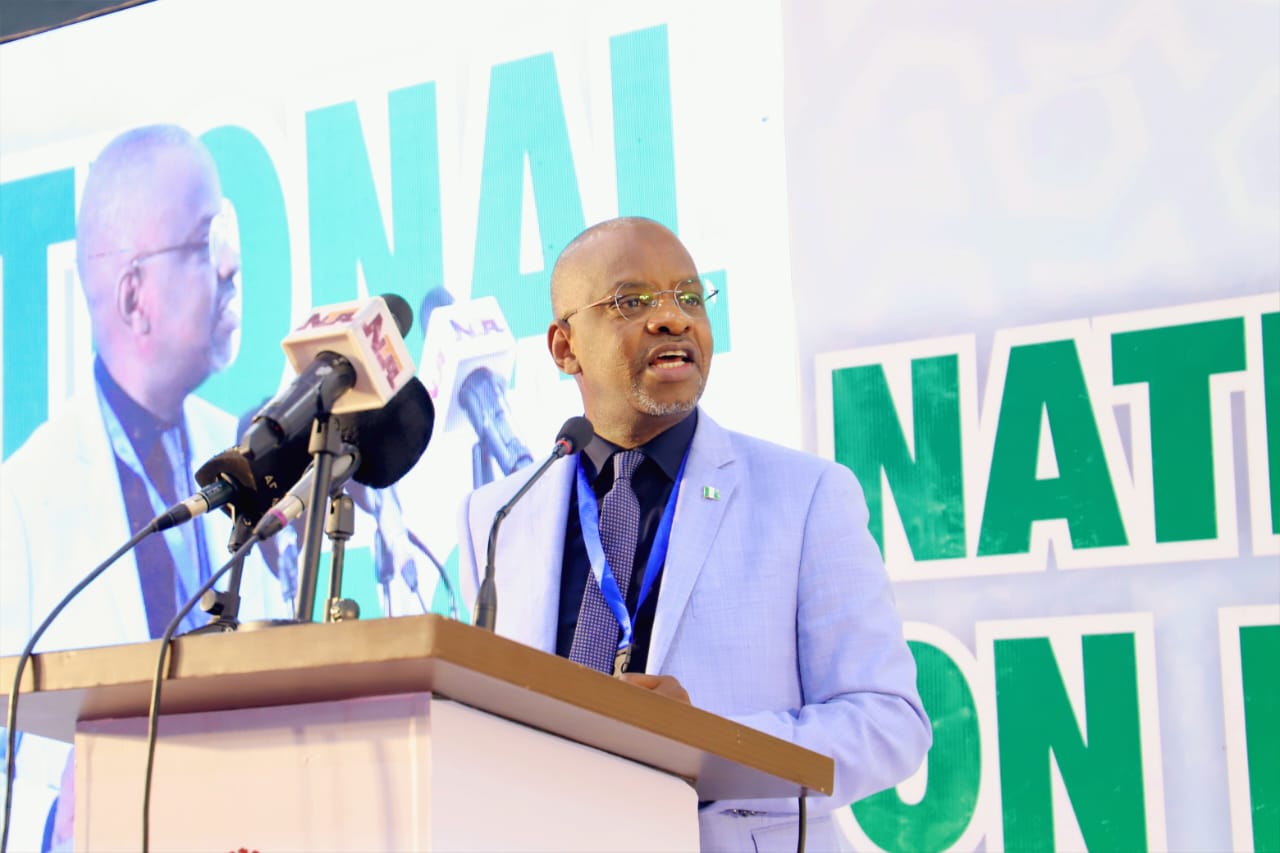
Dr Gidado Mustapha, Executive Director, KNCV Tuberculosis Foundation, Netherlands says Nigeria’s heavy reliance on imported diagnostic tools and laboratory supplies is weakening the country’s health system and exposing it to global disruptions.
Mustapha said this in Abuja at the National Summit on Diagnostics, while delivering a lecture on “Fragmentation to Integration: Building a Partnership-Driven Diagnostic Ecosystem for Nigeria’s Health System and Quality of Care”.
The summit is themed: “Strengthening Partnerships and Local Content for Integrated Diagnostics.”
Mustapha said many African countries, including Nigeria, remained vulnerable because their diagnostic systems depended largely on imported tools and technologies.
According to him, the COVID-19 pandemic exposed weaknesses in global supply chains and underscored the need for stronger local manufacturing capacity.
“Dependence on import of diagnostic tools, including reagents, is a major challenge across many African countries.
“As long as you rely on international importation of reagents and simple supplies, including maintenance of equipment, a minimal disruption in the world system will disrupt the entire system,” he said.
Mustapha noted that global studies showed nearly half of the world’s population lacked access to quality laboratory services.
“More than 47 per cent of individuals have no access to quality laboratory services globally, and this rises to about 80 per cent in low and middle-income countries,” he said.
He said Nigeria also faced additional challenges including fragmented laboratory networks and weak integration across disease programmes.
According to him, vertical programmes for diseases such as tuberculosis, HIV and malaria have often operated independently within the health system.
“Over the years, different vertical programmes have created additional crisis in the health system because everyone believes their crisis is more important,” he said.
Mustapha said such fragmentation had resulted in duplication of infrastructure, poor coordination and inefficient use of limited resources.
He stressed that integration of diagnostic services across disease programmes was critical to improving healthcare delivery.
“Patients do not walk into a facility with TB or HIV written on their foreheads; they simply come with complaints,” he said.
He said Nigeria had made progress in expanding laboratory infrastructure, particularly through donor support and investments in molecular testing.
According to him, the number of diagnostic platforms in Nigeria has grown significantly over the years.
“I started with just 19 molecular machines in Nigeria, but before I left government service the number was more than 300, but as I speak today, there are more than 500 of these facilities in Nigeria,” he said.
Mustapha, however, warned that infrastructure expansion alone could not transform healthcare without strong systems and governance.
He said functional laboratory networks required governance structures, skilled workforce, quality assurance systems and integrated data platforms.
Mustapha also called for expansion of diagnostic services at the primary healthcare level to improve early disease detection.
He stressed that decentralising diagnostics to communities would strengthen equity without compromising quality.
“Bringing diagnosis closer to communities does not mean lowering standards.
“With the right quality assurance and connectivity, decentralisation strengthens equity without compromising excellence,” he said.
Mustapha also urged Nigeria to scale up local manufacturing of diagnostic consumables and strengthen capacity for equipment maintenance.
He said strong partnerships among government, development partners, private sector and manufacturers were essential to building a resilient diagnostic ecosystem.
According to him, Nigeria must move from fragmented programmes toward an integrated diagnostic network.
Earlier, the Permanent Secretary, Federal Ministry of Health and Social Welfare, Ms Daju Kachollom, said diagnostics remained central to effective healthcare delivery.
Kachollom, represented by the Director of Hospital Services in the ministry, Dr Abisola Adegoke, said the summit came at a critical moment for Nigeria’s health sector reforms.
“As we strengthen health systems and expand access to quality care, diagnostics have become central to achieving effective, equitable and evidence-based healthcare delivery,” she said.
She noted that more than 70 per cent of medical decisions globally relied on diagnostic results.
Kachollom acknowledged that Nigeria had made progress in expanding laboratory capacity but said infrastructure gaps, workforce shortages and supply chain challenges remained.
“Addressing these issues requires stronger partnerships across government, development partners, academia and the private sector,” she said.
Kachollom reaffirmed the Federal Government’s commitment to strengthening Nigeria’s diagnostic ecosystem under President Bola Tinubu’s health sector reform agenda.
She said the ministry would continue strengthening laboratory networks, expanding quality assurance systems and implementing the National Medical Laboratory Policy and Strategic Plan.
According to her, the summit is expected to generate actionable recommendations to advance integrated diagnostics and accelerate progress toward universal health coverage in Nigeria. (NAN)(www.nannews.ng)
Edited by Abiemwense Moru