











By Usman Aliyu
Edo Government has defended its performance in office, saying ongoing projects in infrastructure, healthcare, education and security showed clear progress despite criticism from the opposition.
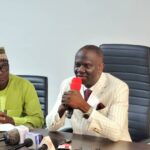
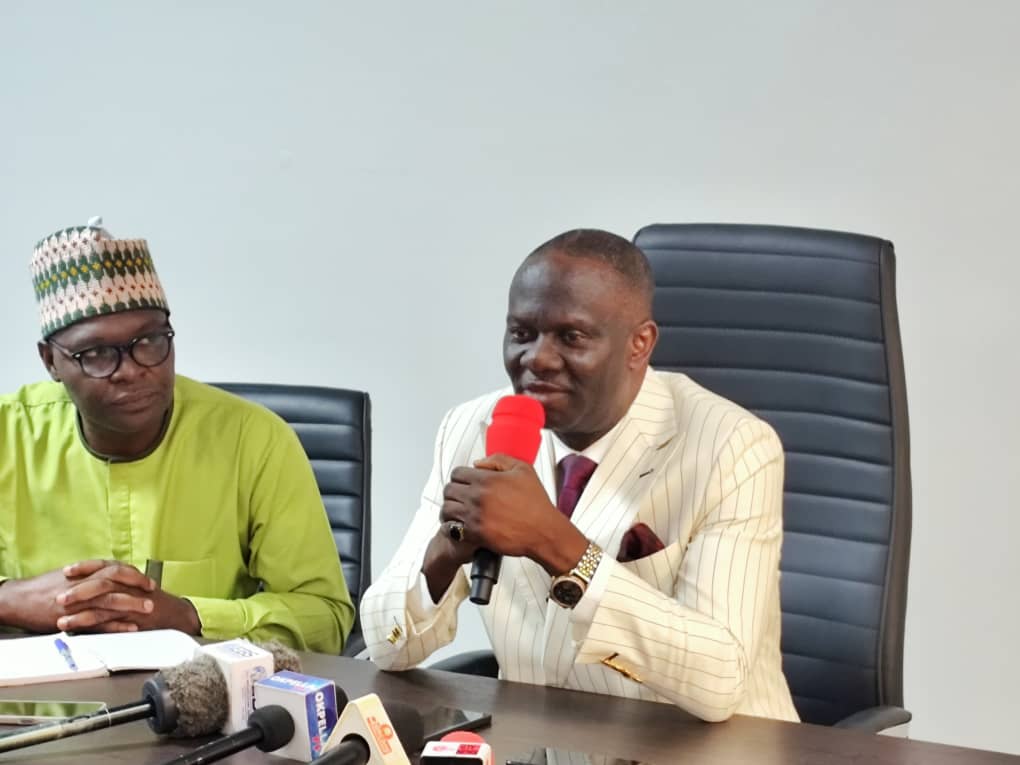
Commissioner for Information and Strategy, Prince Kasim Afegbua, stated this at a news conference held in Benin on Wednesday.
Afegbua said that the Gov. Monday Okpebholo administration had been focused on addressing inherited challenges rather than engaging in propaganda.
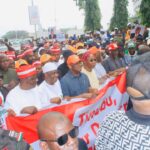
He described the recent protests against the government as driven by “faceless actors,” questioning the credibility of those behind the protests.
The commissioner also dismissed claims that the state was stagnating.
“The current Edo narrative is cheering news to the average Edo mind.
“We are not into propaganda. What we are doing, you can see for yourselves,” he said.
Afegbua anchored the government’s defence on infrastructure, pointing at the ongoing and completed road projects across the state.
He also listed the near-completion of the Ramat Park flyover and a second flyover at Adesuwa junction in Benin as some of the new infrastructural developments being carried out by the Okpebholo administration.
He also cited rehabilitation works on Sapele Road, previously abandoned, as well as multiple urban and rural road projects, spanning Edo South, Central and North Senatorial Districts.
“In 18 months, we can beat our chest that the governor has done so much to advance critical infrastructure,” he said, noting that road construction was being accelerated despite early rains affecting timelines.
Afegbua also highlighted interventions in the education sector, stating that about 6,500 teachers had been recruited, alongside rehabilitation of dilapidated schools previously lacking basic facilities, such as desks, roofs and toilets.
“Today, you can go around and see the difference,” he said.
The commissioner added that completed school projects had risen from 68 at the administration’s one-year mark to nearly 80.
In healthcare, he said that the state government had expanded primary healthcare access by already constructing 75 centres, with a target of 160 within four years.
He said that many of the facilities had been equipped to deliver immediate services at the grassroots, while work had resumed on Stella Obasanjo Hospital which, he said, was inherited at 55 per cent completion.
“We are strengthening primary healthcare because it is the first point of contact for our people,” he said.
On higher education, Afegbua disclosed that the state recentlyu committed N2 billion to infrastructure development at Edo State University, Iyamho, while also increasing its monthly subvention from N100 million to N250 million.
Government, he said, had also provided buses to support students’ mobility.
Beyond infrastructure and social services, he pointed at the economic support initiatives, including a N1 billion interest-free loan scheme for market women and another N1 billion set aside for students’ bursaries.
All these, he noted, were aimed at easing economic pressure and expanding access to education.
While acknowledging that security incidents had shifted from urban centres to the hinterlands, Afegbua, however, maintained that overall security had improved significantly in the state.
“The way kidnapping was rife when we took over, I think it has dropped maximally,” he said, citing bush-combing operations, arrests and destruction of criminal hideouts.
He also stated that government had procured over 100 Hilux vans and 300 motorcycles for security agencies.
Similarly, he said that government had supported the local vigilante operations and established a rapid response mechanism for road maintenance and emergency interventions.
Afegbua further said that local governments had been empowered with heavy-duty equipment to open rural roads and improve mobility, describing the decentralised approach as critical to grassroots development.
“We need the cooperation of everyone. Security is not just about government; it is about collective responsibility,” he added.
Responding to concerns about transparency, particularly around contract costs, the commissioner insisted that all projects followed due procurement process and were approved by the State Executive Council.
“If you check with the Ministry of Works, you can always get the cost of those contracts,” he said, stressing that the administration was prudent in resource management.(NAN) (www.nannews.ng)
AUO/GOM/WAS
========
Edited by Gregg Mmaduakolam/’Wale Sadeeq