















By Emmanuel Afonne
The Civil Society Organisations (CSOs) have called on the Federal Government to ensure transparency and expedite the utilisation of recovered assets for the benefit of Nigerians.
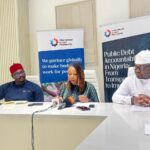
The call was made in Abuja by Mr Leo Atakpu, Deputy Executive Director, African Network for Environmental and Economic Justice (ANEEJ), at a forum for journalists and other stakeholders on asset recovery organised by the group.
Atakpu said although Nigeria had recorded progress in asset recovery, concerns persisted over delays in utilisation and limited public disclosure.
He cited the recovery of over $900,000 deployed to primary healthcare facilities, as well as the Galactica restitution of about $50 million linked to a former Petroleum Minister, Diezani Alison-Madueke.
According to him, some recovered funds earmarked for rural electrification projects under a World Bank-supported initiative, to be managed by the Rural Electrification Agency (REA), are yet to be disbursed.
“The challenge is that some of these recovered assets are still domiciled in locations that are not clearly known, even to monitoring groups.
“We expect the World Bank, REA and the Central Bank of Nigeria (CBN), to clarify where these funds are currently lodged,” he said.
Atakpu expressed concern that some recovered funds had remained idle in the CBN for years, urging relevant institutions to expedite disbursement.
He also stressed the need for periodic public disclosure on the status, location and utilisation of recovered assets to address misinformation and build public trust.
Also speaking, Mr Walson Paminola, the Vice Chairman, Bayelsa Non-Governmental Organisation Forum (BANGOF), said his group did not participate in the bidding process but was focused on monitoring and tracking the utilisation of the funds.
“We are ensuring that there is value for money and that the looting of recovered funds does not happen again,” he said.
Paminola said findings indicated that delays in the implementation process were largely due to procurement challenges and inability of initial bidders to meet stipulated requirements under the Memorandum of Understanding (MoU) between Nigeria and its international partners.
“The first set of non-governmental organisations that bidded were unable to meet the required standards.
“There have been back and forth engagements because those requirements are beyond local discretion.
“The government is now considering a direct purchasing approach involving the Federal Ministry of Justice, the Federal Ministry of Health and relevant state agencies to fast-track implementation.
“I think in a short time from now, work will commence in the selected health facilities,” he said.
Paminola added that CSOs had faced challenges accessing key documents such as the Bill of Quantities, which are necessary for effective monitoring and evaluation.
“We have insisted on access to such documents because they provide a basis for proper tracking and accountability,” he said.
He, however, noted that CSOs were already engaged in the monitoring framework as provided in the MoU and would ensure transparency in fund utilisation.
On project selection, Paminola said the targeted healthcare facilities were carefully chosen based on population needs and access gaps.
“We focused on underserved communities with high population influx and limited healthcare services.
“The idea is to ensure that the funds are used for service delivery that directly benefits the people, not just infrastructure that does not translate to impact,” he added.
He expressed optimism that the project would commence soon, noting that the funds remained available for disbursement once processes were concluded. (NAN)(www.nannews.ng)
Edited by Chinyere Joel-Nwokeoma