









By Justina Auta
As the world marks World Sight Day 2025, Sightsavers and Bloomberg Philanthropies have launched a 75million dollars Vision Initiative to tackle untreated vision impairment in low and middle-income countries.
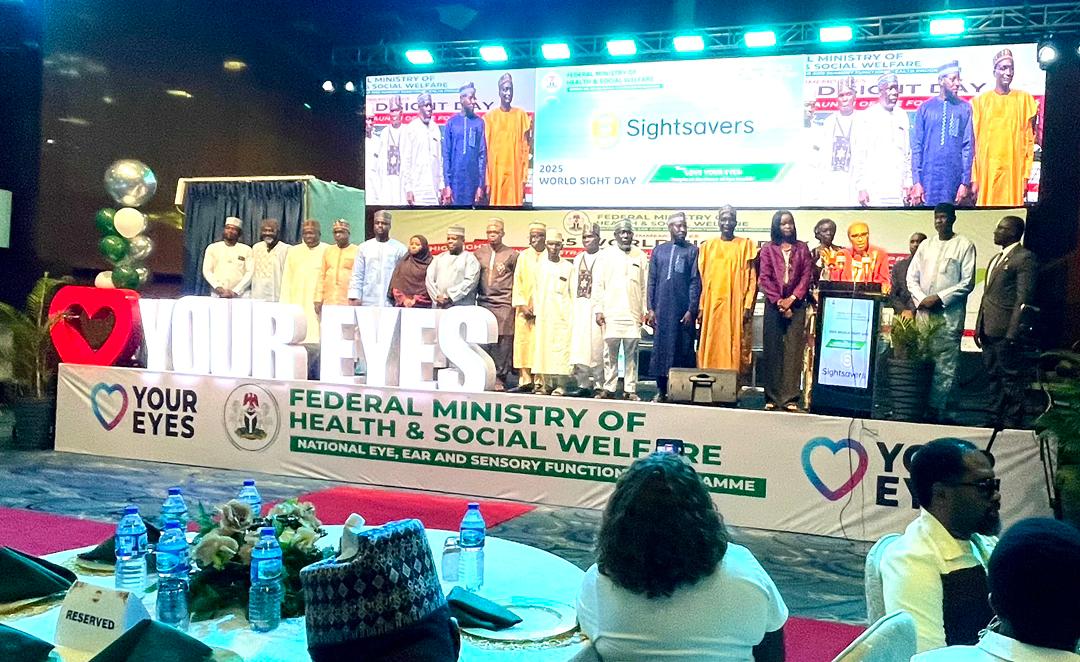
The initiative was launched in Abuja as part of activities to commemorate the 2025 World Sight Day, themed “Love Your Eyes”, which focuses on access to quality eye care worldwide.
Prof. Joy Shuaibu, Country Director of Sightsavers Nigeria, said the two-year programme aimed to strengthen eye health services through collaboration with the Ministries of Health and Education in participating countries.
She explained that activities would include training health workers and teachers in basic eye health screening, providing examinations and glasses, and expanding outreach in schools, communities, and among out-of-school children.
According to her, the initiative will screen 11.5 million people, distribute seven million pairs of eyeglasses, and carry out 250,000 cataract surgeries across Nigeria, Kenya, Bangladesh, Cambodia, Ethiopia, and the United States.
“Making eye care a priority will be transformative for people, for communities, and for Nigeria.
“Good eye health reduces inequities, gets more children in school, and helps adults remain productive,” Shuaibu said.
She added, “Access to glasses and cataract surgery can boost learning and economic productivity. That’s why we are investing heavily in this initiative, especially in underserved populations across countries.”
Minister of State for Health and Social Welfare, Dr Iziaq Salako, emphasised the importance of regular eye checks to maintain good vision and prevent avoidable causes of blindness among all age groups.
Represented by Dr Olawole Jimoh-Salawudeen, Director of Hospital Services, Salako urged early diagnosis and treatment by qualified eye health professionals as key to achieving the goals of 2025 WSD theme.
“The ministry believes that increasing access to quality eye care will improve education, productivity, and quality of life, and ultimately contribute to national development and increased life expectancy,” he stated.
Salako noted that Nigeria’s current blindness prevalence was 0.78 per cent, with 84 per cent of cases considered preventable, a situation that could be reversed through policy implementation and greater investment in eye health.
He reiterated the government’s commitment to eye care through initiatives like the Effective Spectacle Coverage Initiative, adoption of the 2019 National Eye Health Policy, and other public health programmes.
Also speaking, Dr Oteri Okolo, National Coordinator of the National Eye, Ear, and Sensory Functions Health Programme (NESHP), said a new Memorandum of Understanding (MoU) demonstrated ongoing government commitment to eye health.
“This MoU reflects Mr President’s commitment to improving eye health.
“In 2023, he approved Jigibola 2.0, to increase access to glasses and general eye care services nationwide,” she said.
Dr Emem Omokaro, Director-General of the National Senior Citizens Centre, highlighted that vision loss was a major crisis affecting older persons’ independence, safety, and overall quality of life in Nigeria.
“When their vision is impaired, it translates to an inability to support themselves and live independently.
“We must integrate health care, social protection, and insurance for meaningful ageing,” Omokaro stated. (NAN)(www.nannews.ng)
Edited by Abiemwense Moru