






follow and like on:










By Taiye Olayemi
Senior policymakers, regulators and insurance industry leaders have called for coordinated reforms and stronger collaboration to unlock the growth potential of the insurance industry.
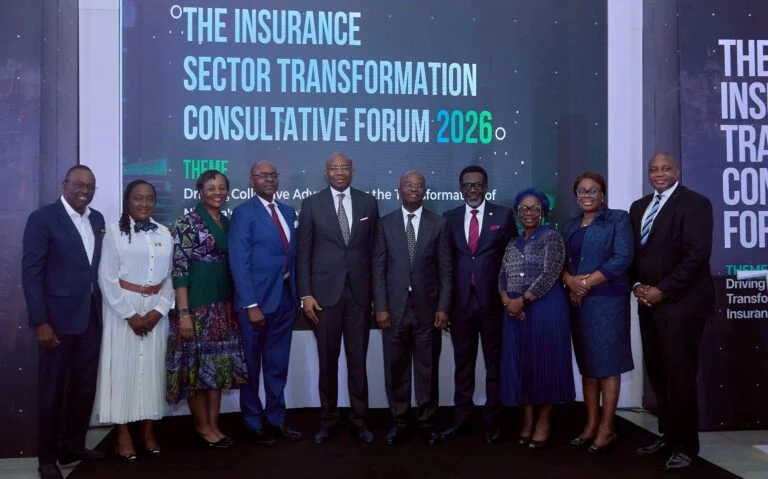
The call was made at the 2026 edition of the Insurance Sector Transformation Consultative Forum, in Lagos, with the theme: “Driving Collective Advocacy for the Transformation of Nigeria’s Insurance Industry”.
The forum was convened by EnterpriseNGR in collaboration with the Nigerian Insurers Association and the Lagos Chamber of Commerce and Industry, with support from key industry stakeholders.
Participants at the gathering emphasised the urgent need to rebuild public confidence in insurance, deepen market penetration and strengthen the sector’s contribution to economic growth.
Chairman of the Senate Committee on Banking, Insurance and Other Financial Institutions, Sen Tokunbo Abiru, said that the recently enacted Nigeria Insurance Industry Reform Act (NIIRA) would modernise the legal framework governing the sector.
According to him, the focus must now shift from legislation to implementation.
“The essence of this gathering goes beyond putting the law in place; it is about implementing the legislation.
“Implementation can best be achieved through cooperation and collaboration among all players in the industry and we have to thank EnterpriseNGR for leading this advocacy,” he said.
Chairman of EnterpriseNGR, Mr Aigboje Aig-Imoukhuede, described insurance as a critical pillar of economic development, noting that Nigeria’s insurance penetration remained below one per cent of Gross Domestic Product (GDP).
He said growing penetration to three per cent or higher would significantly expand the sector and stimulate broader economic growth.
“The greatest source of growth for any economy is investment, and the lever through which that growth is achieved is the financial and professional services sector.
“Insurance is one of the most important services globally, and we must raise its relevance in our economy,” he said.
Aig-Imoukhuede described EnterpriseNGR as the financial services and professional services advocacy body driving the transformation of the Nigerian economy through the activities of banking, insurance, asset management, accounting, law, and fintech.
The Commissioner for Insurance and Chief Executive Officer of the National Insurance Commission, Mr Olusegun Omosehin, said the transformation of the insurance sector was imperative to achieving the economic reform agenda of President Tinubu.
Omosehin noted that regulatory reforms were already underway, as he emphasised the need for sustained collaboration across stakeholders to drive meaningful change.
He said, “Given the ambition of President Tinubu on the direction of the transformation of the Nigerian economy, the transformation of the insurance sector is no longer optional. It has to commence now.
“Given the level of work that has been done at the regulatory end, it then becomes obvious that we need a platform for collaboration across all stakeholders in the financial services and professional ecosystem to ensure that the desired transformation is given meaning.
“There is no nation on this planet that can successfully transit to that level of growth without the resilience required from the insurance sector.”
The President of the Chartered Insurance Institute of Nigeria (CIIN), Mrs Yetunde Ilori, underscored the importance of collective action to address structural challenges limiting insurance adoption.
Ilori identified low consumer awareness, trust deficits arising from claims disputes, and service inefficiencies as key barriers to penetration.
Also, the Director-General of the Nigerian Insurers Association (NIA), Mrs Bola Odukale, called for greater transparency in claims management, improved consumer education, enhanced service standards and stronger ethical compliance to rebuild public trust.
The forum also examined the role of innovation and digital transformation in expanding access to insurance products across retail, MSME and corporate segments.
Stakeholders unanimously emphasised the need for modern risk-based supervision frameworks, improved regulatory coordination and effective implementation of the reform law to ensure sustainable industry growth.
They highlighted the importance of strengthening human capital development, particularly in actuarial science, digital skills and advanced risk management.
Participants agreed that a stronger insurance industry could mobilise long-term capital to support national priorities such as infrastructure, agriculture, healthcare, energy and the digital economy.
They said recommendations from the forum would guide continued engagement with policymakers and regulators, as well as the development of a coordinated industry roadmap to position insurance as a stronger driver of Nigeria’s economic development. (NAN)(www.nannews.ng)
Edited by Olawunmi Ashafa
follow and like on: