


By Angela Atabo
Key stakeholders across government, civil society and industries have called for stronger regulatory coordination and accelerated action on methane abatement in Nigeria’s oil and gas sector.
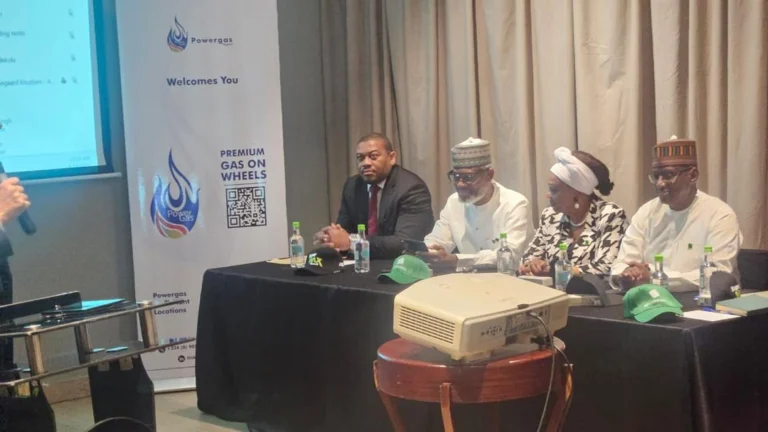
They made the call at the Methane Emission Abatement in the Oil and Gas Industry Regulatory Dialogue organised by the Stakeholder Democracy Network (SDN) and other partners on Friday in Abuja.
The SDN Country Director, Mrs Florence Ibok-Abasi, said the gathering marked a turning point in efforts to harmonise regulatory approaches, describing collaboration as critical to achieving meaningful climate outcomes.
Ibok-Abasi stressed that fragmented regulatory approaches have slowed progress in the past, noting that the current engagement aimed to align priorities, strengthen enforcement, and build lasting institutional coordination.
“We are here to align priorities, learn from our challenges, break down silos, and build genuine coordination among all stakeholders.
“Each of you brings critical knowledge; upstream expertise, midstream insights, climate policy perspective, civil society accountability, and legislative oversight. Our strength lies in bringing these together.
“Improved inter-agency cooperation is not optional; it is the foundation for better data, stronger enforcement, and credible progress toward Nigeria’s global methane pledge. We have the talent to make this work.”
Ibok-Abasi said the dialogue was the first of two, adding that a second dialogue would be reconvene to advance initiatives and collaboration that would ensure improvement of methane abatement in the oil and gas sector.
Also speaking, Dr Jude Samuelson, Head of Environment and Climate Change, SDN, highlighted methane reduction as one of the fastest and most effective strategies for tackling climate change globally.
Samuelson noted that the initiative was, therefore, designed to ensure regulators and operators work hand in hand to deliver measurable results.
However, he identified the high cost of methane abatement technologies as a major constraint, calling for stronger government-industry partnerships to make such solutions more accessible and scalable in Nigeria.
“One of the recommendations that SDN has is to see how the government can work with the operators to ensure that the operators afford these technologies.
“We are also interested in bringing some of the new technologies from methane emission abatement down to the country to see how the technologies could be deployed in the oil and gas sector to ensure that emissions reduce drastically.”
From the climate policy perspective, Mr Chukwuemeka Okebugwu of the National Council on Climate Change (NCCC) said methane remained a significant contributor to global warming, particularly in oil-producing countries like Nigeria.
“The oil and gas sector is a major source of methane emissions.
“So regular dialogue helps us develop practical solutions and also identify opportunities, including converting methane into useful energy instead of wasting it,” he said.
Mr Odafe Atebe, Technical Advisor on Health, Safety, Environment and Community to Mr Saidu Mohammed, Chief Executive Officer of Nigerian Midstream and Downstream Petroleum Regulatory Authority (NMDPRA), highlighted the need for methane abatement.
Atebe described methane abatement as a cost-effective pathway for Nigeria to achieve climate goals without compromising energy security.
“Fragmented approaches will not deliver the scale of impact required. We must move beyond discussions to coordinated action across the entire oil and gas value chain,” he said.
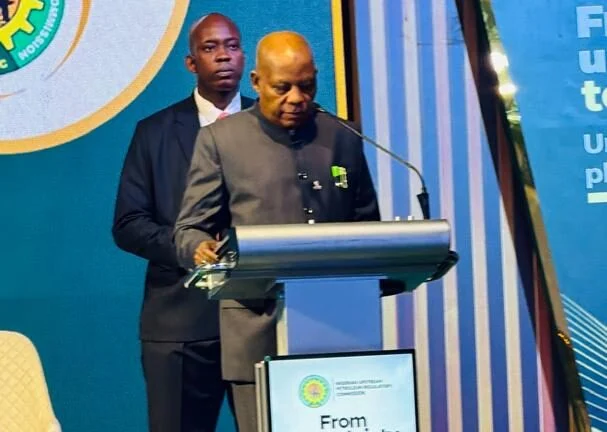
Similarly, Ibrahim Jilo, Senior Manager, Nigerian Upstream Petroleum Regulatory Commission (NUPRC), noted that while progress has been made, challenges remain in ensuring compliance across a diverse and evolving industry landscape.
Jilo emphasised the importance of tailored approaches, capacity building, and sustained engagement with operators.
From the civil society standpoint, Tengi George-Kalu of the Natural Resource Governance Institute (NRGI) urged stakeholders to ensure that methane reduction efforts translate into tangible benefits for communities affected by oil and gas operations.
“Collaboration is key to moving from policy ambition to real implementation and enforcement,” she said.(NAN)(www.nannews.ng)
Edited by Yakubu Uba

Comments