


By Ibironke Ariyo
A Judge of the Federal High Court, Justice Obiora Egwuatu, has urged stronger collective action to end Sexual and Gender-Based Violence (SGBV), describing it as a pervasive global and national challenge.
Egwuatu made the call on Thursday in Abuja at the official launch and dissemination of the SGBV Investigator Aide-Memoire Card.
The project, themed “Strengthening the Forensic Capacity of Nigeria to Support the Effective Investigation and Prosecution of SGBV Linked to Terrorism in Borno State”, is funded by Global Affairs Canada (GAC).
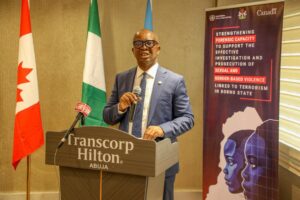
The judge described SGBV as any act committed against a person’s will based on gender norms and unequal power relations, including rape, sexual assault, domestic violence, child marriage, female genital mutilation, sexual harassment and economic abuse.
He said the menace thrives in silence, with women and girls mostly affected, although boys and men also suffer, often in silence due to stigma and societal perceptions of weakness.
According to him, the consequences of SGBV are far-reaching, including physical injuries, unwanted pregnancies, and sexually transmitted infections such as HIV, psychological trauma, depression and, in extreme cases, death.
Egwuatu illustrated the long-term emotional toll on survivors, noting that victims often struggle with fear, broken relationships and difficulty in rebuilding their lives.
“Beyond the individual, SGBV destroys families, places pressure on health systems and weakens the fabric of communities,” he said.
The judge identified major challenges in tackling SGBV to include a culture of silence and stigma, weak reporting and justice systems, delays in investigation, poor evidence gathering and preservation, and low conviction rates.
He added that inadequate support systems, such as limited access to medical care, psychological services, shelters and legal aid, further discourage survivors from seeking justice.
Egwuatu also cited harmful cultural norms, including patriarchy and victim-blaming, as factors that normalise violence and protect perpetrators.
He noted that conflict and poverty, particularly in insurgency-affected areas, had increased vulnerability to SGBV, especially among women and children.
The judge stressed that addressing SGBV was not the responsibility of the government alone but required the involvement of all sectors of society, including families, schools, religious institutions and social groups.
“We must believe survivors, show empathy, expose perpetrators and encourage victims to report these crimes,” he said.
Speaking, the Senior Project Manager at Global Affairs Canada, Ms Wilma Endamne, reaffirmed Canada’s commitment to strengthening Nigeria’s response to SGBV through capacity building and operational support.

Endamne noted that accessible tools and targeted training were essential in reinforcing professional standards, promoting consistency in investigations and improving coordination among stakeholders at the operational level.
She commended national partners and United Nations Office on Drugs and Crime (UNODC) for their leadership in developing the guide, as well as stakeholders committed to its implementation and utilisation.
She expressed confidence that the discussions at the event would further strengthen partnerships and enhance the impact of the initiative.
Endamne added that GAC remained committed to supporting efforts aimed at combating sexual violence and improving investigative and justice systems in Nigeria.
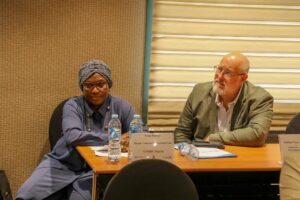
Earlier, the Country Representative, UNODC, Mr Cheikh Toure, expressed appreciation to the Government of Canada, UN partners, Nigerian institutions and all stakeholders involved in developing the guide.
Toure urged stakeholders to use the launch as an opportunity to reinforce their collective commitment to ending sexual violence and strengthening justice systems in the country.
He noted that the initiative was made possible through the support of the Canadian government, which he said demonstrated a strong commitment to ending impunity and ensuring access to justice for survivors.
“Their contributions have been more than financial. It reflects a principled commitment to justice and trust in Nigerian institutions to deliver lasting impact,” he said.(NAN)(www.nannews.ng)
Edited by Stanley Nwanosike and Yakubu Uba



Comments