















By Justina Auta
Stakeholders in the health sector have called on the Federal Government to adopt innovative and sustainable financing mechanisms to strengthen the prevention and control of non-communicable diseases (NCDs) in Nigeria.
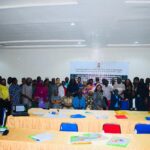
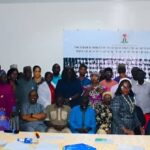
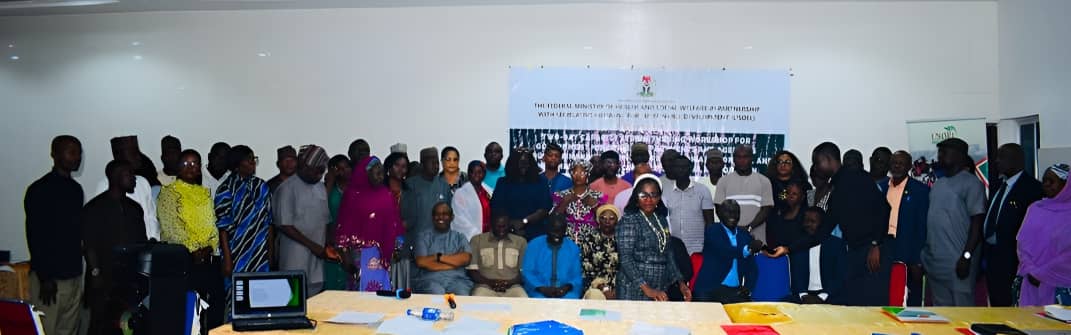
The stakeholders made the call at a two-day capacity-building workshop for Ministries, Departments and Agencies (MDAs) on public financing for NCDs and implementation of of NCD-MSAP on Thursday in Mararaba, Nassarawa State.
The workshop was organised by the Federal Ministry of Health and Social Welfare (FMoHSW), Legislative Initiative for Sustainable Development (LISDEL) and Global Health Advocacy Incubator (GHAI).
They noted the rising burden of diseases such as hypertension, diabetes, cancer and cardiovascular diseases requires urgent and diversified funding approaches beyond traditional budgetary allocations.
Dr Alayo Sopekan, National Coordinator, NCD Division, FMoHSW, noted that while the government is making efforts in funding NCDs the level of funding remains relatively low, with few partners interested in supporting it’s prevention, control and management.
Sopekan said early NCD detection is vital for prevention and control, noting that timely intervention can delay or prevent onset and slow disease progression in affected individuals.
According to him, a recent survey on NCDs burden and trends in Nigeria shows that 8 per cent of Nigeria’s population currently live with diabetes; 14 per cent with hypertension, while 25 per cent carrying sickle cell gene.
He, therefore, stressed need for sustainable innovative allocation of funds to address NCDs, which will improve health outcomes and reduce mortality resulting from the diseases.
He noted that since 2015, the government has introduced several taxes on alcohol, sugar-sweetened beverages, and tobacco products to generate revenue, reduce consumption of these harmful products, and ultimately prevent the development of related diseases.
” So now you put in these taxes, these taxes are coming in, we are now saying that some of the money supposed to be plugged back to address the NCD that these products are causing.
” But of course, the money is being spent in another way not to address the NCD,” he stated.
According to him, the workshop aims to sensitize MDAs to support allocating even 1 per cent of tax revenue to NCD control, to visibly improve health outcomes in Nigeria.
“One of the reasons why we are here is to open the eyes of everybody here, the MDAs to support us ensure that some of these taxes even if it is just 1 per cent of the amount generated from the tax that government can bring back to address NCD in Nigeria,” he said.
Prof. Alhassan Emmanuel, Country Lead, Health System Strengthening for GHAI, highlighted the high mortality burden associated with NCDs, noting that they account for approximately one-third of all deaths in Nigeria.
He said, “this is very alarming. Unfortunately, funding for NCDs has been really challenging.
“Last year, not one naira was released for NCDs at all. We are already in the second quarter of 2026, and we really don’t know what is going to happen this year.
“That is one of reasons we are here so that all the MDAs that are concerned can have their capacity built in terms of how to not only budget, but also advocate for releases after appropriations are made.”
Emmanuel, however, commended the Federal Government for its efforts in 2024, noting that glucometers were provided to at least one primary healthcare centre in each of the 774 local government areas across the country.
According to him, while the intervention is commendable, it remains insufficient considering the large number of primary healthcare centres within each local government.
Mr Marcel Sati, Team Lead, Health Sector and Human Capital Development, Budget and Planning office of the Federation, noted a growing shift from reliance on donor funding to innovative financing and domestic resource mobilisation.
Sati emphasised that countries need to prioritise mobilising internal resources, adding that innovative financing presents a viable pathway that can be effectively leveraged to achieve this goal.
“Society is moving from donor funding to innovative financing, domestic mobilisation of resources.
” So what we really need to do is to adopt what the African Leadership Meeting has agreed that we have to look at domestic mobilisation of resources.
“And one of the best way of doing that is innovative financing. And I think it is one area we can actually leverage on,” he said.
Olympus Adebanjo, Policy and Advocacy Officer, LISDEL, stressed the need for stronger multi-sectoral collaboration to close gaps in NCD financing and improve public health financing.
Adebanjo noted that findings from the capacity needs assessment on NCDs public health financing showed poor alignment between MSAP commitments and budget allocations.
According to him, even where allocations exist, they are often difficult to trace to specific Multi Sectoral Action Plan (MSAP) activities such as awareness and screening campaigns.
He highlighted weak budget releases, sometimes as low as 17 per cent, and stressed the need for better coordination, improved tracking, and engagement with the National Assembly to address these challenges. (NAN)(www.nannews.ng)
Edited by Ekemini Ladejobi