



















By Folasade Akpan
Stakeholders have called for urgent, coordinated action to sustain HIV response, warning that declining funding, stigma and health system gaps threaten progress toward ending infections globally and undermine hard won gains.
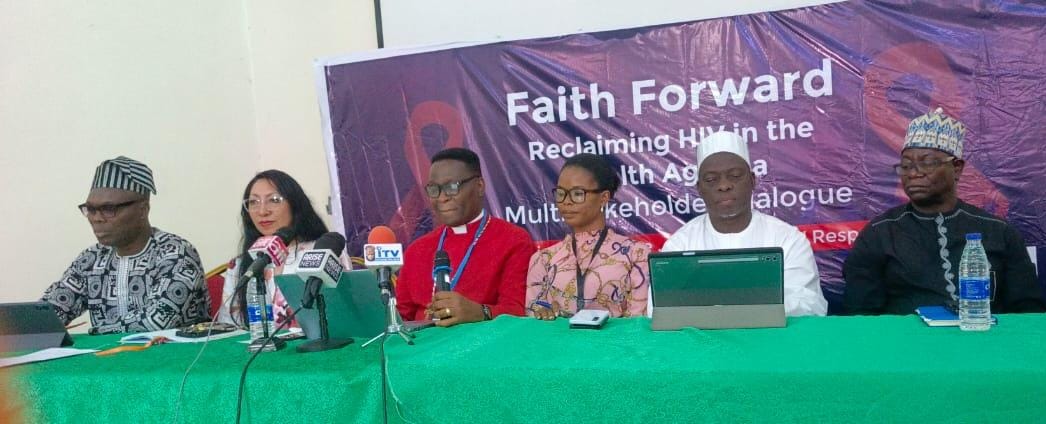
The call was contained in a communiqué issued on Wednesday at the end of a three day multi stakeholder dialogue themed “Faith Forward: Reclaiming HIV in the Health Agenda” held in Abuja.
The dialogue was convened by the World Council of Churches (WCC) in alliance with the Nigerian Network of Religious Leaders Living with or Personally Affected by HIV (NINERELA+), bringing diverse stakeholders together for discussions.
Reading the communiqué, Rev. Benebo Fubara-Manuel, said participants affirmed commitment to ending HIV and AIDS as a public health threat in spite of persistent global challenges and emerging risks affecting vulnerable populations worldwide.
He said the HIV response was at a critical crossroads; noting about 1.3 million new infections were still being recorded globally amid declining funding and increasing vulnerability among young people in many regions.
Fubara-Manuel expressed concern that although scientific advances such as long acting injectables offered transformative potential, access remained limited without urgent and equitable scale up across low and middle income countries.
He said faith communities played a critical role in promoting compassion, reducing stigma, and supporting access to HIV services, noting their influence in mobilising trust and upholding human dignity across societies.
He added that the communiqué urged governments to increase domestic financing, integrate HIV services into primary healthcare, protect human rights and ensure equitable access to new innovations for affected populations.
It also called on development partners and the private sector to sustain funding and expand technical support, while encouraging faith leaders to intensify awareness efforts and promote stigma free communities everywhere.
According to the communiqué, stakeholders also committed to advocating sustainable financing, strengthening partnerships and ensuring inclusive programmes that leave no one behind in HIV response efforts across different communities globally.
Also speaking, Imam Fuad Adeyemi, urged religious leaders to eliminate stigma and adopt compassionate approaches in addressing HIV, stressing the importance of empathy and inclusion in faith based interventions.
For us in leadership, our task is not to judge, there should not be stigma on anybody, he said, stressing the need to expand access to testing and treatment services.
He called for stronger government intervention and closer collaboration with faith leaders to ensure that HIV prevention and treatment services effectively reached underserved and marginalised communities across the country.
Oluchi Ndubuisi of the International Community of Women Living with HIV West Africa warned that declining funding could reverse hard earned gains in HIV response, highlighting risks associated with reduced international support.
She emphasised the urgent need for sustained investments to protect progress, ensure continuity of care, and prevent setbacks that could undermine years of effort in combating HIV across affected communities.
“It would be very bad for us to go back to where we started now that we are almost at the finish line,” she said, urging stakeholders to sustain accessible services.
She said that access to treatment had enabled many young people living with HIV to lead productive lives, underscoring the need to end stigma and discrimination in all settings.
Gracia Ross, Programme Executive for HIV, Reproductive Health, and Pandemics at WCC, described the global HIV response as being in crisis, citing reduced international support and growing systemic pressures worldwide.
She said that declining external funding was leaving countries like Nigeria to shoulder increasing responsibility for sustaining HIV prevention, treatment and care programmes amid rising demand and limited domestic resources.
Ross, who has lived with HIV for 26 years, emphasised the role of faith leaders in mobilising communities and advocating sustained commitment to the response while supporting people living with HIV.
Stakeholders agreed that stronger collaboration among governments, faith institutions and communities remained critical to sustaining gains, improving outcomes and ultimately ending HIV infections across affected populations worldwide.(NAN)(www.nannews.ng)
Edited by Abiemwense Moru