


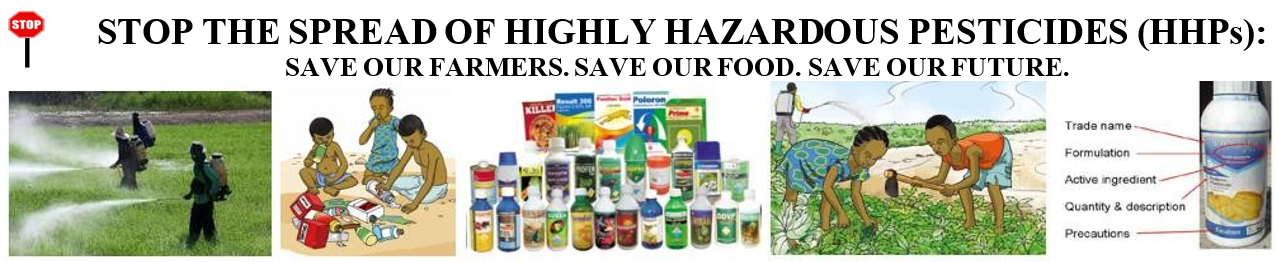
To: Legislators, Governors, LGA Chairmen, MDAs, Development Partners, CSOs, Farmer Associations, Agro Dealers
🚨 The Problem – Chemicals in our Soil, Water, Food, and Bodies
Every year, billions of naira are spent on agricultural inputs—especially chemical pesticides and fertilizers—distributed through government and donor programs. But many of these contain dangerous Highly Hazardous Pesticides (HHPs), posing high risks to human health and the environment.
Over 65% of active ingredients in pesticides used in Nigeria are toxic to people and the environment.
⚠️ What’s at Risk?
- Health: Cancer, kidney failure, infertility, birth defects, hormone disruption, neurological disorders.
- Food Exports: Over 70% of Nigeria’s food exports are rejected abroad due to pesticide residues.
- Deaths: Estimated 200,000 Nigerians die yearly from food poisoning.
- Suicide: Over 77% of suicides involve pesticide ingestion.
- Environment: Pesticides kill pollinators (bees), contaminate water, destroy biodiversity, and damage soil health.
❗ Why Are These Pesticides Still Used?
- Many HHPs banned in Europe and other countries are still sold openly in Nigeria due to weak laws and poor enforcement.
- These chemicals are available on platforms like Jumia, Jiji, Konga, village markets, and constituency programs.
- Often distributed via government and donor programs without proper training or safety checks.
- Children and untrained persons can easily access them.
Common Banned or Toxic Pesticides Still Found in Nigeria
| Pesticide | Use | Health Risks | Ban Status | Safer Alternatives |
|---|---|---|---|---|
| Atrazine | Herbicide | Endocrine disruptor, reproductive harm, cancer | Banned since Jan 2025 | Mulching, mechanical weeding, vinegar-based herbicides |
| Butachlor | Herbicide | Carcinogenic, organ damage | Still used | Mulching, mechanical weeding, Pretilachlor |
| Carbendazim | Fungicide | Birth defects, infertility, possible cancer, liver damage | To be banned Jan 2026 | Biological fungicides (Trichoderma spp.) |
| Carbofuran | Insecticide | Neurotoxic, endocrine disruptor, reproductive damage | Banned May 2023 | Neem oil, biocontrols, IPM |
| Chlorpyrifos | Insecticide | Child neurodevelopmental harm, endocrine disruption | Banned Nov 2024 | Neem oil, soaps, Bt |
| Cypermethrin | Insecticide | Hormone imbalance, reduced fertility, possibly cancer | Still used | Neem, physical barriers, biocontrol |
| Dichlorvos (DDVP) | Insecticide | Cancer, reproductive harm, neurotoxic | Restricted | Spinosad, hygiene, hermetic storage |
| Dimethoate | Insecticide | Organ damage, cancer, neurotoxicity | Still used | Spinosad, cold/heat treatments |
| Endosulfan | Insecticide | Reproductive damage, cancer, endocrine disruptor, neurotoxic | Globally banned | Neem-based biopesticides |
| Glyphosate | Herbicide | Cancer, DNA damage, hormone disruption | Still used | Organic herbicides, mechanical weeding, mulching |
👉 For the full list of 17 banned Highly Hazardous Pesticides (HHPs) in Nigeria, their product names, global bans, and health risks, download the full Dossier on Pesticides in Nigeria from the AAPN website.
📣 OUR CALL TO ACTION
- STOP distributing Highly Hazardous Pesticides in government and donor-supported farm programs.
- LEGISLATE: Support a National Pesticide Law aligned with international standards. Pass it before Q3 2025.
- CALL ON NAFDAC: Update your list of banned pesticides to reflect new bans by NAFDAC and FMAFS (2022–2025).
- INVEST: Develop and fund biopesticide production, farmer training, and organic agriculture initiatives.
- PROTECT HEALTH: Establish a pesticide surveillance system. Mandate hospitals to report pesticide-related illnesses and deaths.
- CLEAN UP ONLINE SALES: Order platforms (Jumia, Jiji, Konga, FarmSquare) to delist banned pesticides, verify sellers, and regulate buyer access.
- DEMAND SAFER OPTIONS: Request biopesticides and organic alternatives from your suppliers. Protect your family and community.
- SPREAD THE WORD: Share this on WhatsApp, Facebook, Twitter. Educate farmer groups and markets about safer alternatives.