









The Pop-Up Effect: Imagining Holographic and AR Video Ads that Move With You
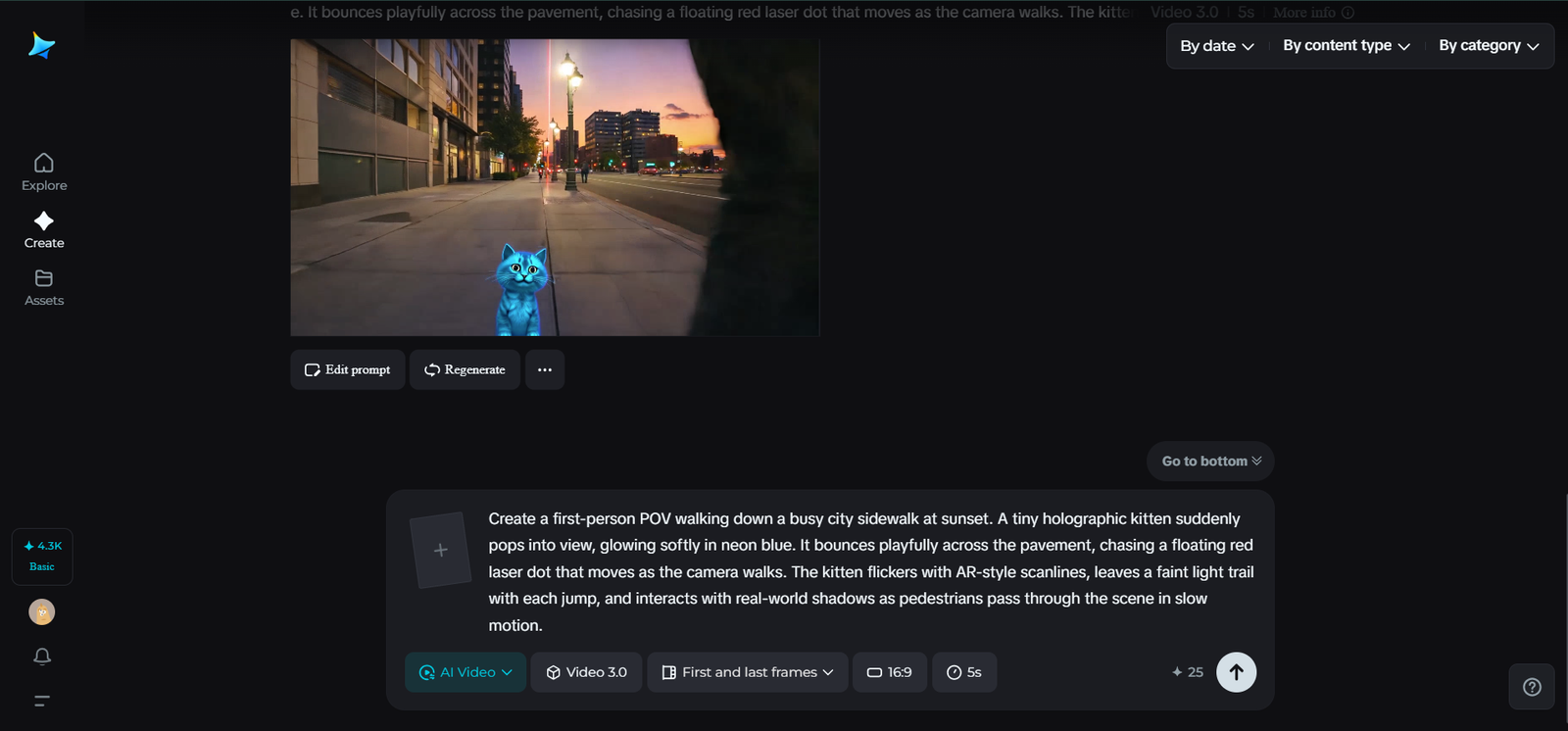
Picture this: you’re outside on an active street and you have a laser pointer that you’re shining on the ground when suddenly, a little kitten appears and jumps next to you, following the laser pointer, but it isn’t on a screen — it is just floating and bouncing as you walk. The kitten is real; this is the pop-up effect – (holographic and augmented reality) AR video ads that follow your movement and look like a world that we thought was only part of sci-fi in movies before.
As brands and creators become more creative in experimenting with new, futuristic, and interactive concepts, and a new aspect of content creation comes to life, this is the outcome. With resources such as Dreamina’s AI video generator, creating immersive moments like this is getting easier.
Why the pop-up effect excites audiences
People are attracted to motion and activity instinctively. Traditional advertisements are static-banners, posters, even videos on a timeline. Holographic and AR advertising breaks that mold: they move, react, and integrate into the environment in real time. That surprise factor keeps viewers engaged, curious, and eager to share their experience.
Some psychological drivers behind the effect:
- Interactivity captures attention: the ad will respond to movement, gaze, or gestures, which turns people from observers into participants.
- Surprise provokes memory: Unexpected brand moments stick in the mind more than routine visuals.
- Whimsical novelty: Floating characters, floating logos, or AR mini-games create a sense of whimsy and delight.
It’s not just advertising; it’s storytelling in motion: immersive, memorable, and inherently social.
Visual tricks that make AR pop
Holographic and augmented reality visuals are not just about technology – they are about design, perspective, and creativity. The visuals must look like they are in three dimensions, work in the context of the real world, and react appropriately to the viewer’s movements.
Designers depend on principles like:
- Layering and depth: The objects in the AR ad must convincingly scale, shadow, and overlap surfaces in the real world.
- Kinetic signal: Subtle movements, things floating, or a bounciness develops liveliness in the ad.
- Reactive animation: Characters and objects changing direction, sudden stops, or reacting to someone’s pathway is much more magical and responsive.
Even a simple product logo could “follow” someone across a room, pulse along with the environment, or expand into playful mini-scenes that reinforce the brand identity.
Building a pop-up moment with AI
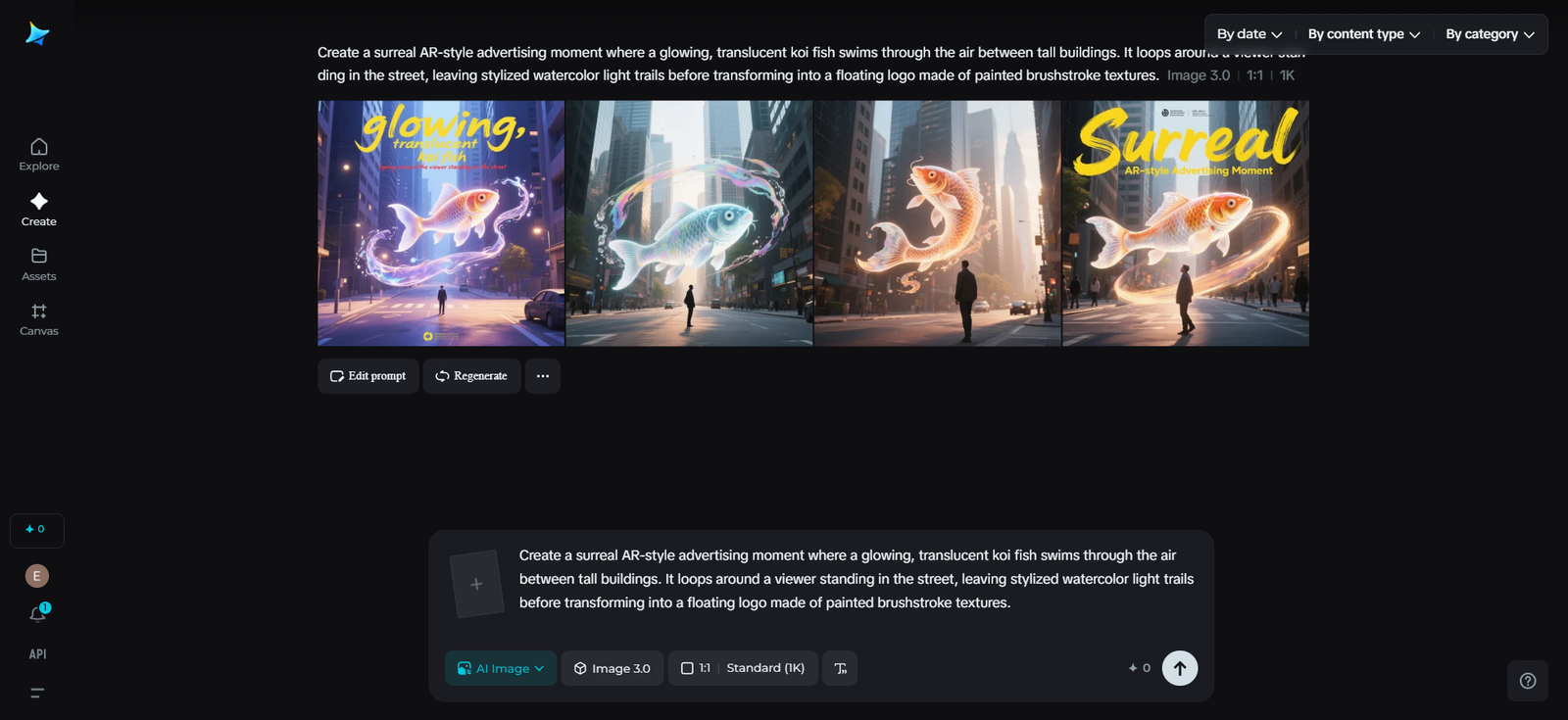
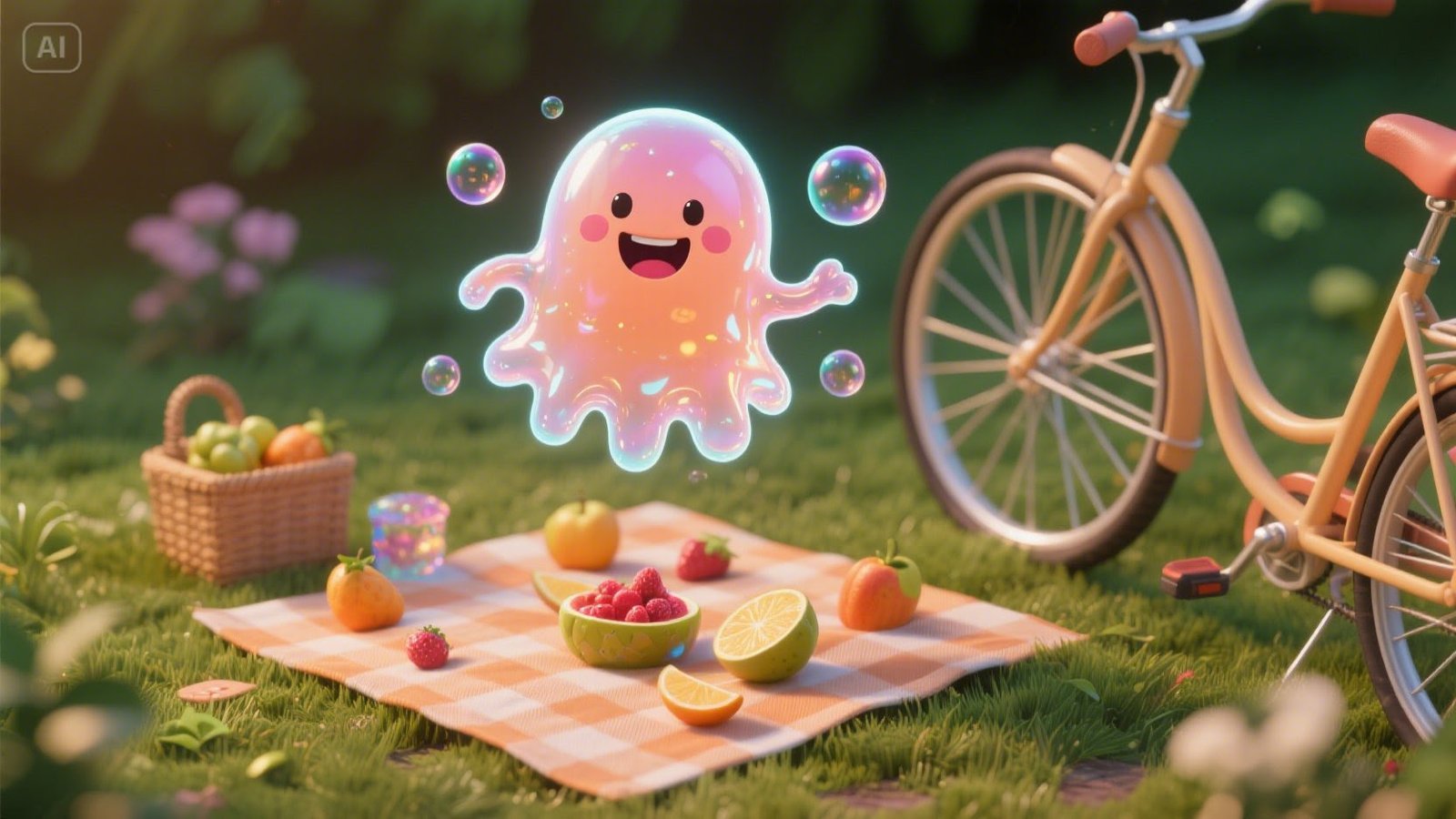
AI tools have completely changed how creators envision these experiences. With an AI image generator, surreal or whimsical backgrounds can be created to make the AR ad pop into any real-world setting. Want your brand mascot floating on a city street or perched on a cafe table? Image generation lets you produce highly detailed, photorealistic, or stylized references in seconds.
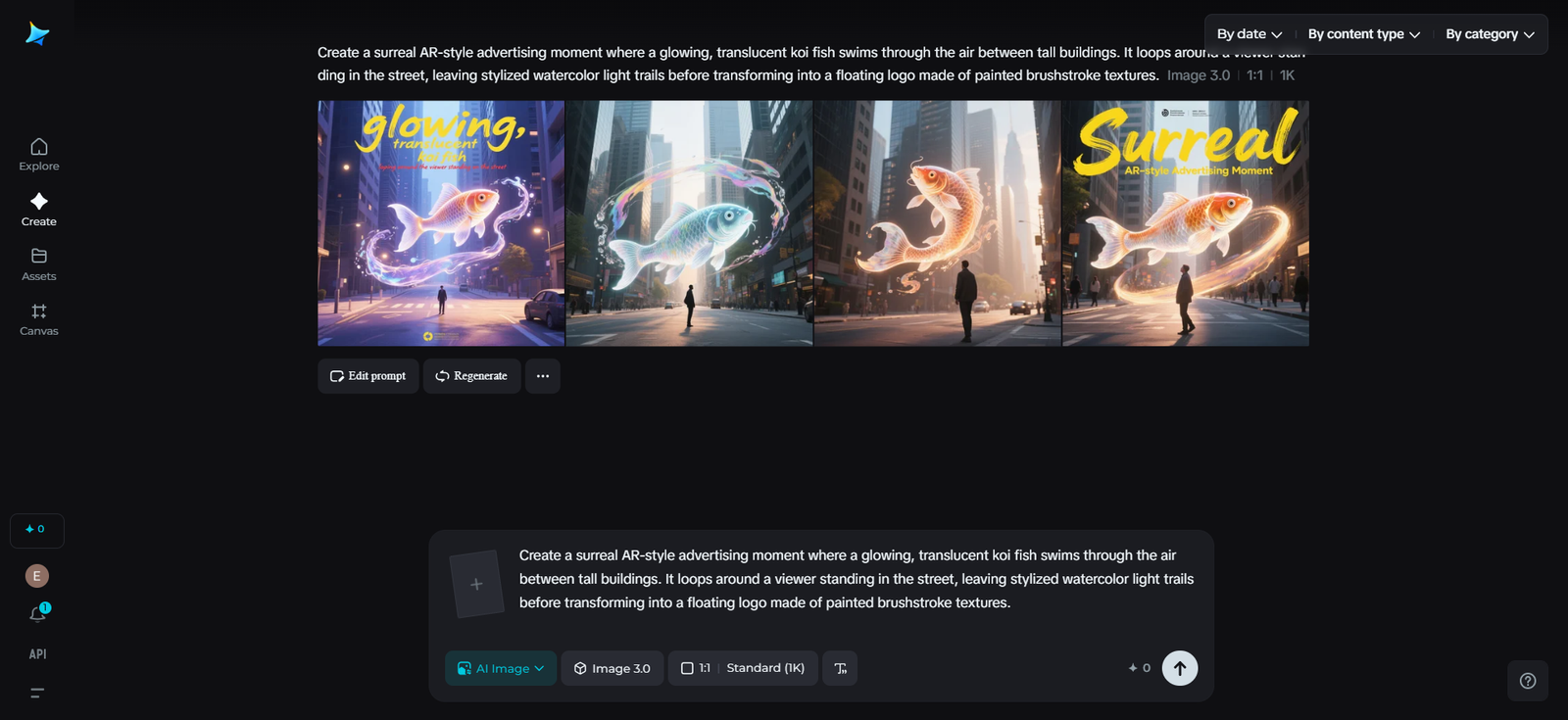
Meanwhile, the video generator makes the next leap possible: animated sequences of holographic movement. You can create looping, interactive animations that feel like they exist in 3D space and test how they might react to motion, perspective shifts, or virtual interactions.
Mini-stories in motion
AR and holographic ads can be at their best when they tell a story-even just for a few seconds. Micro-narratives can make an ordinary streetwalk memorable. Example:
- The coffee chain could provide an animated signal of steam wafting up from the cup that appears as though it sits above the table, inviting the viewer to imagine the scent.
- The brand of pet products might create an excited puppy that runs around the park bench chasing the AR ball, inviting extra engagement and creating smiles and laughter.
- The sneaker brand may create a holographic runner who runs alongside, with neon light trails following every footstep.
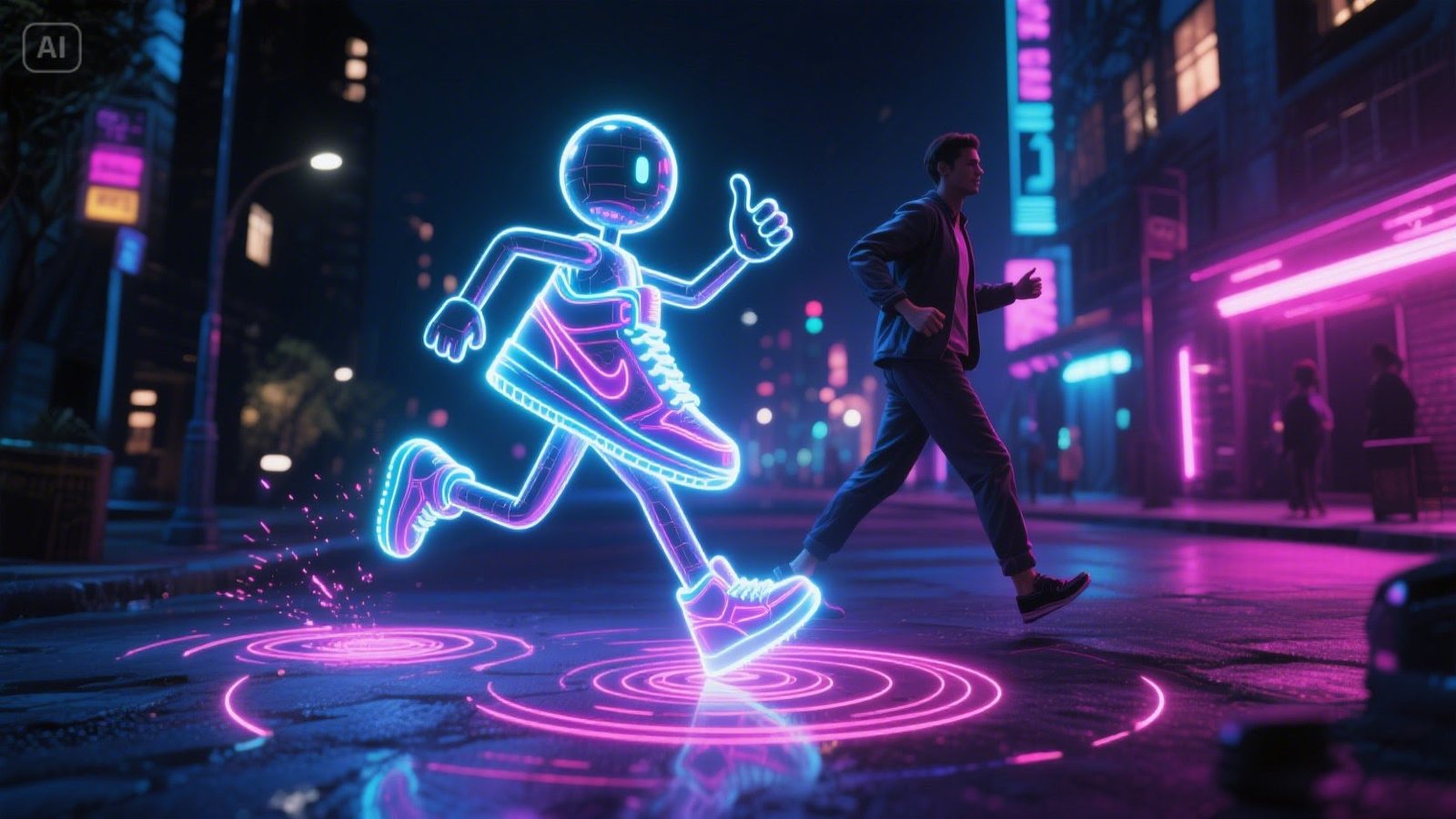
All these microstories add the pop-up: in addition to storytelling, the ad adds humor or surprise to delight the viewer, educate, engage, and even send out content to their social network.
Designing for motion and perspective
As opposed to the traditional ad, an AR experience will rely on the viewer’s changing perspectives or movement during the presentation of the experience. As the user moves, the visual should move. Important design considerations include:
- Scale sensitivity: Users will expect elements in the AR experience to grow, shrink, or otherwise relate naturally to their approach and retreat from the space around the objects.
- Parallax layer: Many layers of depth to express a 3D effect.
- Reaction triggers: Animations respond to gestures, gaze, or proximity in an interactive way.
These principles make sure the holographic or AR ad doesn’t feel “stuck” in space. The goal is seamless integration: Viewers shouldn’t think “this is an ad”; they should think “wow, this is happening around me.”
Making memes meet marketing
One entertaining side of AR pop-up ads is the social shareability behind them. People enjoy filming and sharing unexpected, whimsical moments. This opens the door for meme-style promotion — a floating character that photobombs selfies, a mini-drama unfolding on a street corner, or a dancing logo appearing in a home living room.
By mixing short-form video trends with AR creativity:
- Brands boost organic reach via social sharing.
- Users, in other words, become co-creators as they generate content when interacting.
- Campaigns remain culturally relevant by leveraging and embracing humor and surprise.
The best campaigns, even in immersive advertising, will be participatory and shareable.
Dreamina’s playground for pop-up ads
Tools like Dreamina make the leap from imagination to prototype far easier than traditional animation pipelines. Here’s how creators can explore the pop-up effect:
- Design fantastic or stylized backgrounds that anchor the AR element using its advanced AI image generation technology.
- Animate AR or holographic elements for video generation; adjust movement, loops, and interaction cues.
- These images take on a certain style flair when combined with Dreamina’s AI art generator, transforming useful advertisements into entertaining and captivating small works of art.
The end product is a fully realised pop-up advertisement that doesn’t need a big production staff and is lively, entertaining, and shareable.
Future visions of AR and holographic ads
The possibilities for AR pop-up marketing are practically endless:
- Floating characters that deliver tiny tutorials or tips as users navigate through the stores.
- Interactive promotional mini-games integrated into urban spaces.
- Location-based experiences that change according to time of day, weather, or crowd density.
What ties these innovations together is surprise and delight. It culminates in a whimsical storytelling device, which can be a dancing robot in a subway or a levitating coffee cup at a coffee shop, that has the ability to transform banal environments into playful storytelling experiences.
Why does this matter?
Because these applications are more than just futuristic novelties–they are tapping into a few basic principles that drive attention, interactivity and human curiosity:
- People are more engaged when there is motion and responsivity.
- Micro-stories create memorability for the content.
- Social shareability pivots your viewers to become brand ambassadors.
By merging state-of-the-art AI tools with AR design thinking, brands can create experiences that are at once innovative and human-centered.
Conclusion
As consumers in a saturated landscape of static messages, the pop-up effect is a fun and refreshing way to engage. With the implementation of Dreamina, creators will be able to experiment with not only holographic and AR video ads, but can experiment with movement, storytelling, and even aesthetics, until they finally create visual material that moves and floats alongside the viewer-literally and visually.
One day, who knows? Advertising could be holographic and interactive, and fun together. However, for now, with a program like Dreamina, that could be a few strokes of creativity away!